

Maddy summaryHJRES 122 proposes a constitutional amendment that would grant Congress and states explicit authority to regulate campaign contributions and spending intended to influence elections. It would allow for reasonable, viewpoint-neutral limits on how much money candidates and others can raise or spend, as well as enable public financing systems to reduce private wealth's influence in campaigns. The amendment would permit distinguishing between individuals and corporations in campaign finance rules, potentially banning corporate spending to influence elections. It explicitly states this amendment would not affect the freedom of the press.
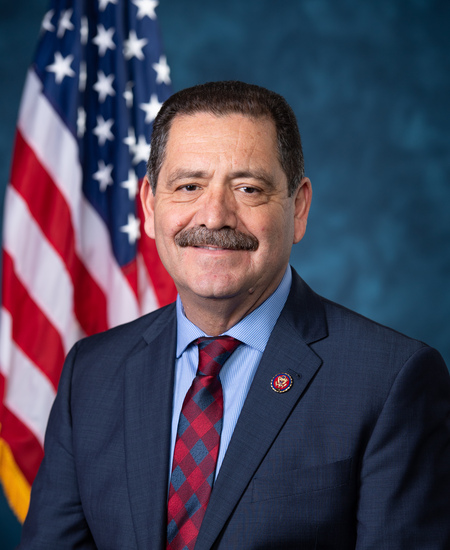
Rep. Jesús G. "Chuy" García
Sponsored bills
Maddy summaryThe Billionaires Income Tax Act (HR 5427) would require high-net-worth individuals with annual income over $100 million or assets over $1 billion to pay taxes annually on investment gains rather than deferring taxes until assets are sold. It eliminates the "buy, borrow, die" tax strategy by implementing annual mark-to-market taxation of investment assets and closing loopholes that allow tax-free transfers of appreciated assets to heirs. The bill applies to individuals meeting specific income or asset thresholds, as well as applicable trusts and entities with significant ownership interests, with provisions taking effect for taxable years beginning after December 31, 2025.
Maddy summaryThis bill requires the 988 Suicide Prevention Lifeline to establish a dedicated "Press 3" option (via IVR) for LGBTQ+ youth seeking crisis support, directly affecting LGBTQ+ youth who face a four times higher suicide risk than peers. It mandates that at least 9% of funds allocated for the lifeline's services be reserved specifically for these specialized LGBTQ+ youth services. The bill amends existing law to formalize this dedicated resource, building on current services that handled over 1.5 million contacts from LGBTQ+ youth in 2025. This creates a concrete policy change for accessing tailored crisis support without altering other lifeline operations.
Maddy summaryThe FAMILY Act would establish a national paid family and medical leave insurance program that provides wage replacement benefits for workers needing time off for caregiving or medical reasons. It defines "qualified caregiving" to include caring for a family member with a serious health condition, personal medical needs, or recovery from violence (including domestic violence, sexual assault, or stalking). Benefits would be calculated based on earnings, with a minimum monthly benefit of $580 and maximum of $4,000, administered by a new Office of Paid Family and Medical Leave within the Social Security Administration. Eligible individuals would need to have worked for at least 8 quarters in the previous year and file an application with required documentation, while existing state paid leave programs would continue to operate alongside this federal program.
Maddy summaryHRES 717 is a resolution honoring Juan López, a Honduran Catholic leader and human rights advocate assassinated in Tocoa on September 14, 2024. The resolution commemorates his murder one year later and calls for an international commission to investigate his killing and support for land and environmental defenders in Honduras' Bajo Aguán region. It specifically requests U.S. government collaboration to strengthen anti-corruption efforts in Honduras and protect communities facing threats from land exploitation projects. The resolution directly affects Honduran activists, particularly women defending water resources and forests, and aims to address ongoing violence against human rights defenders.
Maddy summaryThe George Floyd Justice in Policing Act of 2025 would establish a National Police Misconduct Registry to track officer complaints, disciplinary actions, and misconduct records across all law enforcement agencies. It would require law enforcement agencies to implement body-worn camera programs with specific recording and retention policies, ban chokeholds and no-knock warrants in drug cases, and reform qualified immunity to make it easier to hold officers accountable for misconduct. The bill mandates comprehensive data collection on use of force incidents, requiring agencies to report detailed information about stops, searches, and force used, disaggregated by race, ethnicity, gender, and other demographics. These provisions would directly affect all Federal, State, and local law enforcement agencies that receive federal grant funding, with requirements for policy changes, training, and data reporting.
Maddy summaryThe National Infrastructure Bank Act of 2025 would establish a government-owned bank to finance infrastructure projects across the United States, aiming to address a $3.69 trillion financing gap identified by the American Society of Civil Engineers. The bank would provide loans up to $5 trillion for transportation, energy, environmental, and community development projects, with specific criteria focused on economic growth, environmental benefits, and serving disadvantaged communities. It would be governed by a 25-member Board of Directors with diverse regional and expertise qualifications, and would operate with tax exemptions and capital requirements to ensure financial stability. The bill also establishes regional economic accelerator planning groups to coordinate infrastructure development and create a pipeline of projects for the bank to finance.
Maddy summaryThe FAIR Act of 2025 would prohibit companies from requiring pre-dispute arbitration agreements or waivers that prevent individuals from joining class or collective lawsuits in employment, consumer, antitrust, or civil rights cases. This directly affects workers, consumers, and small businesses who currently face forced arbitration for issues like workplace discrimination, product defects, or unfair business practices. The bill makes such agreements unenforceable while allowing voluntary arbitration after disputes arise and leaving collective bargaining agreements unaffected. It applies to all disputes occurring after the law takes effect, without changing how voluntary arbitration works post-dispute.
Maddy summaryThe Equal Tax Act (HR 5336) changes how capital gains are taxed on inherited property and gifts. It treats property transferred by gift or death as if sold at fair market value on the date of transfer, creating a taxable event for most transfers. The bill limits preferential tax rates on dividends and capital gains to incomes of $1 million or less, and provides a $1 million exclusion for capital gains from transfers at death, with special rules for qualifying family farms or businesses. It also eliminates carryover basis for gifts after 2025 and allows for 5-year installment payments for the tax on these gains.
Maddy summaryHR 5309, the Congressional Tribute to Constance Baker Motley Act of 2025, authorizes a posthumous Congressional gold medal for Constance Baker Motley, a pioneering civil rights attorney and judge. The bill directs the Treasury Secretary to strike the medal with her image and name, to be presented to her son, Joel W. Motley III, and her niece, Constance Royster. It also permits the sale of bronze duplicates at cost to cover expenses, with proceeds going to the U.S. Mint fund. This is a commemorative measure with no substantive policy changes, honoring Motley’s legacy as the first African-American woman appointed to a federal judgeship.