Improving Access to Nutrition Act of 20 21 This bill repeals certain work requirements for the Supplemental Nutrition Assistance Program (SNAP, formerly known as the food stamp program). The requirements apply to able-bodied adults who are ages 18-49 and have no dependent children. Individuals who do not meet certain work requirements are generally prohibited from receiving more than 3 months of SNAP benefits over a 36-month period. Under current law, some of the work requirements under SNAP are temporarily suspended due to COVID-19 (i.e., coronavirus disease 2019).
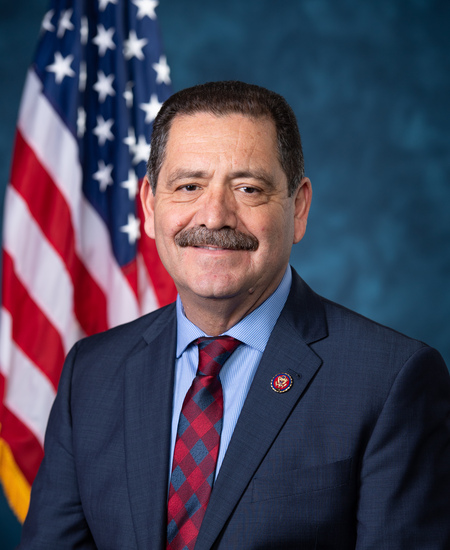
Rep. Jesús G. "Chuy" García
Sponsored bills
Mental Health Services for Students Act of 2021 This bill provides specific statutory authority for the Project AWARE (Advancing Wellness and Resiliency in Education) State Educational Agency Grant Program that is administered by the Substance Abuse and Mental Health Services Administration. The program supports school-based mental health services, including screening, treatment, and outreach programs.
Safer Neighborhoods Gun Buyback Act of 2021 This bill authorizes the Department of Justice's Bureau of Justice Assistance (BJA) to make grants to states, local governments, or gun dealers to conduct gun buyback programs. The BJA may distribute smart prepaid cards for use by a state, local government, or gun dealer to compensate individuals who dispose of firearms. Additionally, the bill establishes a new criminal offense for using or accepting a smart prepaid card in the acquisition or transfer of a firearm or ammunition. A violator is subject to a fine, up to two years in prison, or both.
Healthy Maternity and Obstetric Medicine Act or the Healthy MOM Act This bill expands health insurance coverage availability for pregnant individuals. It requires health insurers, health insurance exchanges, and group health plans to offer a special enrollment period to pregnant individuals. The special enrollment period offered by an insurer or exchange must begin when the pregnancy is reported to the insurer or exchange. The special enrollment period offered by a group health plan must begin when the pregnancy is reported to the plan or is confirmed by a health care provider. The bill also makes pregnancy a qualifying life event for the purpose of enrolling in a federal employee health benefit plan. Additionally, a group health plan or health insurer that covers dependents must provide coverage for maternity care to all covered individuals. Any individual who is eligible for Medicaid and is, or becomes, pregnant maintains such eligibility for one year after the end of the pregnancy. The bill revises the range in which a state must establish a maximum level of family income for pregnant women and infants to be eligible for Medicaid. The upper limit of the range is eliminated and the lower limit is set to the level in place on January 1, 2014.
Green Transportation Act This bill incorporates greenhouse gas emission reduction in various transportation-related planning activities and programs. Specifically, states and metropolitan planning organizations must address greenhouse gas emission reductions and certain other issues (e.g., public health and climate change) in long-range and other planning related to highways and public transportation. The bill also makes reducing carbon dioxide and other greenhouse gas emissions from the transportation system a national goal of the Federal-aid Highway Program. The Department of Transportation (DOT) must establish applicable performance measures and standards related to that goal. Additionally, states and metropolitan planning organizations may use certain funding available through the National Highway Trust Fund to develop standardized models and methodologies to measure and monitor transportation-related greenhouse gas emissions. DOT must collect and organize such models and methodologies in a publicly available clearinghouse and report about them to Congress. Further, DOT must establish a program to fund projects that support the reduction of greenhouse gas emissions from the surface transportation system. As part of this program, DOT must annually evaluate carbon dioxide emissions on public roads and evaluate states' progress in reducing emissions.
Northern Rockies Ecosystem Protection Act This bill designates specified National Forest System lands, National Park System lands, and public lands in Idaho, Montana, Oregon, Washington, and Wyoming as wilderness and as components or additions to existing components of the National Wilderness Preservation System. The Department of the Interior and the Department of Agriculture (USDA) must accept donations of leases or permits authorizing grazing on specified public or National Forest System lands. The bill also designates (1) specified federal lands as biological connecting corridors and as special corridor management areas; (2) segments of specified rivers and creeks in Idaho, Montana, and Wyoming as components of the National Wild and Scenic Rivers System; and (3) specified areas as wildland recovery areas. USDA shall develop a wildland recovery plan for each recovery area. A panel of independent scientists shall study roadless lands greater than 1,000 acres that are within the National Forest System in the Wild Rockies bioregion in Idaho, Montana, Oregon, Washington, or Wyoming and that are not designated as components of the National Wilderness Preservation System for their role in maintaining biological diversity in the Northern Rockies and as part of the overall forest reserve system. Any new road construction or reconstruction or timber harvest is prohibited in those lands after the evaluation without an act of Congress. Oil or gas leasing, mining, or other development which impairs the natural and roadless qualities of the land is also prohibited.

COVID Vaccine Transportation Access Act This bill establishes a grant program to remove transportation barriers in accessing COVID-19 vaccination sites. It also requires the federal government to cover the full cost of nonemergency transportation benefits related to accessing a COVID-19 vaccine for Medicaid recipients. Specifically, the Department of Health and Human Services must award the grants through state health agencies to nonprofits that have experience providing services to communities with disparities in health status and health care access. Grant-funded projects may include prescheduled or on-demand transportation to and from COVID-19 vaccination sites.
COINTELPRO Full Disclosure Act This bill requires the U.S. government to release and publicly disclose, within six months, all records related to the COINTELPRO operation of the Federal Bureau of Investigation (FBI) unless disclosure would cause harm. COINTELPRO was a series of covert and illegal projects aimed at surveilling, infiltrating, discrediting, and disrupting domestic political organizations, including the Black Panther Party. The bill requires the removal of J. Edgar Hoover's name from the FBI headquarters in the District of Columbia. The bill establishes the COINTELPRO Records Review Board to review determinations by government offices that do not fully disclose their records after six months. The review board shall make recommendations to the President regarding whether files that have been only partially disclosed should be fully released. The review board may request the Department of Justice to petition any U.S. court to release any information relevant to COINTELPRO that is held under court seal.
Connecting America's Active Transportation System Act This bill directs the Department of Transportation (DOT) to carry out an active transportation investment program to provide competitive grants to state, local, and regional government entities, and Indian tribes to construct projects that connect walking and bicycling infrastructure within and between communities, metropolitan regions, or states. The bill sets forth various limitations on the use of funds by DOT, including that it must obligate at least 30% of funds to projects that connect people with public transportation, businesses, workplaces, schools, residences, recreation areas, and other community activity centers; set aside at least $3 million to provide planning grants for eligible entities; and set aside at least $2 million to cover the costs of administration, research, technical assistance, communications, and training activities under the program. The federal share of grants must not exceed 80% of the total project cost. However, DOT may increase the federal share to 100% for disadvantaged communities with a poverty rate of over 40%.
This resolution expresses support for the designation of the National Day of Awareness for Missing and Murdered Indigenous Women and Girls.