

Philippine Human Rights Act This bill imposes limitations on providing assistance to the police or military of the Philippines. No federal funds may be used to provide such assistance until the Philippines government has taken certain actions, including (1) investigating and successfully prosecuting members of its military and police forces who have violated human rights, (2) withdrawing the military from domestic policing activities, and (3) establishing that it effectively protects the rights of journalists and civil society activists. The President shall also direct U.S. representatives at multilateral development banks to vote against providing loans to the police or military of the Philippines.
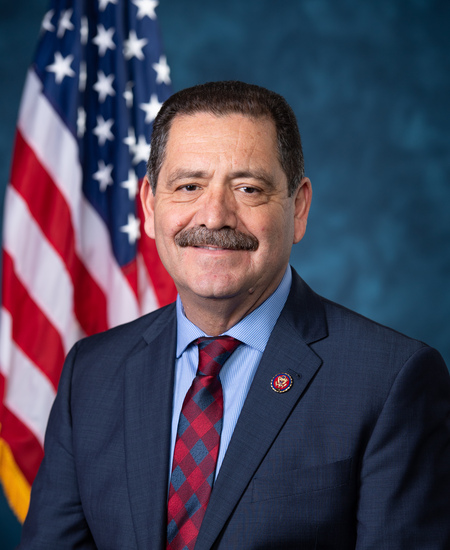
Rep. Jesús G. "Chuy" García
Sponsored bills
Children Don't Belong on Tobacco Farms Act This bill prohibits as a form of oppressive child labor the employment of any employee under age 18 who has direct contact with tobacco plants or dried tobacco leaves.
Pink Tax Repeal Act This bill prohibits product manufacturers or service providers from selling substantially similar products at different prices based on the gender of the intended purchaser. If, for example, the only difference between two products is the color, they are substantially similar. The bill provides authority for the Federal Trade Commission and state attorneys general to enforce these requirements.
Equal Dignity for Married Taxpayers Act of 2021 This bill modifies several tax provisions that refer to married couples to make the provisions equally applicable to legally married same-sex couples.
Supplemental Security Income Restoration Act of 2021 This bill modifies eligibility for, and other components of, the Supplemental Security Income (SSI) program, including by (1) increasing applicable income and resource limits used to determine SSI eligibility, (2) equalizing treatment of married couples when both spouses receive SSI as compared to two unmarried individuals, and (3) eliminating the penalty on SSI applicants or recipients who transfer resources to another individual for less than fair market value.
Stronger Communities through Better Transit Act This bill requires the Department of Transportation to establish a grant program to support operating projects for public transportation (e.g., service expansion) and related capital improvements, particularly in underserved communities and areas of persistent poverty.
Nullifying Opportunities for Variants to Infect and Decimate Act or the NOVID Act This bill establishes the Pandemic Preparedness and Response Program to coordinate and carry out the U.S. government's global health response to COVID-19, its variants, and other pathogens with pandemic potential. As part of the program, the bill requires, within 30 days, the development of a comprehensive strategy to end the COVID-19 pandemic. The strategy must outline efforts to increase COVID-19 vaccinations worldwide, including through the immediate release of the COVID-19 vaccine doses that the United States committed to sending abroad. The bill also requires a long-term strategy for the program to prevent future pandemics.
State-Based Universal Health Care Act of 20 21 This bill establishes the option for states, or groups of states, to apply to waive certain federal health insurance requirements and provide residents with health insurance benefits plans through a state-administered program. Such programs must cover 95% of the residents in the state within five years and plan benefits must be at least as comprehensive and affordable as the coverage under the equivalent federal program. State programs are supported with funds from the federal programs the state programs replace, which may include Medicare, Medicaid, the Children's Health Insurance Program, the Federal Employee Health Benefits program, certain federal tax credits, and premium-assistance funds, among others. The bill requires the Department of Health and Human Services to appoint an Independent Assessment Panel for Comprehensive Care to review and recommend whether to approve state applications. Each approved state program must be independently reviewed every five years to evaluate changes in health benefits access, quality, and coverage, including whether the state has met the 95% coverage requirement. The federal government must pay all health insurance costs for American Indians and Alaska Natives who enroll in a plan through a state insurance program.
Cahokia Mounds Mississippian Culture National Historical Park Act This bill provides for the establishment of the Cahokia Mounds Mississippian Culture National Historical Park in Collinsville, Illinois; Monroe, Madison, and St. Clair Counties, Illinois; and St. Louis City County, Missouri, as a unit of the National Park System. The Department of the Interior may acquire lands and interests within the boundary of the park by donation, purchase, or exchange, except that land owned by such states or their political subdivisions may only be acquired by donation. Interior may enter into cooperative agreements with such states and their political subdivisions, colleges and universities, nonprofit organizations, Indian tribes, and individuals to (1) mark, interpret, and restore nationally significant historic or cultural and natural resources related to the life of the Mississippi culture within the park, if the agreement provides for reasonable public access; and (2) conduct research related to Mississippi culture.
Disclosure of Tax Havens and Offshoring Act This bill requires certain issuers of securities to annually disclose information related to the tax jurisdiction, income, and assets of their constituent entities on a country-by-country basis.