

Maddy summaryThe Universal School Meals Program Act of 2026 mandates that all public schools provide free breakfast and lunch to every enrolled student, regardless of income. It establishes specific funding rates for these meals, adjusts payments based on the use of locally sourced food, and eliminates the ability of schools to collect debt for unpaid charges. Additionally, the bill expands free meal access to summer programs, afterschool care, and incarcerated juveniles while updating poverty measurement standards across various federal education and nutrition laws.
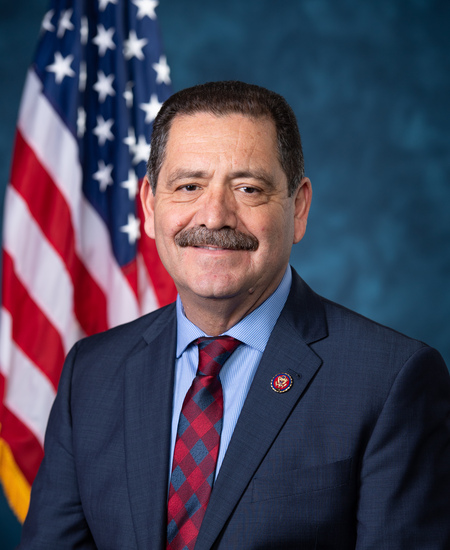
Rep. Jesús G. "Chuy" García
Sponsored bills
Maddy summaryThe EV Charging Accessibility Act directs the Architectural and Transportation Barriers Compliance Board to finalize a proposed rule ensuring electric vehicle charging stations are accessible to people with disabilities. This rule establishes minimum standards and guidelines for station design, which the Departments of Transportation and Justice must then adopt into federal regulations within 180 days. If the Board fails to complete the rule by the deadline, the proposed guidelines automatically become final without further action. The law primarily affects the government agencies responsible for setting and enforcing accessibility standards for public charging infrastructure.
Maddy summaryThe Pregnant Women in Custody Act establishes new federal standards to protect the health and rights of pregnant women held in Bureau of Prisons facilities, immigration detention centers, and refugee shelters. It mandates comprehensive medical care, including mandatory pregnancy testing, access to contraception, and specialized dietary and housing accommodations tailored to pregnancy needs. A central provision prohibits the use of restrictive housing and physical restraints during pregnancy, labor, and the postpartum recovery period, with limited exceptions only for immediate safety threats. The legislation also requires facilities to provide nursery programs allowing mothers and infants to remain together, offers education on parental rights, and mandates regular reporting on health outcomes and the use of restrictive measures.
Maddy summaryThis resolution formally acknowledges the cultural and historical importance of Cinco de Mayo, a holiday celebrated by Mexican and Mexican-American communities. It commemorates the 1862 Battle of Puebla, where Mexican forces defeated the French army, symbolizing resilience and the pursuit of self-determination. The text highlights the holiday's role in honoring diverse contributions to the United States and strengthening ties between Mexico and the U.S. Ultimately, the House of Representatives is encouraged to observe the day with appropriate ceremonies and activities.
Maddy summaryThis House Resolution designates the week of May 3 through May 9, 2026, as National Postpartum Awareness Week for Communities of Color. It formally acknowledges the unique health challenges and disparities faced by pregnant people of color during the postpartum period. The measure does not create new laws or allocate funding but aims to raise awareness and encourage support for maternal health equity initiatives.
Maddy summaryThis bill prohibits the U.S. government from spending money on military actions against Iran between its enactment and December 31, 2026, unless Congress explicitly approves the use of force. It allows for military action only if Congress declares war, passes a specific authorization, or if the action is necessary to defend the United States or its allies from an imminent attack while following reporting requirements. The law directly restricts the President's ability to deploy troops without legislative approval during the specified timeframe.
Maddy summaryThis resolution formally recognizes the value of the Greenhouse Gas Reporting Program, a federal system that requires over 8,000 industrial facilities to submit data on their emissions. The bill highlights how this program provides transparent information on pollution sources to help government agencies, researchers, and communities make informed decisions about public health and environmental protection. It specifically notes that the data collected supports efforts to address climate change and protects vulnerable populations who are disproportionately affected by air pollution. The measure does not create new laws or regulations but serves to express support for the existing reporting requirements and their role in maintaining scientific integrity.
Maddy summaryH.R. 1243 is a House resolution that formally recognizes May as Asian American, Native Hawaiian, and Pacific Islander Heritage Month to celebrate the contributions of these communities to U.S. history. The bill highlights the diverse populations, historical milestones, and significant achievements of Asian Americans, Native Hawaiians, and Pacific Islanders in government, the military, and society. It also acknowledges the ongoing challenges faced by these groups, including a rise in hate crimes and historical discrimination. As a commemorative resolution, the measure does not create new laws or funding but serves to express official congressional appreciation and awareness.
Maddy summaryThe Reward Work Act prohibits companies from buying back their own stock on public exchanges while requiring at least one-third of corporate board members to be elected by employees. Under this bill, corporations would need to hold one-employee-one-vote elections to select these worker representatives, with the Securities and Exchange Commission tasked with creating rules to ensure fair and democratic processes. The legislation specifically targets publicly traded companies and their boards of directors, aiming to increase worker influence in corporate governance through direct election mechanisms.
Maddy summaryThe CHARTER Act aims to ensure that public funds for charter schools are not used to generate profits for for-profit companies. It directly affects charter schools receiving federal money by prohibiting them from contracting with for-profit entities to run, manage, or oversee their daily operations. While the bill allows schools to hire for-profit vendors for specific services like food, supplies, and transportation, it strictly bans contracts where a for-profit company controls the school or takes a cut of its revenue. These rules will only apply to new or renewed contracts made after the law is passed, with full enforcement beginning three years later.