

Maddy summaryThis bill creates a new federal tax credit for family child care providers who operate from their primary residence and hold state licenses. It allows qualifying providers to claim up to $5,000 in startup costs per year, including licensing fees, supplies, insurance, safety equipment, furniture, and required home renovations. The credit applies only once per provider (no repeat claims) and expires after 7 years. It directly benefits small-scale, licensed family child care providers serving at least two non-family children, aiming to reduce their initial business setup costs.
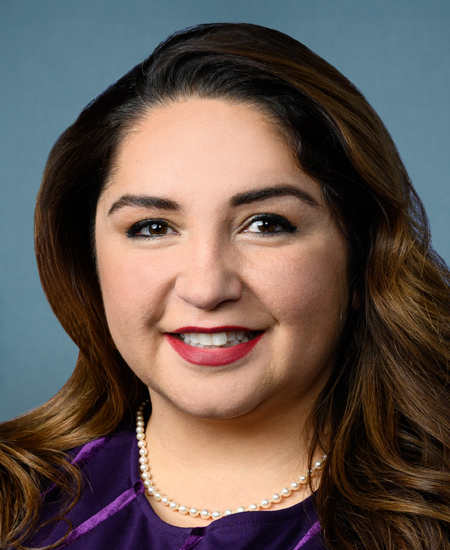
Rep. Delia C. Ramirez
Sponsored bills
This resolution recognizes the anniversary of the Civil Rights Act of 1866 and its impact on establishing that all Americans are protected equally under the law.
Maddy summaryThis bill requires federal agencies to include specific equity goals in their planning documents. Agencies must set at least one goal (or 20% of total goals, whichever is greater) focused on improving services for underserved communities and individuals, defined as groups systematically denied full participation in economic, social, and civic life. Agencies must also consult with community groups, local governments, and research partners when developing these plans. The law amends existing planning requirements under Titles 5 and 31 of the U.S. Code to implement these changes.
Maddy summaryThis bill requires each federal agency to establish an Equity Advisory Team with at least 10 specific agency roles represented, including leadership from civil rights, data, human capital, and policy teams. It creates an Equity Subcommittee within the Performance Improvement Council to coordinate equitable service delivery guidance across agencies and share best practices. The bill also mandates that Chief Data Officers ensure agencies follow equitable data collection and use standards, and establishes an Equitable Data Working Group to report quarterly on achieving equity in federal data practices. These provisions directly affect all federal agencies by requiring new internal structures and reporting on equitable operations.
Maddy summaryHR 7862 directs federal agencies to annually report on converting unused government-owned buildings into affordable housing. It establishes two grant programs: a $1.75 million annual grant for exploring office-to-residential conversions, and a $250 million annual program for states and local governments to convert underutilized public buildings into rental housing. The state/local program requires converted housing to maintain affordability for 30 years, with at least 20% of units reserved for households earning ≤50% of local median income, or 40% for households ≤60% of median income. This bill directly affects federal agencies (through reporting) and state/local governments (through grant funding), focusing on repurposing vacant public property to expand affordable housing options.
Maddy summaryHCONRES 102 is a non-binding symbolic resolution supporting International Transgender Day of Visibility, introduced by multiple House members. It formally encourages the U.S. to observe the day with ceremonies and programs, celebrates transgender community achievements, and recognizes their ongoing fight for equality amid documented discrimination in employment, healthcare, housing, and public spaces. The resolution highlights transgender representation in politics (including 21 state legislators) and historical context, while acknowledging rising anti-transgender legislation. It directly affirms the transgender community's visibility and rights without creating new policies or funding.
Maddy summaryThe Prevent Illegal Gun Resales Act increases licensing fees for firearm dealers and requires them to implement specific business practices to prevent firearms from being diverted to illegal markets or straw purchasers. It mandates dealers to certify secure gun storage availability, submit detailed business procedures, maintain electronic records of transactions, and respond to law enforcement requests within 24 hours. Dealers must update security measures if they report multiple lost/stolen firearms or firearms traced to crimes, with penalties including civil fines up to $5,000 and license suspension for non-compliance. The bill also establishes enhanced regulations for "high risk" dealers identified by the Attorney General based on crime trace data or previous violations.
Maddy summaryThe Pink Tax Repeal Act prohibits businesses from charging different prices for substantially similar consumer products or services based on the gender of the intended users. It defines "substantially similar" as having no meaningful differences in materials, use, or design - meaning color alone (e.g., pink vs. blue packaging) cannot justify price differences. The Federal Trade Commission would enforce this under existing laws, and state attorneys general could also sue companies for violations on behalf of residents. This directly affects consumers who pay higher prices for identical or nearly identical items marketed to a specific gender, such as women’s razors or clothing.
Maddy summaryThis bill authorizes federal grants to expand maternal health services in underserved communities. It directly affects public and nonprofit health care providers serving minority, low-income, or medically underserved areas, requiring them to improve prenatal, postnatal, and postpartum care while reducing racial and economic disparities. Key provisions include prioritizing community-led providers, limiting administrative costs to 10% of grant funds, and mandating culturally appropriate care. The grants, funded for fiscal years 2025-2029, aim to enhance health outcomes for mothers and infants in these communities through coordinated service delivery.
Maddy summaryThis bill would provide federal grants to public housing agencies to modernize public housing through energy efficiency upgrades, infrastructure improvements, and renewable energy systems. It requires all public housing to become "zero-carbon homes" that produce enough renewable energy to meet their own consumption within 10 years. The bill includes specific requirements for workforce development, hiring from low- and very low-income communities (40% in year 1, 50% in year 2, 90% after that), and contracting with resident-owned businesses (20% in year 1, 30% in year 2, 50% after that). It also mandates resident and community engagement in planning, and requires public housing agencies to meet specific energy efficiency and water quality standards. The bill directly affects all public housing agencies managing housing for low- and very low-income residents across the United States, including tribal housing entities.