

Stop Antiabortion Disinformation Act or the SAD Act This bill prohibits deceptive advertising for reproductive health services. Specifically, the bill makes it unlawful for a person (i.e., individual, partnership, corporation, association, or organization) to deceptively advertise the reproductive health services they offer, including by misrepresenting that the person (1) offers or provides contraception or abortion services (or referrals for such contraception or abortion services), or (2) employs or offers access to licensed medical personnel. The bill provides for enforcement by the Federal Trade Commission. In addition to any other penalty, violations are subject to a civil penalty that may not exceed the greater of $100,000 (adjusted annually for inflation) or 50% of the revenue earned during the preceding 12-month period by the ultimate parent entity of the person who violated the bill.
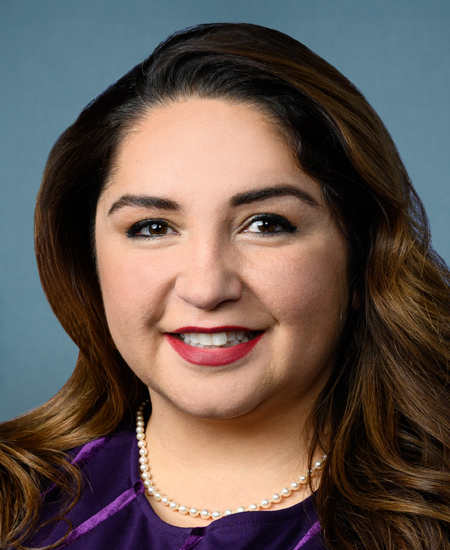
Rep. Delia C. Ramirez
Sponsored bills
Maddy summaryThis resolution expresses the House of Representatives' position that Congress should take steps to prevent the privatization of the United States Postal Service (USPS), ensuring it remains a federal independent agency. It highlights USPS’s constitutional role, self-sustaining nature (relying on service revenue, not taxpayer funds), and critical functions - serving 168 million addresses daily, supporting rural communities, and underpinning e-commerce. The resolution opposes privatization, noting it would raise prices, reduce services, and harm the $1.9 trillion mailing industry. As a non-binding resolution, it reflects the House’s stance but does not create new law or policy.
Maddy summaryHR 764, the Global Health, Empowerment and Rights Act, removes two barriers for foreign nongovernmental organizations (NGOs) seeking U.S. foreign assistance. It ensures these organizations cannot be denied funding solely because they provide health services (like counseling and referrals) using non-U.S. government funds, as long as those services comply with local laws. The bill also requires that foreign NGOs face the same rules on using non-U.S. funds for advocacy and lobbying as U.S. NGOs receiving similar aid. This directly affects international health-focused NGOs working in countries where U.S. aid is provided.
Mentoring to Succeed Act of 2025 This bill establishes grants to support mentoring programs for eligible youth (e.g., in-school youth, out-of-school youth, or youth who are failing academically or who meet specified criteria). Specifically, the bill directs the Department of Labor to award competitive grants for certain community-based organizations or partnerships involving community-based organizations to (1) establish, expand, or support mentoring programs; (2) assist eligible youth enrolled in secondary schools in developing cognitive and social-emotional skills; and (3) prepare eligible youth for success in high school, postsecondary education, and the workforce. Additionally, Labor must work with the Department of Justice's Office of Juvenile Justice and Delinquency Prevention and the Department of Education to (1) refer grant recipients to the National Mentoring Resource Center to obtain mentoring resources, and (2) provide grant recipients with information regarding transitional services for eligible youth returning from correctional facilities and transition services for students with disabilities. The bill also requires Labor's Chief Evaluation Office to study and report on mentoring programs.
Maddy summaryHR 801, the Charitable Act, creates a new tax deduction for individuals who do not itemize deductions on their federal tax returns. It allows these taxpayers to deduct up to one-third of their standard deduction amount for charitable contributions in 2026 and 2027. The bill directly affects non-itemizing individual taxpayers by providing a limited, direct deduction for charitable giving without requiring them to itemize. The deduction is capped at 1/3 of the standard deduction amount for those tax years, effective for returns filed in 2027 and 2028.
Maddy summaryThis bill requires the U.S. Department of Education to proactively notify eligible college students about potential access to SNAP (food stamp) benefits. It targets students with a negative or zero student aid index (SAI) who file the Free Application for Federal Student Aid (FAFSA). The Department must send annual written and electronic notices explaining SNAP eligibility and providing state contact information for applying. The bill also mandates consultation between the Education and Agriculture Departments to design these notifications. This is a policy change focused on improving access to nutrition assistance for low-income students already enrolled in college.
Maddy summaryHRES 68 is a non-binding House resolution expressing strong disapproval of the President’s announcement to withdraw the U.S. from the Paris Agreement. It commends states, businesses, and citizens supporting the Agreement, urges the President to reverse the withdrawal decision, and calls for Congress to prioritize U.S. climate leadership. The resolution does not create new laws or affect specific groups but formally states the House’s position against withdrawing from the international climate accord. It was introduced by 115 co-sponsors and reflects broad congressional concern about reversing U.S. climate commitments.
Maddy summaryHRES 61 is a symbolic resolution designating January as "Muslim-American Heritage Month" to celebrate the contributions of Muslim Americans to U.S. society. It does not create new laws or affect specific groups legally, but formally recognizes their historical and cultural impact through non-binding support. The resolution highlights Muslim Americans' roles in fields like business, science, military service, and the arts, while acknowledging challenges like religious discrimination. It urges the public to observe the month with ceremonies celebrating their heritage.
Maddy summaryHR 646, the Build Housing with Care Act of 2025, establishes a HUD grant program to fund the co-location of affordable housing developments with child care facilities. It directly affects housing developers, child care providers, and residents of affordable housing by requiring grants to support projects in "child care deserts" (areas with severe child care shortages), prioritizing low-income, rural, or Head Start-serving providers. Key provisions mandate that projects must not evict residents, include resident engagement plans, and ensure child care providers serve low-income families or dual-language learners. The bill authorizes $100 million annually (2025-2030) and requires annual reports tracking child care slots created, resident usage, and demographic data.
Maddy summaryHR 612, the Health Care Providers Safety Act of 2025, provides federal funding to help health care facilities improve safety. It authorizes the Secretary to award grants to hospitals, clinics, and other health care providers to cover costs for physical security (like structural improvements) and cyber security (such as data privacy tools and video surveillance systems). These grants directly help health care providers protect their facilities, staff, and patients from security threats. The bill creates a new funding mechanism under the Public Health Service Act, making specific security upgrades eligible for federal support.