

Maddy summaryThis bill protects living organ donors from insurance discrimination by prohibiting life, disability, and long-term care insurers from denying coverage, raising premiums, or altering policy terms solely because someone donated an organ while alive. It also updates the Family and Medical Leave Act to include recovery from organ donation surgery as a qualifying health condition, allowing donors to take protected leave for this purpose. Additionally, the bill requires the Health and Human Services Secretary to update public educational materials about living donation benefits, risks, and insurance protections within six months of enactment. These changes directly affect living organ donors, insurers, employers, and healthcare systems by ensuring fair access to insurance and workplace leave.
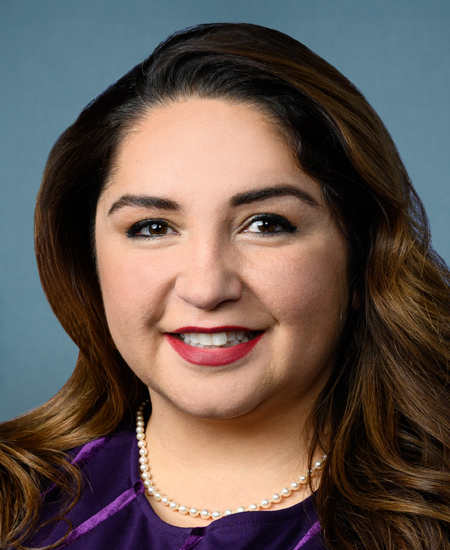
Rep. Delia C. Ramirez
Sponsored bills
Maddy summaryHR 2904, the Anti-Racism in Public Health Act of 2023, establishes a National Center on Antiracism and Health within the CDC. The center will declare racism a public health crisis, conduct research on how structural racism affects health outcomes, and develop data systems to track health disparities across race, ethnicity, gender, and other factors. It will fund regional centers in minority communities, create public health interventions, and require CDC to report annually on antiracist efforts. This bill directly affects public health agencies, researchers, and communities of color by mandating systemic analysis of racial inequities in healthcare and public health policy.
Maddy summaryThe Kids PRIVACY Act strengthens privacy protections for children under 13 and teenagers aged 12-18 online. It requires digital services that collect data from these age groups to obtain verifiable consent, limit data collection to what's necessary, and prevent targeted advertising based on their information. The bill establishes new requirements for transparency (including clear privacy policies), data minimization, security measures, and privacy impact assessments. It also creates a dedicated Youth Privacy and Marketing Division at the Federal Trade Commission to enforce these rules and repeals existing safe harbor provisions that previously protected operators from liability.
Maddy summaryThis bill requires the Pentagon to obtain a clean audit of its finances. If the Department of Defense fails to get an unqualified audit (a "clean" opinion) for a department or agency, it triggers automatic spending cuts: 0.5% in the first year of failure and 1.0% in subsequent years. These cuts apply broadly across programs but exclude military personnel, National Guard, reserve forces, and the Defense Health Program. The President may temporarily waive cuts for national security reasons, but must justify the waiver to Congress. The goal is to link defense spending to financial accountability, using existing audit standards.
Maddy summaryThe Election Mail Act (HR 2987) establishes new requirements for handling mail-in ballots in federal elections to improve reliability and accessibility. It requires the Postal Service to process absentee ballots on the same day received, place postmarks indicating mailing dates on ballot envelopes, and treat election mail as first-class mail with free postage for completed ballots. The bill also mandates states to use intelligent mail barcodes on return envelopes, affix specific tags for ballot visibility, and adopt a uniform 7-day deadline for accepting mailed ballots postmarked on or before election day. These changes apply to federal elections, with most provisions taking effect for the 2024 election cycle. The bill includes additional provisions for the Postal Service to consult with Indian Tribes about voting barriers on tribal lands.
Maddy summaryThe RAP Act of 2023 (HR 2952) would prevent prosecutors and plaintiffs from using a defendant’s creative or artistic works - such as poems, songs, art, or films - as evidence in court, unless specific exceptions apply. It requires the government to prove by clear evidence that the work was meant literally (not figuratively), directly relates to the specific facts of the case, is relevant to disputed facts, and has unique value beyond other evidence. If admitted, courts must redact the work to limit its presentation and provide jury instructions about its restricted use. This bill directly affects defendants in both criminal and civil cases who create artistic expression, aiming to protect their creative works from being misused in legal proceedings.
Maddy summaryHR 2974 establishes the United States Interagency Council on Housing Affordability and Preservation, a new federal body composed of heads from 21 agencies (including HUD, Treasury, and Justice) to coordinate efforts on affordable housing. The Council’s key duties include developing a national strategic plan for affordable housing within 12 months, reviewing federal housing programs, providing regional support to states and localities to access federal resources, and requiring annual agency reports on housing barriers. It mandates $4.8 million annually for operations (2024-2028) and encourages states to create their own housing councils to align with federal goals. The bill directly affects federal agencies, state/local governments, and low-income renters by improving coordination and access to housing programs, without directly changing housing subsidies or tenant protections.
Maddy summaryHR 2918, the Fair Housing for Survivors Act of 2023, amends the Fair Housing Act to explicitly protect survivors of domestic violence, sexual assault, and sex trafficking from housing discrimination. It adds "survivor of domestic violence, sexual assault, or severe forms of trafficking" as a protected class under the law, prohibiting landlords and housing providers from refusing to rent, evicting, or charging more based on this status. The bill also clarifies that discrimination based on survivor status - including denial of housing due to protective orders, shelter stays, or prior incidents - is illegal. This directly affects survivors who face barriers like denied rentals, evictions, or higher costs when seeking safe housing, addressing documented discrimination reported by 67% of survivors in New York studies. The law preserves survivors' ability to pursue other discrimination claims under the Fair Housing Act.
Raise the Age Act of 2023 This bill establishes new restrictions on the sale or transfer of certain semiautomatic firearms to individuals under 21 years of age. Specifically, this bill makes it unlawful for a licensed gun dealer, importer, manufacturer, or collector to sell or deliver a semiautomatic center-fire rifle or semiautomatic center-fire shotgun that has (or has the capacity to accept) an ammunition feeding device with a capacity of more than five rounds to an individual who the licensee knows or has reasonable cause to believe is under age 21. The prohibition does not apply if the individual under age 21 is a full-time law enforcement officer or active-duty member of the Armed Forces. The bill also requires the Federal Bureau of Investigation to report on the operation of its public access line, including a description of information sharing protocols and recommendations for improving such protocols.
Maddy summaryHR 2915, the Farm Workforce Support Act of 2023, requires the Comptroller General to study the H-2A visa program and submit a report to specific congressional committees within two years. The report must examine how the program affects hiring (including impacts on domestic and guest workers), challenges in providing housing for guest workers, wage rate effects on employer recruitment, economic impacts of lost wages for guest worker families, and compliance with working condition guarantees. This bill does not create new policy but mandates a detailed analysis of the existing H-2A program's operations and impacts. The study will directly inform Congress on the program's current functioning and potential issues.