

IDEA Full Funding Act This bill provides permanent, mandatory funding for the grant program that assists states and outlying areas in providing special education and related services to children with disabilities.
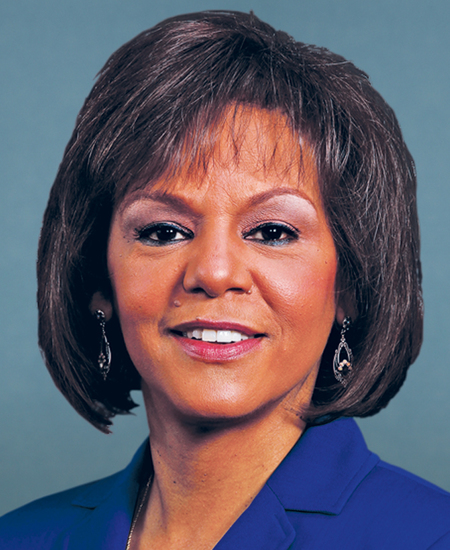
Rep. Robin L. Kelly
Sponsored bills
This resolution expresses support for the goals and values of the 53rd anniversary of the Fair Housing Act and for efforts to strengthen housing protections, particularly during the COVID-19 public health emergency.
Untraceable Firearms Act of 2021 This bill establishes a federal statutory framework to regulate the manufacture, sale, offer to sell, transfer, purchase, and receipt of ghost guns (i.e., guns without serial numbers). Additionally, the bill revises the federal statutory framework regulating the manufacture, possession, sale, import, shipment, delivery, receipt, and transfer of undetectable firearms. Among the revisions, the bill defines undetectable firearm as a firearm without a major component wholly made of detectable material.
Sgt. Isaac Woodard, Jr. and Sgt. Joseph H. Maddox GI Bill Restoration Act of 2021 This bill expands eligibility for Post-9/11 GI bill educational assistance benefits and the Department of Veterans Affairs (VA) home loan program. Specifically, the bill explicitly includes the following persons as eligible veterans: Black veterans who served on active duty during World War II who can certify they were denied a specific benefit on the basis of race; and the living surviving spouses, children, grandchildren, or other direct descendants of such veterans described above who can certify the veteran was denied a specific benefit on the basis of race. Such veterans described above must apply for educational or home loan benefits within the five-year period after the passage of this bill to be eligible for benefits. The Government Accountability Office must report on the number of individuals who received educational or housing loan benefits and the total value of such benefits administered by the VA due to the amendments made by the bill. Finally, the VA must appoint a panel of independent experts to develop recommendations regarding additional benefits and assistance for female and minority members of the Armed Forces.
This resolution expresses that the House of Representatives applauds the Biden administration for reaffirming the U.S. commitment to the Paris Agreement on climate change and to our collective responsibility to globally combat climate change; encourages the Biden administration to implement measures to ensure global climate change remains a top priority for this and future administrations and to cement the United States as a global leader in the fight to mitigate its most severe consequences; voices strong commitment as legislators toward achieving the climate goals of the Paris Agreement, fulfilling the forthcoming pledges from the COP26 in Glasgow, Scotland, and advancing other international efforts to keep global warming to no more than 1.5 degrees Celsius and realize global net-zero carbon emissions by 2050 using a whole-of-government approach; and recognizes the critical responsibility of the United States and other developed nations to ensure all societies have the capabilities to transition to a clean energy economy, the resources to protect against climate-induced disasters, and the necessary assistance to endure climate-related challenges to food security, regional migration, and public health.
Brycen Gray and Ben Price COVID-19 Neurological Impact Act This bill authorizes grants and requires other activities to address neurological and psychiatric illnesses associated with COVID-19 infection. Specifically, the National Science Foundation may award competitive grants for multidisciplinary research on such illnesses. In addition, the White House Office of Science and Technology Policy must establish a temporary interagency working group to coordinate relevant federal programs, data collection, and other activities focused on neurological and psychiatric illnesses associated with COVID-19 infection. The working group must also engage with researchers and nonfederal stakeholders to ensure the sharing and dissemination of relevant research, information, and best practices pertaining to those illnesses. The working group terminates after five years.
Access to Breast Cancer Diagnosis Act of 20 21 This bill prohibits private health insurance plans from imposing higher cost-sharing requirements on breast cancer diagnostic examinations than initial breast cancer screening examinations. Diagnostic examinations are generally required after an initial screening detects an abnormality and typically require additional mammogram images (e.g., x-rays).
Social Security 2100: A Sacred Trust This bill makes changes to Social Security benefits, taxes, and other aspects of the program, including by raising the primary insurance amount, increasing the maximum taxable earnings that are subject to Social Security payroll taxes, and requiring Social Security account statements to be mailed unless the individual recipient opts for electronic delivery.
Family Violence Prevention and Services Improvement Act of 20 21 This bill modifies, expands, and reauthorizes through FY2026 the Family Violence and Prevention Services program, which funds emergency shelters and supports related assistance for victims of domestic violence. Specifically, the bill requires the Department of Health and Human Services (HHS) to award grants and enter cooperative agreements with state and tribal domestic violence coalitions, and community-based organizations, to support prevention services. Depending on the type of organization, grant recipients must use funding to (1) provide technical assistance; (2) promote evidence-informed prevention strategies; (3) implement coordinated, community responses to reduce risk factors for family violence; and (4) develop prevention partnership strategies. Further, HHS must award specified grants to organizations that provide population-specific services in underserved communities and to community-based organizations that provide culturally specific domestic violence services to racial and ethnic minority groups. The bill also establishes a grants program for tribal domestic violence coalitions to support the provision of local, tribal, family domestic or dating violence services and requires HHS to award a grant for the administration of a hotline dedicated to serving Indians affected by domestic violence. In addition, the bill modifies certain program-wide definitions; changes the requirements for specified grant applications, eligibility criteria, and use of funds; and makes other technical revisions.
Public Service Freedom to Negotiate Act of 20 21 This bill provides minimum collective bargaining rights and procedures for public employees and prohibits strikes by certain public safety workers. The Federal Labor Relations Authority (FLRA) shall determine for each state whether the laws of such state substantially provide for each of the minimum standard collective bargaining rights and procedures specified by this bill, including the right of public employees and supervisory employees to self-organize, form or join a labor organization, or collectively bargain. The FLRA must issue rules and take actions to establish and administer bargaining rights and procedures for those states that do not substantially provide for them. No employers, emergency services employees, or law enforcement officers may engage in a lockout, strike, or any other organized job action that is likely to result in a measurable disruption of the delivery of emergency or public safety services. Furthermore, no labor organization may be the cause of a violation of such prohibition.