

Maddy summaryHRES 1381 is a symbolic resolution that commemorates the United States Olympic and Paralympic Teams' historical achievements, including over 5,300 total medals across past Games. It expresses congressional support for U.S. athletes competing in the 2024 Summer Olympics and Paralympics in Paris, France, and commends the Government of France for hosting the events. The resolution also commits to ensuring a safe environment for the 2028 Los Angeles Olympic and Paralympic Games. As a non-binding expression of support, it does not create new laws or allocate funds.
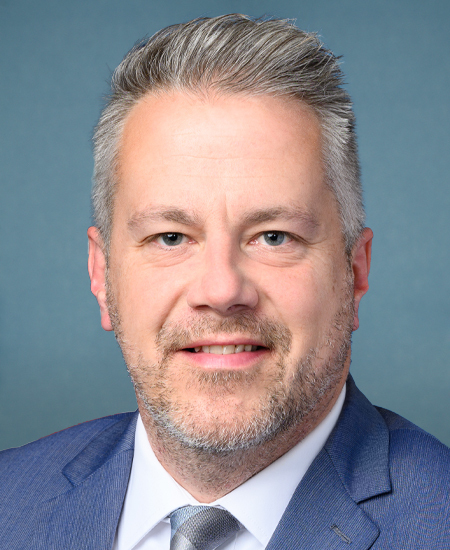
Rep. Eric Sorensen
Sponsored bills
Maddy summaryThe Railroad Safety Enhancement Act of 2024 establishes new safety requirements for high-hazard trains carrying hazardous materials, including speed limits of 50 mph (40 mph in urban areas) for trains with 20 or more flammable liquid tank cars. The bill requires rail carriers to provide real-time electronic train consist information to emergency responders and State emergency commissions, including details about hazardous materials being transported, routes, and emergency response contacts. It mandates railroads to develop and regularly update hazardous materials emergency response plans, with triennial reviews by the Federal Railroad Administration. The act also phases out older tank cars by December 2027, requiring all tank cars to meet DOT-117 specifications for flammable liquids, and increases civil penalties for rail safety violations up to $5 million.
Maddy summaryHRES 1355 is a non-binding resolution supporting the designation of July 10 as Journeyman Lineworkers Recognition Day. It honors lineworkers who maintain electrical infrastructure under hazardous conditions, including during disasters, and commemorates Henry Miller, the first president of the International Brotherhood of Electrical Workers, who died on July 10, 1896, while troubleshooting an electrical outage. The resolution encourages public recognition of these workers' contributions but does not create new laws or policies.
Maddy summaryHRES 1349 is a symbolic House resolution recognizing the success of the Food for Peace Act, which provides U.S. humanitarian food aid to global populations facing hunger. It does not create new policy or funding but formally acknowledges the program’s impact - such as reaching 53 million people with emergency aid in 2022 - and highlights global hunger statistics (e.g., 783 million people hungry in 2022). The resolution urges continued U.S. funding prioritization for the program but has no binding effect or direct policy changes. It directly affects no new groups, as it solely expresses congressional support for an existing aid program.
Maddy summaryHR 8992, the Stop Fentanyl at the Border Act, allocates $5.8 billion in federal funding to enhance border security efforts focused on intercepting fentanyl and other illegal drugs. The bill provides $3.4 billion for U.S. Customs and Border Protection (CBP) staffing, including hiring bonuses, mental health support, and processing coordinators, and $1.09 billion for advanced scanning technology and drug interdiction capabilities at land borders. Additional funds target disrupting fentanyl trafficking networks ($223 million for ICE), outbound firearm/currency inspections ($285 million), and law enforcement coordination (DEA, DOJ, U.S. Marshals). These provisions directly affect CBP officers, ICE agents, and border ports of entry by expanding personnel, technology, and interdiction strategies. The bill requires annual reports to Congress on the effectiveness of new staffing, scanning systems, and outbound inspection programs.
Maddy summaryHRES 1337 is a ceremonial resolution commemorating the July 4, 2022, Highland Park, Illinois, Independence Day Parade shooting. It honors the seven victims (Katie Goldstein, Irina McCarthy, Kevin McCarthy, Stephen Strauss, Jacquelyn Sundheim, Nicolas Toledo-Zaragoza, and Eduardo Uvaldo) and over 40 wounded survivors, while acknowledging the community's healing two years post-tragedy. The resolution expresses the House's solidarity with Highland Park residents, first responders, and healthcare providers who aided victims. It does not enact new laws or policies but serves as a symbolic tribute to the victims and survivors. This is a procedural resolution with no concrete policy changes, solely focused on remembrance and support.
Maddy summaryThis bill expands Post-9/11 GI Bill benefits to National Guard members who perform specific full-time duty. It amends eligibility rules to include service on "full-time National Guard duty" (as defined in Title 32) and "active duty" (as defined in Title 32), which previously did not count toward full benefits. The change applies retroactively to service since September 11, 2001, and takes effect one year after enactment. This directly affects National Guard members serving in these specific full-time roles, granting them parity with other veterans for educational benefits.
Maddy summaryThis bill amends the Occupational Safety and Health Act to explicitly include public employees - such as those working for federal, state, or local government agencies - under OSHA's coverage. It changes the definition of "employee" to specify that public sector workers are protected, removing previous exclusions. The law takes effect 90 days after enactment for most workplaces, but gives states and local governments without OSHA-approved plans up to 36 months to comply. This directly affects public service workers in government roles by bringing their workplace safety protections under the same federal OSHA framework as private-sector employees.
Maddy summaryThis bill amends federal jury selection laws to explicitly prohibit discrimination based on sexual orientation and gender identity. It updates definitions in Title 28 of the U.S. Code by adding "sexual orientation and gender identity" to the protected characteristics under "sex" and defining key terms like "gender identity" and "sexual orientation." The changes directly affect federal jury pools by requiring courts to consider these factors when selecting jurors and preventing discrimination in the process. The law clarifies that discrimination based on these characteristics - including associations with others who share them - is prohibited during jury selection. This is a concrete policy change to expand anti-discrimination protections in federal jury service.
Maddy summaryHR 5012 (SHINE for Autumn Act of 2023) authorizes federal funding to improve stillbirth research and data collection. It provides $5 million annually for states to collect standardized stillbirth data (including risk factors) while protecting privacy, $1 million annually for developing public educational materials and data collection guidelines, and $3 million annually for medical fellowships training pathologists in perinatal autopsy and stillbirth research. The bill directly affects state health departments, medical professionals (like obstetricians and pathologists), and families who experience stillbirth by improving data quality for future research. It requires federal reports on guidelines and program effectiveness within five years but does not provide direct medical care or financial assistance to families.