Public Service Retirement Fairness Act of 2021 This bill expands the ability of 403(b) retirement plans (i.e., retirement plans designed for certain employees of public schools, nonprofits, and churches) to invest in collective investment trusts, which are a group of pooled investment assets held by a bank or trust company.
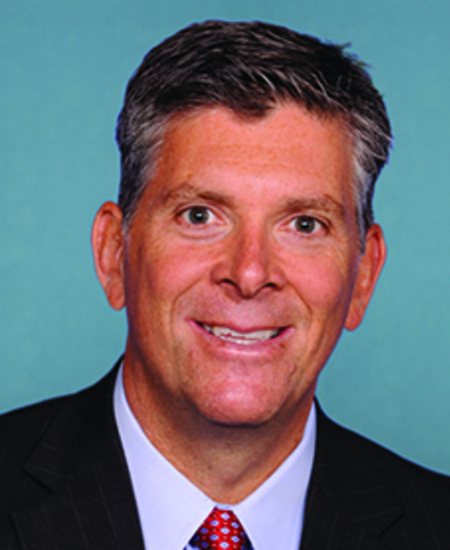
Rep. Darin LaHood
Sponsored bills
Modernizing Agricultural and Manufacturing Bonds Act This bill modifies provisions relating to qualified small issue bonds for manufacturing purposes by expanding the definition of manufacturing facility to include a facility that (1) is used in the creation or production of intangible property; or (2) is functionally related, subordinate to, and located on the same site as a facility used in the manufacturing or production of tangible or intangible personal property. The bill also increases from $10 million to $50 million the maximum bond size limitation. The bill modifies requirements for private activity bond financing for first-time farmers. The modified provisions (1) increase from $450,000 to $552,500 (adjusted annually for inflation) the amount of bond proceeds that may be used by a first-time farmer to acquire land for farming purposes, (2) repeal the separate dollar limitation on the use of bond proceeds for used farm equipment, and (3) revise the definition of substantial farmland to determine farm size by reference to the average (instead of median) size of a farm in the county in which the farm is located.
This resolution expresses the sense of the House of Representatives that (1) clean water is a national priority, and (2) the 2020 final rule titled The Navigable Waters Protection Rule: Definition of "Waters of the United States" should not be withdrawn or vacated.
Affordable Housing Credit Improvement Act of 2021 This bill revises provisions of the low-income housing tax credit and renames it as the affordable housing credit . The bill increases the per capita dollar amount of the credit and its minimum ceiling amount beginning in 2021 and extends the inflation adjustment for such amounts. The bill modifies tenant income eligibility requirements and the average income formula for determining such income. It also revises rules for student occupancy of rental units and tenant voucher payments, and prohibits any refusal to rent to victims of domestic abuse. The bill further modifies the credit to increase state allocations of the credit; repeal the qualified census tract population cap; prohibit local approval and contribution requirements; increase the credit for certain projects designated to serve extremely low-income households; increase the credit for certain bond-financed projects designated by state agencies; eliminate the basis reduction for properties that receive certain energy-related tax benefits; and increase the population cap for difficult development areas (i.e., areas with high construction, land, and utility costs relative to area median gross income). The bill also includes Indian and rural areas as difficult development areas and modifies other requirements relating to casualty losses, acquisition credits, and foreclosures.
Accelerate Long-term Investment Growth Now Act or the ALIGN Act This bill makes permanent the expensing of certain new business equipment. Expensing allows the deduction of the full amount of an expense item in the same taxable year.
Comprehensive Care for Alzheimer's Act This bill allows the Center for Medicare and Medicaid Innovation (CMMI) to test a Dementia Care Management Model that provides comprehensive care to Medicare beneficiaries with Alzheimer's disease or a related dementia. Under the model, participating health care providers receive payment under Medicare for comprehensive care management services that are provided to individuals with diagnosed dementia, excluding Medicare Advantage enrollees, hospice care recipients, and nursing home residents. Required services include medication management, care coordination, and health, financial, and environmental monitoring, as well as trainings and other support services for unpaid caregivers. Providers must furnish services through interdisciplinary teams and must ensure access to a team member or primary care provider 24-7. The CMMI must set payments and determine quality measures for the model in accordance with specified requirements. The bill also allows the CMMI to design a similar model under Medicaid.

This resolution condemns Iranian state-sponsored terrorist attacks against U.S. citizens and officials and Iranian dissidents and expresses support for the people of Iran who are engaged in legitimate and peaceful protests against the Iranian regime.
This resolution urges the Department of State to take action on unpaid Peruvian agrarian reform bonds by encouraging Peru to negotiate in good faith with U.S. bondholders regarding payment of these bonds.
Historic Tax Credit Growth and Opportunity Act of 2021 This bill increases the rehabilitation tax credit and modifies certain requirements for the credit. The bill increases the rate of the credit for qualified rehabilitation expenditures in taxable years beginning after December 31, 2019, and before January 1, 2027, after which the rate reverts to 20%. The bill increases the rate of the credit to 30% for certain small projects whose qualified rehabilitation expenditures do not exceed $2.5 million. The bill also expands the types of buildings eligible for rehabilitation by decreasing the rehabilitation threshold from 100% to 50% of project expenses. It also eliminates the basis adjustment requirement for the credit and modifies rules relating to tax-exempt use property eligible for the credit.
Springfield Race Riot National Historic Monument Act This bill establishes the Springfield Race Riot National Historic Monument in Illinois as a unit of the National Park System to preserve, protect, and interpret the resources associated with the Springfield Race Riot of 1908 and its role in the forming of the National Association for the Advancement of Colored People.