

Next Generation Fuels Act of 2021 This bill supports the use of biofuels (e.g., gasoline blended with ethanol) in vehicles, including by establishing a minimum octane standard for gasoline as well as making related biofuel requirements for vehicles, their fuels, and fuel infrastructure.
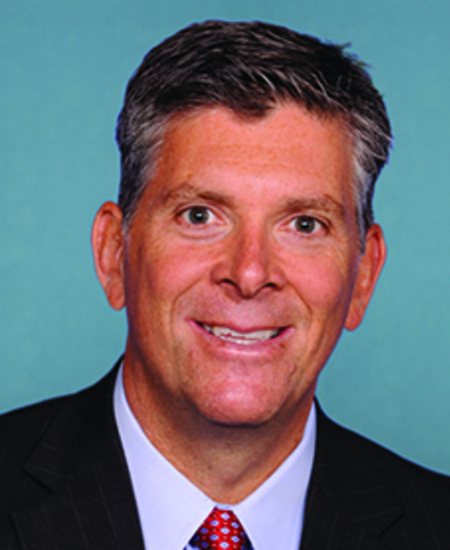
Rep. Darin LaHood
Sponsored bills
Harlem Hellfighters Congressional Gold Medal Act This bill provides for the award of a Congressional Gold Medal to the 369th Infantry Regiment, commonly known as the Harlem Hellfighters, in recognition of their bravery and outstanding service during World War I.
Puppies Assisting Wounded Servicemembers for Veterans Therapy Act or the PAWS for Veterans Therapy Act This bill implements a program and a policy related to service dog therapy for veterans. Specifically, the bill requires the Department of Veterans Affairs (VA) to implement a five-year pilot program to provide canine training to eligible veterans diagnosed with post-traumatic stress disorder as an element of a complementary and integrative health program. Eligible veterans are those who are enrolled in the VA health care system and have been recommended for participation by a qualified mental health care provider or clinical team. The VA must seek to enter agreements containing specified elements with accredited nongovernmental entities that have demonstrated ability to provide canine training. Veterans who participate in the program are authorized to adopt the dog they assisted in training if their health provider determines it is in the best interest of the veteran. The VA must establish processes to document and track the progress of participating veterans with respect to health benefits and improvements. The Government Accountability Office must brief Congress and submit a report on the program. The bill also authorizes the VA to provide service dogs to veterans with mental illnesses, regardless of whether they have a mobility impairment.
Keep Physicians Serving Patients Act of 2021 This bill requires the Centers for Medicare & Medicaid Services to use specified data regarding physician wages and office rent when determining certain geographic adjustment factors for the payment of physician services under Medicare. With respect to such payment, the bill also makes permanent certain minimum adjustments to the work geographic index and extends to all localities certain minimum adjustments to the practice expense index.
Promoting Access to Diabetic Shoes Act This bill allows a nurse practitioner or physician assistant to fulfill documentation requirements for coverage, under Medicare, of special shoes for diabetic individuals. Under current law, such requirements may be satisfied only by a physician.
Don't Weaponize the IRS Act This bill codifies regulations promulgated by the Trump Administration exempting certain tax-exempt organizations from specified reporting requirements. Specifically the bill increases from $5,000 to $50,000 the gross receipts threshold used to determine the eligibility of tax-exempt organizations for the exemption from certain disclosure and reporting requirements; expands the definition of organization to include tax-exempt charitable organizations and organizations with no significant activities relating to lobbying, political activity, and the operation of a trade or business; exempts from disclosure the names and addresses of contributors to an organization in its annual informational return; and extends exemptions from reporting requirements to political action committees (i.e., 527 organizations).
Alexander Lofgren Veterans in Parks (VIP) Act This bill makes the America the Beautiful-National Parks and Federal Recreational Lands Pass available, without charge, to members of the Armed Forces, veterans, and Gold Star Families. The pass covers the entrance fee and standard amenity recreation fee for all federal recreational lands and waters.
This resolution denounces socialism and opposes the implementation of socialist policies in the United States.
Value in Health Care Act of 2021 This bill makes a series of changes to certain methodologies and components used in the Medicare Shared Savings Program. The program enables accountable care organizations (ACOs) to receive payments for savings stemming from care coordination and management. Among other changes, the bill requires the Centers for Medicare & Medicaid Services to increase the shared savings rate for participating ACOs, as specified, and to establish a program that assists ACOs with start-up and operational costs of participation. The bill also extends certain incentive payments for health professionals who participate in eligible alternative payment models. The Government Accountability Office must report on health outcomes and racial disparities among beneficiaries who receive care from providers under alternative payment models compared to beneficiaries who receive care from providers under the traditional fee-for-service system.
Jobs and Opportunity with Benefits and Services for Success Act This bill renames the Temporary Assistance for Needy Families (TANF) program as the Jobs and Opportunity with Benefits and Services (JOBS) program, reauthorizes the program through FY2027, and makes changes relating to work requirements for beneficiaries. States providing aid under the program shall create an individual opportunity plan for each beneficiary. States shall impose work requirements on all work-eligible beneficiaries and shall reduce benefits for noncompliance. (Currently, individual plans are optional under TANF, and states have discretion as to whether to reduce benefits for noncompliant individuals.) States providing aid shall meet annual performance targets related to the number of beneficiaries who exit the program and find unsubsidized employment. The Department of Health and Human Services (HHS) shall reduce grants to states that fail to meet such targets. States shall provide data related to beneficiary employment and wages to HHS, which shall be publicly available. The bill modifies certain limitations that restrict the use of funds for case management and other purposes and requires states to spend at least 25% of funds from various grants on core activities. Certain existing laws relating to monitoring and recovering improper benefits payments shall apply to the JOBS program. The bill eliminates programs providing (1) supplemental grants for population increases, (2) bonuses for high performance states, (3) welfare-to-work grants, and (4) contingency funds for state welfare programs.