

Maddy summaryHR 4338 formally designates the historic Route 66 as a National Historic Trail under the National Trails System Act, covering approximately 2,400 miles from Chicago, Illinois, to Santa Monica, California, along its original alignments between 1926 and 1985. The bill specifies that the National Park Service will administer the trail while prohibiting the federal government from acquiring land beyond one-quarter mile on either side of the trail or creating buffer zones, and explicitly states it will not interfere with energy development or use eminent domain. This designation primarily affects the public by recognizing Route 66's historical significance and landowners along the route by limiting federal land acquisition and management restrictions. It is a procedural act focused on formal recognition, not new regulatory requirements.
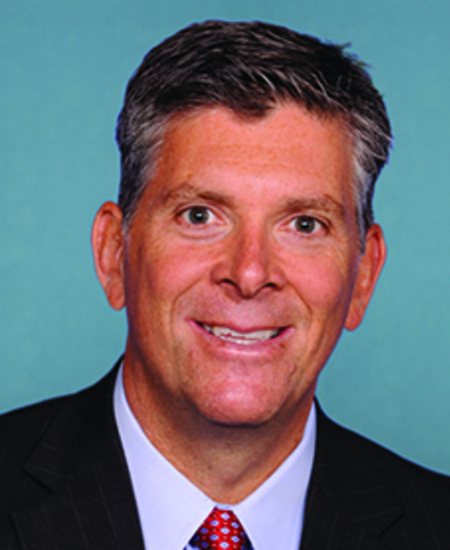
Rep. Darin LaHood
Sponsored bills
Maddy summaryThis bill modifies federal regulations for commercial driver's license (CDL) testing. It requires the Transportation Secretary to update two rules within 90 days: first, to set new standards for examiners (requiring valid certification, specific training, and instruction units); second, to allow any state to administer skills tests to CDL applicants regardless of where the applicant lives or received training. The bill directly affects CDL applicants, states administering tests, and third-party examiners. Key changes simplify examiner qualifications and remove geographic restrictions on skills testing locations.
Maddy summaryThis bill establishes a commission to study whether the Weitzman National Museum of American Jewish History in Philadelphia should be transferred to the Smithsonian Institution. The commission, composed of 8 members appointed by congressional leaders with expertise in Jewish American history and museum administration, will examine the museum's collections, financial status, governance, and feasibility of transfer within two years. The commission must submit a report detailing findings, a fundraising plan, and legislative recommendations for any potential transfer. The bill does not transfer the museum but creates a process to evaluate the possibility.
Maddy summaryHR 7438 directs the U.S. Treasury to mint commemorative coins for the 2026 FIFA World Cup, including 100,000 $5 gold coins, 500,000 $1 silver coins, and 750,000 half-dollar coins. The coins will be sold to the public at face value plus surcharges ($35, $10, and $5 per coin, respectively), with all surcharge revenue paid to FWC2026 US, Inc. for U.S. soccer programs. These funds must support soccer initiatives, particularly in underserved communities and youth development, as specified in the bill. The coins are legal tender but will only be issued during 2026, with no net cost to the U.S. government.
Maddy summaryThis bill reinstates a pre-American Rescue Plan Act (ARP) tax reporting rule for gig economy platforms. It requires third-party payment platforms (like Uber or DoorDash) to report transactions to the IRS only if a gig worker earns over $20,000 in total or completes more than 200 transactions in a year. This directly affects gig workers whose income falls below these thresholds, exempting them from the reporting requirement. The provision effectively reverses a change made by the ARP, reducing administrative burden for both platforms and lower-earning gig workers. The bill amends IRS Code Section 6050W to restore these specific de minimis payment thresholds.
Maddy summaryHR 9151 establishes a new Department of Justice task force within 120 days to investigate and prosecute international trade crimes like tariff evasion, smuggling, and trade-based money laundering. The task force will hire specialized prosecutors, coordinate with U.S. Customs and Border Protection and Homeland Security, and focus on violations under specific U.S. Code sections including smuggling (18 U.S.C. 545) and fraud (18 U.S.C. 1001). It authorizes $20 million for fiscal year 2025, with 80% dedicated to criminal prosecutions, and requires annual congressional reports detailing case statistics, funding use, and future needs. The bill directly affects importers/exporters engaging in trade violations and DOJ agencies handling cross-border enforcement.
Maddy summaryHR 5861, the BRIDGE for Workers Act, requires that all individuals receiving unemployment benefits automatically receive reemployment services (such as job training and career counseling) and eligibility assessments. This change expands existing services by removing prior restrictions, ensuring every unemployment claimant - rather than only those previously referred - accesses these supports. The bill amends Section 306(a) of the Social Security Act to update eligibility language, directly affecting unemployed workers filing for regular unemployment compensation. It takes effect upon enactment (November 25, 2024), aiming to streamline access to job assistance for all eligible claimants.
Maddy summaryThe Working Dog Commemorative Coin Act (HR 807) directs the U.S. Treasury to mint three types of commemorative coins honoring working dogs' service: $5 gold coins, $1 silver coins, and half-dollar coins with specific weight and composition requirements. Each coin will carry a surcharge ($35 for $5 coins, $10 for $1 coins, $5 for half-dollars) that will be paid directly to America's VetDogs to support their programs providing service dogs for veterans, the disabled, and others. The coins will be issued in 2027 with designs reflecting working dogs' roles in military, detection, therapy, and assistance work. The legislation specifies that all surcharge revenue must fund America's VetDogs' operations without creating new government programs. This is a commemorative measure focused on honoring working dogs' contributions through coin sales, with all surcharge funds going to a specific nonprofit organization.
Maddy summaryThis bill renames a specific U.S. Postal Service facility in Rockford, Illinois, to honor Jay P. Larson. The building at 5225 Harrison Avenue will officially be called the "Jay P. Larson Post Office Building." All government documents, maps, and records referencing the location will automatically update to use the new name. This is a purely administrative designation with no policy changes or direct impact on citizens or services.
Maddy summaryThis resolution (HRES 554) affirms U.S. policy support for religious and ethnic minority survivors of ISIS genocide in Iraq, including Yezidis, Assyrians, Chaldeans, and others. It calls for U.S. policy to prioritize the safe return of displaced communities to ancestral areas like Sinjar and the Nineveh Plain, restoration of destroyed religious sites and homes, and economic revitalization of these regions. The resolution urges the Iraqi government and international donors to allocate specific funding for these efforts and ensure minority representation in decision-making, referencing Iraq's Constitution on minority rights. As a non-binding resolution, it does not create new laws but formally states U.S. policy direction on this issue.