

Maddy summaryHR 2423, the Unfair Tax Prevention Act, amends the U.S. tax code to modify how the base erosion tax applies to certain foreign-owned businesses. It directly affects foreign-controlled entities operating under specific foreign tax systems that impose taxes based on ownership chains, such as those linked to foreign corporations. Key provisions include treating these entities as "applicable taxpayers" for tax purposes, changing a deadline from December 31, 2025, to the bill's enactment date, and counting 50% of their cost of goods sold as a tax benefit while excluding certain other tax rules. The changes apply to taxable years beginning after the bill becomes law.
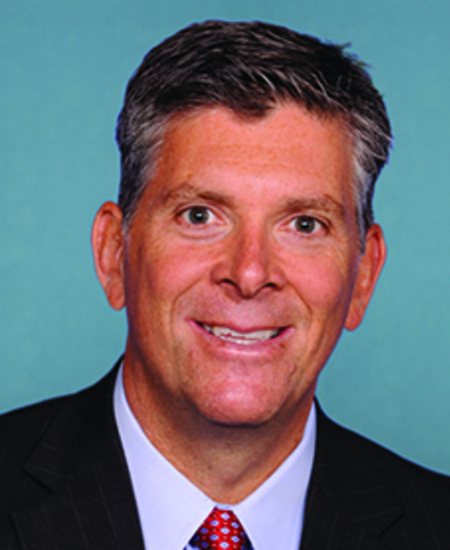
Rep. Darin LaHood
Sponsored bills
Maddy summaryHR 2165, the Choice in Automobile Retail Sales Act of 2025, amends the Clean Air Act to prevent the Environmental Protection Agency (EPA) from writing future tailpipe emissions regulations that mandate specific vehicle technologies (like electric or hydrogen systems) or limit the availability of new vehicles based on engine type (e.g., gasoline vs. electric). The bill requires the EPA to update its regulations within 24 months to ensure new rules comply with these restrictions. This directly affects the EPA’s regulatory authority and automakers, as it limits how emissions standards can be structured. The law aims to preserve consumer choice in vehicle types by preventing regulations from favoring one engine technology over others.
Maddy summaryHR 2381, the SCREENS for Cancer Act of 2025, reauthorizes and updates the National Breast and Cervical Cancer Early Detection Program (NBCCEDP). It directly affects low-income, uninsured, or underinsured women across all 50 states, territories, and tribal communities by expanding access to breast and cervical cancer screenings, diagnostic services, and patient navigation support. Key provisions include updating program language to emphasize prevention alongside detection and control, adding specific strategies to reduce disparities, and appropriating $235 million annually for fiscal years 2026-2030. The bill also requires a GAO study by 2027 to assess program eligibility, service trends, and barriers to screening access.
Maddy summaryThis resolution (HRES 247) is a symbolic gesture expressing the House's support for designating March 23-29, 2025, as "National Cleaning Week." It recognizes the cleaning industry's role in maintaining health and safety through routine cleaning, referencing CDC guidance and ISSA data on reducing virus transmission. The resolution does not create new laws, funding, or obligations - it solely honors frontline cleaning professionals who work in schools, hospitals, and workplaces. As a procedural resolution, it has no direct effect on policy or affected parties beyond raising awareness.
Maddy summaryHR 2246, the Foreign Investment Guardrails to Help Thwart (FIGHT) China Act, restricts U.S. investments in Chinese companies involved in sensitive national security technologies by prohibiting certain transactions and requiring notifications. The bill targets U.S. persons (individuals and businesses) making investments in "covered foreign persons" (those connected to China's military, surveillance, or defense sectors) in specific "prohibited technologies" including advanced semiconductors, artificial intelligence, quantum computing, and hypersonic systems. It creates a public database of covered entities, mandates divestment from securities of companies on the Non-SDN Chinese Military-Industrial Complex Companies List after a 365-day period, and requires notifications for certain transactions. The law applies specifically to China as the "country of concern," with Hong Kong and Macau included in the definition.
Maddy summaryHRES 230 is a non-binding resolution expressing Congress's sense that the U.S. Congress and administration must urgently collaborate on food and agricultural trade policies. It directly affects U.S. farmers, ranchers, and the $9.6 trillion agricultural sector, which supports millions of jobs and generates significant exports. The resolution calls for concrete actions including securing new market access, enforcing trade agreements, eliminating unjustified trade barriers (like tariffs and nontariff restrictions), and using science-based approaches to strengthen global trade. It emphasizes addressing a 9% decline in 2023 agricultural exports and a projected $37 billion trade deficit, contrasting with historical trade surpluses.
Maddy summaryThis bill authorizes $5 million annually (2026-2031) for the CDC to establish a research program focused on cerebral palsy. It directs the CDC to study diagnosis, treatment, prevention factors, health costs, and public health surveillance related to cerebral palsy, including evaluating impacts across different populations. The program aims to address gaps in understanding the condition - where 80% of causes are unknown - and support better care for the estimated 1 million Americans affected. This research funding directly benefits the CDC and researchers, with potential long-term benefits for people with cerebral palsy and their families.
Maddy summaryThe Innovative FEED Act of 2025 establishes a new regulatory category for "zootechnical animal food substances" - additives in animal feed that affect digestive byproducts, reduce foodborne pathogens, or alter an animal's gut microbiome without providing nutrition. These substances would be regulated as food additives (not drugs) under the Federal Food, Drug, and Cosmetic Act, requiring manufacturers to submit specific safety and efficacy data for approval. The bill mandates labeling stating "Not for use in the diagnosis, cure, mitigation, treatment, or prevention of disease in animals" and allows optional claims about intended effects on animal body function. It explicitly excludes existing drugs, hormones, ionophores, and other substances from this category, ensuring no mandatory use of these additives.
Maddy summaryThis bill (HR 2199) prevents private health insurance plans from discriminating against patients with end-stage kidney disease (ESRD) who require dialysis. It amends the Social Security Act to prohibit plans from treating dialysis coverage differently than other medical services or applying network restrictions that disproportionately harm ESRD patients. The law clarifies that plans cannot deny or limit benefits for dialysis based on a patient’s diagnosis, while preserving a plan’s right to choose which dialysis providers are in their network. It directly affects ESRD patients and their private health insurance coverage, ensuring dialysis is treated equally with other covered medical services. The bill does not require plans to include specific dialysis providers but stops them from unfairly restricting access to necessary care.
Maddy summaryThis bill delays two Medicare billing deadlines for ground ambulance services from 2025 to 2028. It amends the Social Security Act to extend the timeline for implementing specific billing rules under Section 1834(l). The change directly affects Medicare ambulance providers by postponing compliance deadlines for billing requirements. No new services or funding are created - only a technical extension of existing timelines.