

Maddy summaryThis bill, titled the Safeguarding Women from Chemical Abortion Act, aims to revoke federal approval for the drug mifepristone (also known as RU-486) for use in terminating pregnancies. If enacted, the Food and Drug Administration's approval for mifepristone for this indication would be withdrawn within 14 days, making its introduction into interstate commerce for pregnancy termination a violation of federal law. Additionally, the bill establishes a new federal right for individuals to sue manufacturers of mifepristone if they experience bodily injury or harm to mental health attributed to its use for pregnancy termination. This legislation directly affects drug manufacturers, distributors, healthcare providers, and individuals seeking or having used medication abortion.
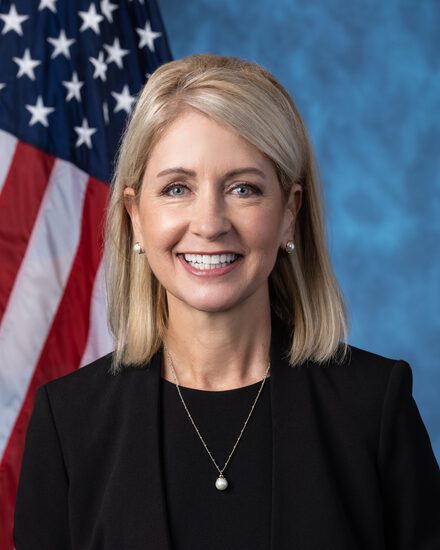
Rep. Mary E. Miller
Sponsored bills
Maddy summaryHR 7678, the Gun Owner Registration Information Protection Act, prohibits federal funding for state or local databases that track lawfully owned firearms or their owners. The bill allows federal funding for databases recording lost or stolen firearms but bans it for databases listing legal gun ownership. This means states cannot use federal money to create or maintain systems that compile information about legally owned guns. The bill directly affects state and local governments that rely on federal funds for firearm ownership databases.
Maddy summaryThe Stop Illegal Alien Cops Act amends federal law to modify exemptions for government entities regarding firearms. Currently, federal, state, and local government agencies are generally exempt from many federal prohibitions when acquiring or supplying firearms for official use. This bill would remove that exemption for specific prohibitions, making it unlawful for government entities to provide firearms to or employ individuals who are unlawfully in the United States. Additionally, the bill removes the
Law-Enforcement Innovate to De-Escalate Act This bill removes less-than-lethal projectile devices (e.g., certain TASERs) from regulation under the Gun Control Act. The term less-than-lethal projectile device means a device that (1) is not designed or intended to expel (and may not be readily converted to discharge) commonly used ammunition or projectiles exceeding a velocity of 500 feet per second; (2) is designed and intended to be used in a manner not likely to cause death or serious bodily injury; and (3) does not accept (and cannot be readily modified to accept) an ammunition feeding device. The bill also requires the Bureau of Alcohol, Tobacco, Firearms and Explosives to determine whether a device satisfies the definition of a less-than-lethal projectile device within 90 days of a request.
Maddy summaryHRES 1073 is a non-binding resolution designating February 21-28, 2026, as "National FFA Week" to recognize the National Future Farmers of America (FFA) Organization’s role in developing agricultural education leaders and to celebrate the 50th anniversary of Alaska’s State FFA Association. It does not create new laws or affect any specific groups or policies; instead, it formally expresses the House’s support for this commemorative week. The resolution highlights FFA’s mission to prepare students for leadership and careers in agriculture, food, and natural resources. As a symbolic gesture, it has no direct legislative or financial impact on constituents.
Maddy summaryThis bill is not a real legislative proposal but a widely circulated hoax. It falsely claims to prohibit federal funding for states that "prohibit dog ownership" while misrepresenting Sharia law as a threat to pet ownership - a claim with no basis in reality, as Sharia law does not regulate pet ownership and no U.S. jurisdiction prohibits dog ownership. The bill contains factual inaccuracies (e.g., falsely equating Sharia law with being "against the pursuit of happiness") and would be unconstitutional due to religious discrimination. It was never introduced in Congress and appears to be a satirical or misleading online post.
Maddy summaryHR 1320, the Modern Worker Security Act, changes how federal law determines if a worker is an employee or independent contractor. It prohibits considering whether a worker has access to "portable benefits" (like health insurance, retirement savings, or paid leave that they can keep after leaving a job) when making this classification. This directly affects workers who might currently be misclassified as independent contractors, denying them employee benefits. The key mechanism is removing portable benefits from the employee status determination process, aiming to ensure workers who perform regular work for an employer qualify for standard employee protections.
This bill specifies a legal standard for determining whether an individual is considered an independent contractor rather than an employee for the purposes of federal labor laws that address issues such as the federal minimum wage, overtime compensation, and collective bargaining. The rights and protections provided by these laws exclusively apply to employees. Under the bill, an individual is considered an independent contractor if (1) another individual or entity does not exercise significant control over the details of how the individual's work is performed, without regard to any control the other individual or entity may exercise over the final result of the work performed; and (2) while performing such work, the individual has opportunities and risks inherent with entrepreneurship (for example, the discretion to exercise professional judgment). The bill also sets forth factors that may not be used to determine whether an individual is an employee. Specifically, factors such as whether another individual or entity requires the individual to meet certain legal, health and safety, insurance, or performance requirements may not be used to make such a determination.
Protection of Women in Olympic and Amateur Sports Act This bill requires certified national governing bodies (NGBs) of amateur sports (e.g., USA Gymnastics) to prohibit a person whose sex is male from participating in an amateur athletic competition that is designated for females, women, or girls. Under the bill, male means an individual who has, had, will have—or would have, but for a developmental or genetic anomaly or historical accident—the reproductive system that at some point produces, transports, and utilizes sperm for fertilization.
Maddy summaryHR 7539, the SAFE Act, requires the Comptroller General to study "chameleon carriers" (motor carriers evading safety rules by changing names or ownership) and develop an automated tool for the Federal Motor Carrier Safety Administration (FMCSA) to detect such applicants during Department of Transportation (DOT) number registration. The bill mandates the tool to identify patterns like shared ownership, similar addresses, insurance lapses, or continuity of operations to flag suspicious applications. It directly affects motor carriers applying for DOT numbers and FMCSA staff, who must use the tool to review applications while preserving final decision-making authority. The law also requires an appeals process for denied applications, data privacy safeguards, and a two-year effectiveness report on the tool.