

Migrant Child Safety Act This bill requires actions relating to placing unaccompanied alien children with a sponsor, such as requiring the Department of Health and Human Services (HHS) to collect and share specified information about prospective sponsors. Before placing such a child with a prospective sponsor, HHS must gather and provide to the Department of Homeland Security (DHS) specified information about the prospective sponsor, including (1) proof of address for the residence where the child will be placed; (2) results of background checks for the sponsor and any adult household members, (3) the sponsor's immigration status, if known; and (4) any evidence to prove any claimed relationship between the child and the sponsor. HHS may not waive any part of this requirement. After receiving this information, if DHS determines that the sponsor is unlawfully present in the United States, the sponsor must be placed in removal proceedings. No later than 30 days after placing the child, HHS must also provide this information and any other relevant information to the appropriate state or local health or welfare agency. If HHS cannot contact the sponsor for a follow-up or well-being check during the 120 days after the child's placement, HHS must report the child as missing to the National Center for Missing and Exploited Children. HHS must attempt to contact the child's parents, to the extent practicable.
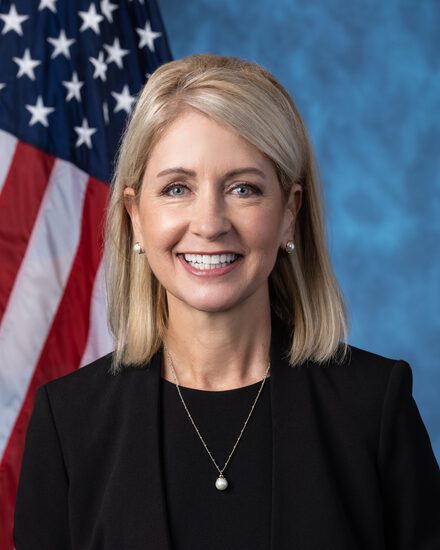
Rep. Mary E. Miller
Sponsored bills
Maddy summaryThis bill expands eligibility for business loans at credit unions to include veterans. It amends the Federal Credit Union Act to define "member business loan" as including loans made to veterans, using the standard definition of "veteran" from Title 38 of U.S. Code. Credit unions offering these loans will now be able to serve veteran business owners under the same terms as other qualifying borrowers. The policy change directly affects veterans seeking business financing and credit unions providing such loans.
Maddy summaryHR 4726 terminates the requirement that aliens (non-citizens) must be vaccinated against COVID-19 to obtain visas, adjust to permanent residency, or naturalize as U.S. citizens. The bill immediately ends this mandate upon enactment and prohibits federal funding for any administration or enforcement of the vaccination rule. It specifically targets requirements set by the CDC and DHS under existing public health laws. This change directly affects non-citizens applying for visas, green cards, or U.S. citizenship who previously faced this vaccination condition. The policy shift removes a specific health-related barrier from three key immigration processes.
Maddy summaryHR 4663, the Federal Mechanical Insulation Act, defines "mechanical insulation" (insulation around pipes and equipment in federal buildings) as an eligible energy efficiency measure. It requires federal agencies to include mechanical insulation in their required energy and water evaluations, specifically mandating that evaluations identify this insulation as a potential efficiency measure. The bill specifies that such insulation must meet minimum standards under Reference Standard 90.1 to qualify. This change directly affects federal building managers and contractors by formally recognizing mechanical insulation as a standard efficiency option in compliance with existing energy conservation laws.
Maddy summaryHR 4776, the Protecting Free Speech Act, ends a specific Department of Homeland Security (DHS) program called the Disinformation Governance Board and prevents federal funding for any similar entity. The bill directly affects DHS by terminating the board's operations and prohibiting the use of federal funds to create or support any replacement program with comparable functions. It does not create new free speech protections but formally removes this particular DHS initiative and blocks future funding for equivalent efforts. The bill focuses on eliminating an existing program rather than changing broader speech policies.
Maddy summaryThis bill cancels a 2016 rule requiring new truck drivers to complete specific training programs. It removes the Federal Motor Carrier Safety Administration's mandate for minimum training standards for entry-level commercial drivers. The repeal directly affects trucking companies and new drivers who would no longer need to follow these training requirements. The change eliminates a specific regulatory obligation without creating new policies or funding.
No Taxpayer Funding For Climate Zealots Advancing Radical Schemes Act or the No Taxpayer Funding For CZARS Act This bill prohibits the use of federal funds for any activity of the Special Presidential Envoy for Climate.
Maddy summaryThis bill requires educational institutions approved for Department of Veterans Affairs (VA) education benefits to provide veterans and eligible individuals with digital copies of their official transcripts upon request. It amends federal law to mandate that schools make transcripts available in digital format, rather than only physical copies, for those using VA education programs. The requirement directly affects veterans and beneficiaries seeking to transfer education credits or apply for further schooling using VA benefits. The key mechanism is a new legal obligation for participating institutions to offer this digital service.
Maddy summaryHR 4711, the *Protecting Taxpayers from Student Loan Bailouts Act*, restricts the U.S. Department of Education's authority to create new student loan regulations or executive actions. It prohibits the Secretary of Education from issuing any proposed or final rule, or executive action, that would increase subsidy costs for student loans if the action is deemed "economically significant" (defined as affecting the economy by $100 million annually or materially impacting sectors like jobs, environment, or public health). The bill requires the Secretary to first determine if a regulation would raise subsidy costs and, if so, blocks further action - regardless of other cost analyses required by law. This directly affects the Department of Education's regulatory process but does not alter existing student loan programs or repayment terms.
Stopping Teachers Unions from Damaging Education Needs Today Act or the STUDENT Act This bill revises the federal charter for the National Education Association. The bill specifies that the corporation and its state and local affiliates may only accept payment of membership dues or fees from a state or local government employee if the employee (1) has been notified of the employee's right under the First Amendment to refrain from membership and payment of associated dues or fees, (2) has clearly and affirmatively consented to membership and payment of associated dues or fees, and (3) has authorized the transmittal of membership dues or fees without the use of payroll deduction. Further, the corporation and its state or local affiliates must process and honor cancellation requests for membership or payment of dues as soon as practicable following receipt of the request. The bill also outlines requirements for the corporation, such as prohibiting the corporation or its directors or officers from contributing to, supporting, or participating in political activities; requiring each officer of the corporation to be a U.S. citizen; requiring the corporation to submit annual reports to Congress; prohibiting the corporation and its affiliates from requiring staff, officers, affiliates, or members to affirm, adopt, or adhere to certain principles related to race or sex; and prohibiting the corporation and its affiliates from calling or participating in a strike, work stoppage, or slowdown affecting a state or local government. The bill repeals the corporation's exemption from District of Columbia property taxes.