

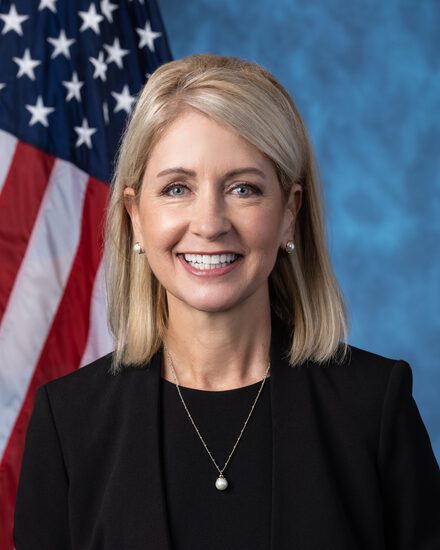
Photo of Mary E. Miller
R United States House · District 15 · Illinois On the 2026 ballot

Rep. Mary E. Miller

Compare
Total votes
2,837
all sessions
Attendance
95%
130 missed
Near the chamber average
With party
87%
of cast votes
Lower than 93% of chamber peers
Bipartisan score
6%
crosses aisle rarely
Higher than 92% of chamber peers
Sponsored
1,359
bills & resolutions
Near the chamber average
Committees
11
assignments
1,359 bills and resolutions

Sponsored bills

Total
1,359
Primary
67
Co-sponsor
1,292
This page
1,359
matching current filters
Co-sponsor HR 6734
In committee · Indiana House · Co-sponsor
Stopping Unconstitutional Background Checks Act

Maddy summaryHR 6734 prohibits the use of federal funds to finalize, implement, or enforce the Bureau of Alcohol, Tobacco, Firearms, and Explosives' (ATF) proposed rule (2022R-17) defining "engaged in the business as a dealer in firearms." This bill directly affects the ATF by blocking funding for this specific regulatory rule, which was proposed in August 2023. The legislation does not create new requirements but prevents federal resources from being used to advance this particular ATF regulation.

In committee Dec 13, 2023 1 co-sponsor
Co-sponsor HR 357
Passed · Indiana House · Co-sponsor
Ensuring Accountability in Agency Rulemaking Act

Maddy summaryHR 357, the Ensuring Accountability in Agency Rulemaking Act, requires federal agencies to have rules signed by Senate-confirmed appointees (or senior appointees for initiation), aiming to increase oversight of regulatory decisions. It directly affects all federal agencies creating rules under standard procedures (covered by 5 U.S.C. § 553), ensuring higher-level accountability for rulemaking. Exceptions exist only if an agency head certifies that compliance would impede public safety/security, with required notifications to the OIRA Administrator and Federal Register publication. The Office of Information and Regulatory Affairs (OIRA) will monitor agency compliance with these requirements.

Passed Dec 13, 2023 1 co-sponsor
Primary HR 6636
In committee · Indiana House · Lead sponsor
Woman’s Right To Know Act

Maddy summaryHR 6636, the "Woman’s Right To Know Act," requires abortion providers performing or attempting abortions to provide specific information to patients 24 hours before the procedure. This includes showing an ultrasound, sharing results, and obtaining a signed consent form detailing the fetus's gestational age, medical risks of the procedure, and fetal developmental characteristics (like heartbeat and organ development). The bill imposes civil penalties of $100,000-$250,000 per violation and allows patients to sue for triple damages and attorney fees if providers fail to comply, with exceptions for life-threatening medical emergencies. It directly affects abortion providers in interstate commerce and applies to all patients seeking abortions, while clarifying it does not override stricter state abortion disclosure laws.

In committee Dec 12, 2023 0 co-sponsors
Primary HR 6635
In committee · Indiana House · Lead sponsor
Pregnancy Is Not an Illness Act of 2023

Maddy summaryThis bill prohibits the Department of Health and Human Services (including the FDA) from treating pregnancy as an illness when approving abortion drugs under the Federal Food, Drug, and Cosmetic Act. It specifically nullifies existing approvals of abortion drugs like mifepristone that relied on pregnancy being classified as an illness. The law requires the FDA to stop using this framework for approving or managing risk strategies for abortion drugs. This directly affects how the FDA regulates abortion medications, removing a specific basis for their current approval status.

In committee Dec 12, 2023 0 co-sponsors
Primary HR 6637
In committee · Indiana House · Lead sponsor
Love Them Both Act of 2023

Maddy summaryThe Love Them Both Act of 2023 prohibits the Equal Employment Opportunity Commission (EEOC) and the Office of Congressional Workplace Rights from finalizing, implementing, or enforcing any regulations under the Pregnant Workers Fairness Act that apply to abortion or abortion-related services. This bill directly restricts two federal agencies' regulatory authority by banning rules that would require workplace accommodations related to abortion. The key provision is a specific ban on including abortion coverage or related services in the regulatory framework of the Pregnant Workers Fairness Act. The bill does not amend the underlying law but limits its implementation to exclude abortion-related matters. As a result, workplace accommodations under this law would not extend to abortion-related needs.

In committee Dec 12, 2023 0 co-sponsors
Co-sponsor HJRES 88
Passed · Indiana House · Co-sponsor
Providing for congressional disapproval under chapter 8 of title 5, United States Code, of the rule submitted by the Department of Education relating to "Improving Income Driven Repayment for the William D. Ford Federal Direct Loan Program and the Federal Family Education Loan (FFEL) Program".

Maddy summaryHJRES 88 is a resolution seeking to block a Department of Education rule that would have improved income-driven repayment options for federal student loan borrowers. The rule, published in the Federal Register on July 10, 2023, targeted the William D. Ford Direct Loan Program and the Federal Family Education Loan (FFEL) Program. This resolution uses the Congressional Review Act process to disapprove the rule, preventing it from taking effect and preserving the current repayment structure. If enacted, it would stop the proposed changes to repayment terms without altering existing loan policies.

Passed Dec 11, 2023 1 co-sponsor
Co-sponsor HRES 920
In committee Dec 11, 2023 1 co-sponsor
Co-sponsor HR 6619
In committee · Indiana House · Co-sponsor
Preventing Aliens Through Rivers Or Land Act

Maddy summaryHR 6619, the PATROL Act, prevents the federal government from suing states for building border barriers. It specifically blocks the Attorney General from filing civil lawsuits under the 1899 Act against states that construct physical barriers (like walls, fences, or buoys) along the border to stop illegal entry or protect state territory. The law directly affects states building such barriers and the federal government’s legal authority to challenge those actions. This is a procedural change that removes a legal obstacle for states pursuing border security measures.

In committee Dec 11, 2023 1 co-sponsor
Co-sponsor HR 5933
Passed · Indiana House · Co-sponsor
DETERRENT Act

Maddy summaryThe DETERRENT Act requires institutions of higher education to disclose foreign gifts and contracts meeting specific value thresholds ($50,000 or more) to the Department of Education, with special rules for contracts involving "foreign countries of concern" or "foreign entities of concern." It creates a public database of these disclosures, mandates faculty and staff to report foreign gifts related to research, and establishes a waiver process for institutions seeking to contract with prohibited foreign entities. Institutions that fail to comply face fines ranging from 1% to 100% of their federal funding, depending on the violation and whether it's a first or repeat offense. The bill applies primarily to institutions receiving significant federal funding, particularly those with substantial research programs. It aims to increase transparency around foreign influence in higher education while maintaining academic freedom.

Passed Dec 7, 2023 1 co-sponsor
Co-sponsor HR 6620
In committee · Indiana House · Co-sponsor
No Taxpayer Funding for Ivy League Schools Act

Maddy summaryThis bill prohibits all federal funding for institutions of higher education with endowment funds totaling $5 billion or more on the enactment date, affecting wealthy universities regardless of name. Exceptions allow funding for research or projects directly tied to "critical national functions," such as border security or national defense. The law uses definitions from the Higher Education Act to calculate endowments (aggregating all funds at an institution) and defines "critical national functions" based on specific security or border control needs. It applies broadly to any qualifying institution, not exclusively to the Ivy League. The prohibition takes effect 60 days after the bill becomes law.

In committee Dec 6, 2023 1 co-sponsor
Showing 561 to 570 of 1,359 bills
Previous 1 … 56 57 58 … 136 Next