

Maddy summaryHR 2553, the "No More Political Prosecutions Act of 2023," amends a specific legal provision (Section 1442(a) of Title 28, U.S. Code) to exclude the President, Vice President, and former officials from being sued under that section. The bill removes existing language allowing civil or criminal cases against these officials and adds a new provision explicitly barring such actions. It applies to all pending cases or new prosecutions filed after the law's enactment. This change directly affects high-level federal officials by limiting legal challenges against them under this particular legal mechanism.
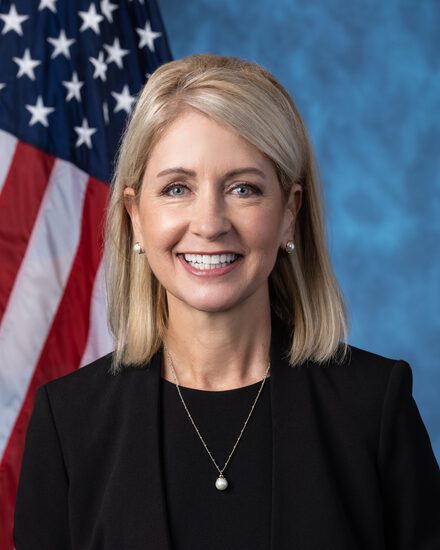
Rep. Mary E. Miller
Sponsored bills
Maddy summaryHR 7083, the RAZOR Act, prohibits federal agencies from removing or altering barriers (like fences or fences) built by states along the U.S. border to prevent unlawful crossings. It directly affects federal departments and agencies, such as the Department of Homeland Security, by restricting their ability to modify state-constructed border infrastructure. The key provision is a clear ban on any federal action that would change or remove these state-built barriers. This bill makes a specific policy change regarding federal-state border infrastructure authority without altering broader immigration law.
Maddy summaryHR 6914, the Pregnant Students’ Rights Act, requires all colleges and universities receiving federal financial aid to inform students about existing protections under Title IX related to pregnancy. Specifically, it mandates that institutions send annual emails to all students, include this information in student handbooks and orientations, and post it on their websites. The notice must detail campus/community resources for students choosing to carry a pregnancy to term, available accommodations (like modified coursework), and how to file complaints about pregnancy discrimination. This directly affects every enrolled and prospective student at participating higher education institutions by ensuring they receive clear, accessible information about their rights and support options.
Maddy summaryHR 6918 blocks a specific federal regulation that would have restricted funding for pregnancy centers. It prohibits the Health and Human Services Secretary from finalizing, implementing, or enforcing a proposed rule (described in a Federal Register notice) affecting pregnancy center funding. The bill directly affects pregnancy centers - defined as organizations supporting maternal and fetal life and providing services like counseling, pregnancy testing, and material support (e.g., diapers, baby clothes). This is a procedural measure preventing a regulatory change, not creating new programs or altering existing funding.
Ultrasound Informed Consent Act This bill requires abortion providers to conduct an ultrasound before performing an abortion. Specifically, before a woman gives informed consent to any part of an abortion, the abortion provider must perform an obstetric ultrasound on the pregnant woman; provide a simultaneous explanation of what the ultrasound is depicting; display the ultrasound images so the woman may view them; and provide a complete medical description of the images, including the dimensions of the embryo or fetus, cardiac activity if present and visible, and the presence of external members and internal organs if present and viewable. Providers are subject to civil actions and penalties for violations. The bill's ultrasound requirements do not apply in cases where a physical disorder, illness, or injury caused by the pregnancy endangers a woman's life. A woman is also not required to view the ultrasound images; nor may she or the provider be penalized if she declines to do so.
Maddy summaryThis resolution expresses the U.S. House of Representatives' support for designating October 1-7, 2023, as "National 4-H Week." It recognizes 4-H as the nation's largest youth development organization, serving nearly 6 million young people through programs in health, science, agriculture, and civic engagement, delivered by land-grant universities and over 600,000 volunteers. The resolution does not create new laws or funding but formally acknowledges 4-H's role in empowering youth leadership and encourages public recognition of its impact. It directly affects 4-H members, volunteers, and the broader network of land-grant institutions and the USDA's Cooperative Extension System.
Maddy summaryThe Death Tax Repeal Act would eliminate the federal estate tax and generation-skipping transfer tax for estates of people who die on or after the bill's enactment date, and for generation-skipping transfers made after that date. It would also establish a new $10 million lifetime gift tax exemption (adjusted annually for inflation) and replace the existing gift tax rate schedule with a revised structure. These changes would primarily affect high-net-worth individuals and their heirs, as the estate tax and gift tax typically apply to large estates or gifts exceeding the new exemption threshold. The bill's provisions would take effect on the date of enactment, with transitional rules for the year the bill is signed into law.
Maddy summaryHR 7045 creates a new 50% federal tax credit for individuals and businesses that donate to eligible pregnancy centers. Donors can claim a credit equal to half their contribution, up to $10,000 per year ($20,000 for joint filers), for donations made to centers that provide free services like counseling, prenatal care, and material support to pregnant women. To qualify, centers must be 501(c)(3) organizations operating primarily to help women carry pregnancies to term without performing or promoting abortions. The bill directly affects donors seeking tax benefits and pregnancy centers receiving support, while requiring centers to meet specific service and non-abortion criteria.
Maddy summaryThe RIFLE Act of 2024 changes how the federal government handles violations by firearms licensees, affecting gun dealers and manufacturers who hold federal licenses. It creates a graduated penalty system where non-willful violations require the Attorney General to work with licensees to fix issues before taking action, while willful violations may lead to license suspension or revocation only after proper notice, hearing, and evidence of continued noncompliance. The bill establishes new procedures for administrative hearings, defines "willful" violations more clearly, and gives licensees 90 days to liquidate inventory after license expiration or revocation, with extensions possible for reasonable cause. These changes aim to create a more transparent process for addressing violations while maintaining public safety standards.
Maddy summaryThis bill clarifies that tax-exempt status for charities (under IRS Section 501(c)(3)) does not count as "federal financial assistance" for other federal programs. It directly affects tax-exempt organizations, such as charities and religious groups, by preventing their tax exemption from automatically qualifying them for other federal benefits or programs. The key provision amends the U.S. Code to define "federal financial assistance" as excluding tax exemptions, ensuring these organizations aren't mistakenly included in programs meant for recipients of direct federal funds. This change applies prospectively and does not alter how tax exemptions were treated before the bill's enactment.