

Maddy summaryHR 24, the Federal Reserve Transparency Act of 2025, mandates a comprehensive audit of the Federal Reserve Board and Federal Reserve banks by the Government Accountability Office (GAO) within 12 months of enactment. The bill requires the GAO to submit a detailed report to Congress within 90 days of completing the audit, including findings, conclusions, and recommendations for legislative or administrative action. This audit replaces current limitations on reviewing Federal Reserve operations, particularly regarding entities like special purpose vehicles not previously subject to standard audits. The bill directly affects the Federal Reserve System by increasing congressional oversight of its financial activities and reporting mechanisms.
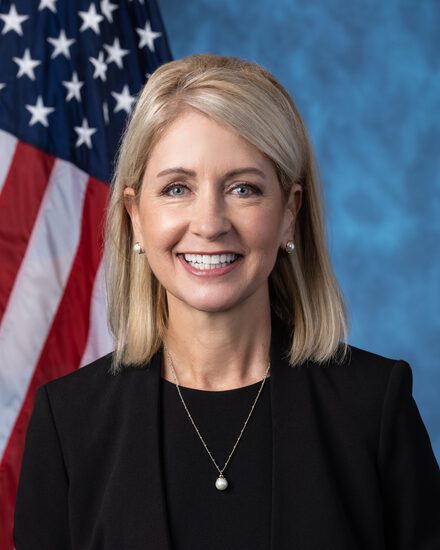
Rep. Mary E. Miller
Sponsored bills
Stopping Border Surges Act This bill modifies immigration law provisions relating to unaccompanied alien minors and to asylum seekers. The bill requires the Department of Homeland Security (DHS) to repatriate certain unaccompanied, inadmissible alien children, generally those not at risk of being trafficking victims nor having a fear of persecution. Currently, only inadmissible unaccompanied aliens from neighboring countries are subject to repatriation, and DHS has discretion whether to repatriate. When the Department of Health and Human Services releases an unaccompanied child to an individual, it shall provide DHS with certain information about that individual, including Social Security number and immigration status. The bill requires a stricter standard to find a credible fear of persecution and imposes additional rules on credible fear interviews. If an alien is granted asylum because of fear of persecution in a country, the alien shall be deemed to have renounced asylum status by returning to that country, if there has been no change in the country's conditions. The bill also (1) expands the definition of what constitutes a frivolous asylum application, (2) imposes additional limitations on eligibility for asylum, (3) shortens the deadline for applying for asylum, and (4) extends the time period an alien seeking asylum must wait before receiving employment authorization. Any individual who knowingly and willfully makes materially false statements or uses fraudulent documents in asylum-related proceedings shall be fined or imprisoned up to 10 years, or both.
Maddy summaryHR 191, titled "Inflation Reduction Act of 2025," is a procedural bill that repeals the Inflation Reduction Act of 2022 (Public Law 117-169) and rescinds its unobligated funds. It directly affects the implementation of the 2022 law by nullifying its provisions and redirecting any remaining unspent budget authority. The bill contains no new policy mechanisms or direct impacts on citizens or programs; its sole action is to undo the previous legislation. This is a straightforward repeal measure with no new funding or regulatory changes. The title is misleading, as the bill does not create a new inflation reduction policy but instead reverses the prior law.
Maddy summaryHR 45 (FIND Act) requires federal government contractors to certify they do not discriminate against firearm businesses (including manufacturers, dealers, and trade associations) in their policies or practices. The bill mandates that contractors and subcontractors (for contracts over 10% of the prime contract value) certify they have no discriminatory policies and will not adopt them during the contract term. Violations could lead to contract termination and potential debarment. This applies to all federal procurement contracts awarded after the bill's enactment, excluding sole-source contracts. The law aims to ensure firearm businesses are treated equally in government contracting without restricting legitimate business criteria like creditworthiness or legal compliance.
Maddy summaryThe FOCA Act of 2023 requires federal agencies to stop mandating or banning contractor agreements with labor organizations (like union contracts) in construction project bids and contracts. It directly affects federal contractors, subcontractors, and agencies managing construction projects funded by the government. The bill prohibits favoring or penalizing contractors based on their labor affiliation status, aiming to promote fair competition and reduce costs. It also mandates updates to federal contracting rules within 60 days of enactment to implement these changes.
Maddy summaryHR 262 (ALERT Act) requires federal agencies to publicly share details about upcoming regulations monthly, including cost estimates, economic impact, and legal basis. Agencies must submit this information to the Office of Information and Regulatory Affairs, which then posts it online within 30 days. Rules cannot take effect until six months after this information is publicly available, except for emergencies (e.g., health/safety threats) or national security actions. This directly affects all federal agencies that issue regulations, making their rulemaking process more transparent to the public.
Maddy summaryThis bill restricts health savings accounts (HSAs), Archer MSAs, health flexible spending accounts, health reimbursement arrangements, and retiree health accounts from covering most abortion expenses. It prohibits these accounts from reimbursing costs for abortions unless the pregnancy resulted from rape or incest, or the woman faces a life-endangering physical condition (as certified by a physician). The policy change directly affects individuals using these specific health accounts who seek abortion coverage, excluding all other abortion-related expenses from tax-advantaged reimbursement. The exceptions are narrowly defined to cover only cases involving rape/incest or severe health risks to the woman.
Maddy summaryThis bill modifies Social Security Number (SSN) requirements for claiming the Child Tax Credit and Earned Income Tax Credit. It specifies that qualifying SSNs must be issued to U.S. citizens (or under specific Social Security Act provisions) and issued before the tax return due date. The changes apply to tax years beginning after December 31, 2024, and update related tax code references to use "social security number" instead of "taxpayer identification number." These are technical adjustments to eligibility criteria, not new benefits or funding.
Maddy summaryHR 7427 clarifies that states may use Temporary Assistance for Needy Families (TANF) funds to support pregnancy centers and other "alternatives to abortion" programs that provide life-affirming services like counseling, parenting resources, and material support to pregnant individuals. The bill explicitly defines these programs as those promoting childbirth over abortion through services such as prenatal care coordination, job training, infant supplies, and adoption referrals, while excluding entities that provide or facilitate abortions. It also prohibits federal discrimination against grantees or states that fund such programs, including preventing the government from imposing unfair requirements or cutting funding based on a provider's opposition to abortion. This bill directly affects pregnancy centers, adoption agencies, and maternity homes receiving TANF funding, ensuring their eligibility under existing federal law. The legislation responds to a 2023 federal proposal that threatened to restrict such funding.
Maddy summaryThe SAFE Home Act (HR 6658) prohibits federal-funded adoption and foster care agencies from delaying or denying placements for children based on a parent’s choices related to gender identity. Specifically, it bans discrimination if a parent: (1) raises a child consistent with their biological sex, (2) declines medical treatments to alter a child’s appearance or validate gender identity, or (3) refuses to change official documents (like birth certificates) to reflect gender identity inconsistent with biological sex. The bill defines "sex" biologically as male or female based on reproductive systems, and requires states to comply with these rules for federal foster care and adoption assistance programs starting in the first fiscal quarter after enactment. This directly affects state agencies and organizations receiving federal funds for child welfare services.