Maddy summaryHR 276, the Gulf of America Act, would rename the Gulf of Mexico to the Gulf of America in all U.S. federal documents and maps. It requires all federal agencies to update their records, maps, and publications within 180 days of enactment to reflect this new name. The bill directly affects federal agencies responsible for geographic naming and documentation, such as the Department of the Interior and the Board on Geographic Names. This is a procedural change with no impact on policy, environmental regulations, or affected communities.
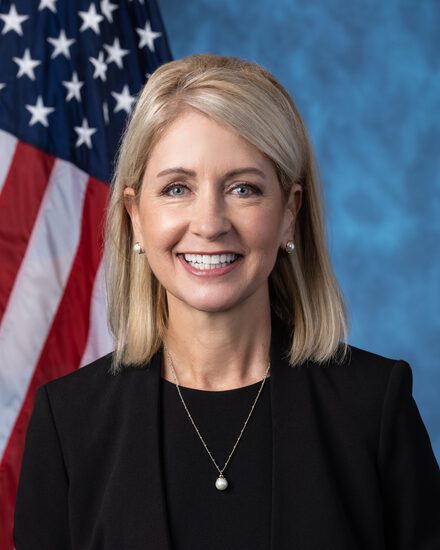
Rep. Mary E. Miller
Sponsored bills
Maddy summaryH.J. Res. 42 is a congressional disapproval resolution that voids a Department of Energy (DOE) rule on appliance energy efficiency standards. The resolution specifically targets the DOE's 2024 rule requiring certification, labeling, and enforcement for energy-efficient appliances and commercial equipment. By disapproving this rule under federal law (5 U.S.C. § 801), the resolution prevents the rule from taking effect, meaning appliance manufacturers and retailers would not need to comply with its requirements. This resolution directly affects the implementation of the DOE's energy conservation program for consumer products and commercial equipment.
Maddy summaryThis bill phases out enhanced federal funding for Medicaid in states that expanded coverage under the Affordable Care Act. It gradually reduces the federal share of Medicaid costs for states that expanded coverage, decreasing the percentage each year from 2027 through 2034 before returning to standard funding levels after 2035. The change directly affects low-income residents in expansion states who rely on Medicaid, as states will pay more for their coverage over time. Non-expansion states (those that haven't expanded Medicaid) are exempt from these reductions, and expansion states can choose to limit coverage to individuals at or below 100% of the federal poverty line to maintain the higher federal funding rate.
Maddy summaryHRES 402 is a symbolic House resolution honoring mothers and recognizing the significance of motherhood on Mother's Day. It affirms that mothers are women who raise children, supports policies recognizing mothers as mothers, and encourages the public to celebrate mothers' contributions to families and society. The resolution does not create new laws, allocate funds, or affect specific policies - it is a ceremonial gesture expressing support for traditional definitions of motherhood. It directly addresses the public and the House's recognition of mothers, with no concrete policy changes or impacts on individuals or programs.
Maddy summaryThis bill changes how married couples filing jointly can deduct student loan interest on their federal taxes. Currently, the deduction limit of $2,500 applies to the household as a whole. The bill would amend the tax code to apply the $2,500 limit separately to each spouse, meaning both partners could each deduct up to $2,500 in interest. This directly affects married couples with student loans who file jointly, providing them with a larger potential tax benefit. The change takes effect for taxable years beginning after December 31, 2024.
Maddy summaryHR 3297, the Interstate Obscenity Definition Act, amends the Communications Act of 1934 to clarify the federal legal definition of "obscene" visual content. It defines obscenity as material that, taken as a whole, appeals to prurient interest, depicts sexual acts with intent to arouse, and lacks serious literary, artistic, political, or scientific value. This definition applies to images, videos, and other visual depictions distributed interstate or in the District of Columbia. The bill directly affects content providers, internet platforms, and law enforcement agencies operating under federal obscenity laws, updating the standard for determining illegal material. It does not create new penalties but refines the existing legal test used in prosecutions.
More Opportunities for Moms to Succeed Act or the MOMS Act This bill establishes requirements to enable the collection of certain child support during pregnancy, establishes grants for supportive services for women that promote alternatives to abortions, and requires the Department of Health and Human Services (HHS) to establish a website with pregnancy resources other than those about abortions. Specifically, the bill requires states to apply child support obligations to the time period during pregnancy under the Child Support Enforcement program. (The program enables states to receive federal matching funds for expenses related to child support enforcement activities and related services.) Such child support applies at the request of the mother and may be applied retroactively. Also, HHS must award grants to nonprofits to provide pregnant and postpartum women, and women parenting young children, with services or information on topics including health care (excluding abortions), child care, and employment assistance. It also requires HHS to provide grants to health care providers in rural or medically underserved areas, as well as tribal areas, to purchase equipment enabling telehealth visits for prenatal and postnatal care (e.g., monitoring devices). Additionally, the bill requires HHS to establish a public website to inform pregnant and postpartum women, and women parenting young children, of nearby services and resources on topics including health care, material or legal support, and alternatives to abortion. States must, as a condition of receiving certain federal funds, provide lists of nonprofit child placement agencies for potential inclusion on the site.

Maddy summaryHR 3231, the American Energy Act, streamlines oil and gas drilling permit processing by requiring the government to approve applications even during pending lawsuits (unless a court has already canceled the lease), and limits court challenges to lease sales. It sets a four-year expiration for drilling permits and bars courts from halting development or lease awards based on environmental lawsuits (like those under NEPA) after bids are opened, unless imminent environmental harm is proven with no other remedy. This directly affects oil and gas companies seeking permits, federal agencies managing leases, and courts handling related litigation. The bill changes procedural rules for permits and lease sales without altering environmental standards.
Maddy summaryHR 3237, the "No Student Visas for Sanctuary Cities Act of 2025," blocks F-1 student visas (for academic studies) and M-1 visas (for vocational training) for international students seeking to attend schools in jurisdictions designated as "sanctuary jurisdictions." The bill defines a sanctuary jurisdiction as any state or local government with laws obstructing immigration enforcement, such as refusing to comply with ICE detainers or denying access to incarcerated immigrants. The Department of Homeland Security would identify these jurisdictions annually, and institutions located in them would be barred from receiving new student visas under the F or M categories. This policy directly affects international students and educational institutions in designated areas, with no visa issuance permitted for those locations during the fiscal year unless the jurisdiction is reclassified.
Maddy summaryHR 3247, the SAFE Home Act, requires federally funded adoption and foster care agencies to stop delaying or denying placements for children based on a parent's choices related to a child's biological sex. It directly affects these agencies and prospective adoptive/foster parents who: (1) raise children consistent with their biological sex, (2) refuse medical treatments to alter a child's sex appearance or perception, or (3) decline to change official documents to reflect gender identity. The bill prohibits such actions by defining "sex" biologically (male/female based on reproductive systems) and banning discrimination in placement decisions for those reasons. It applies to all entities receiving federal foster care/adoptions assistance and takes effect for payments starting after its enactment.