

Maddy summaryThis resolution supports designating the week of June 22-28, 2025, as "National Women’s Sports Week" to commemorate the anniversary of Title IX’s passage (June 23, 1972) and recognize its impact on women’s sports participation. It encourages programs celebrating female athletes, coaches, and equal access to athletic opportunities. The resolution does not create new laws but promotes awareness of Title IX’s role in expanding women’s sports, noting a 545% increase in college and 990% in high school female athletes since its enactment.
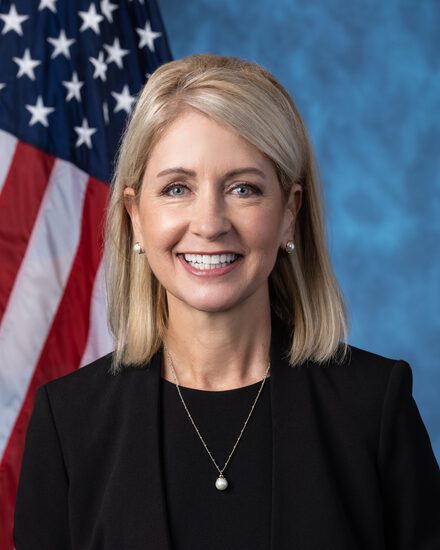
Rep. Mary E. Miller
Sponsored bills
Maddy summaryHR 4021, the Patriotism Not Pride Act, prohibits federal agencies from using government funds to promote or recognize Lesbian, Gay, Bisexual, Transgender, Queer, and Intersex Pride Month through events, communications, or educational programs. It also bans the display of flags representing sexual orientation or gender identity on all federal property and grounds. The bill directly affects all federal agencies, requiring them to cease any activities related to Pride Month recognition or the display of such flags. This legislation enacts concrete policy changes by restricting federal funding and property use for specific LGBTQ+ observances.
Maddy summaryHR 4053, the "Stop Funding Rioters Act," blocks individuals convicted of specific offenses from accessing Small Business Administration (SBA) programs. It directly affects people convicted of assaulting police officers (as a misdemeanor or felony) or committing a felony during a riot that destroyed a small business. The bill's key provision denies eligibility for any SBA assistance, loans, or programs to these individuals. This policy change modifies SBA program access based solely on prior criminal convictions related to violence against law enforcement or riot-related property damage.
Maddy summaryHRES 494 is a symbolic House resolution condemning violent protests in Los Angeles on June 6, 2025, which included assaults on law enforcement, vandalism of federal property, and destruction of personal property. It specifically targets Los Angeles Mayor Karen Bass and California Governor Gavin Newsom, accusing them of obstructing federal immigration enforcement through sanctuary policies and failing to condemn the violence. The resolution affirms the federal government's duty to enforce immigration laws and supports prosecuting individuals who commit violence against law enforcement. It does not create new laws or policies but expresses formal disapproval of the officials' actions and the rioters' conduct.
Maddy summaryThis bill would make non-citizens deportable if they incite or participate in riots during civil unrest involving assaults on law enforcement or military personnel, or destruction of public property, and who were unlawfully present, had DACA, or were lawful permanent residents at the time of the offense. It permanently bars such individuals from reentering the U.S. or accessing any relief from deportation, including asylum, cancellation of removal, or future DACA benefits. During declared emergencies (such as national disasters or state emergencies), the law mandates expedited removal and mandatory detention for those covered, with no discretion for enforcement.
Maddy summaryHR 589, the FACE Act Repeal Act of 2025, would repeal a federal law (Section 248 of Title 18, U.S. Code) that prohibited obstructing access to reproductive health care facilities through physical means, intimidation, or violence. This repeal would eliminate the federal criminal penalty for such conduct, meaning federal prosecutors could no longer charge individuals under this specific law. The bill applies to all pending or future federal prosecutions related to these actions. It does not affect state laws that may still regulate access to reproductive health care facilities.
Maddy summaryHR 3843, the Baseload Reliability Protection Act, prohibits the retirement or fuel-source conversion of certain large, reliable power plants (over 25 megawatts, not relying on intermittent renewables like solar/wind without storage) in areas designated as high or elevated risk for electricity shortages. It directly affects power plant operators in these high-risk regions, requiring them to maintain existing facilities unless they qualify for an exemption. Exemptions can be granted if operators demonstrate financial hardship, safety risks, or prove they’ll replace the plant with a comparable reliable unit, with potential federal grants or loans from the Department of Energy to cover operational costs. The bill explicitly blocks consideration of greenhouse gas emissions in exemption decisions and mandates standardized risk assessment criteria for identifying high-risk areas.
Maddy summaryThis bill requires cities and counties with "sanctuary" policies to return unobligated federal funds received during periods they maintained such policies. It directly affects local jurisdictions that have laws or practices blocking sharing of immigration status information or refusing to comply with federal detainer requests under immigration law. Key provisions mandate fund repayment for fiscal years starting five years before the bill's effective date (excluding certain crime control funds), with a 15-day grace period for jurisdictions to correct their policies. The law targets specific funding streams, not all federal aid, and focuses on unspent funds rather than future allocations.
Maddy summaryThis bill increases penalties for nonimmigrant visa overstays under U.S. immigration law. It directly affects individuals admitted on temporary visas (like students or workers) who remain in the U.S. past their authorized stay, defining a violation as failing to maintain status for 10 cumulative days. Key provisions raise civil fines from $50-$250 to $500-$1,000 per violation, with doubled penalties for repeat offenses, and add criminal penalties of up to 6 months (first violation) or 2 years (repeat offenses). The law also clarifies that these penalties apply in addition to existing civil or criminal penalties.
Maddy summaryHR 649, the Whole Milk for Healthy Kids Act of 2025, amends the National School Lunch Act to allow schools participating in the program to offer students both organic and non-organic whole milk, in addition to reduced-fat, low-fat, and fat-free options. Key provisions include clarifying that milk fat in whole milk should not count toward saturated fat limits for meal compliance, prohibiting schools from purchasing milk from Chinese state-owned enterprises, and ensuring schools cannot be barred from offering the full range of milk types listed. The bill directly affects public and private schools serving the National School Lunch Program by expanding their milk options for students. It focuses on concrete policy changes to dietary offerings and sourcing restrictions within the school nutrition program.