

Maddy summaryThis bill protects living organ donors from insurance discrimination by prohibiting life, disability, and long-term care insurers from denying coverage, raising premiums, or altering policy terms solely because someone donated an organ while alive. It also updates the Family and Medical Leave Act to include recovery from organ donation surgery as a qualifying health condition, allowing donors to take protected leave for this purpose. Additionally, the bill requires the Health and Human Services Secretary to update public educational materials about living donation benefits, risks, and insurance protections within six months of enactment. These changes directly affect living organ donors, insurers, employers, and healthcare systems by ensuring fair access to insurance and workplace leave.
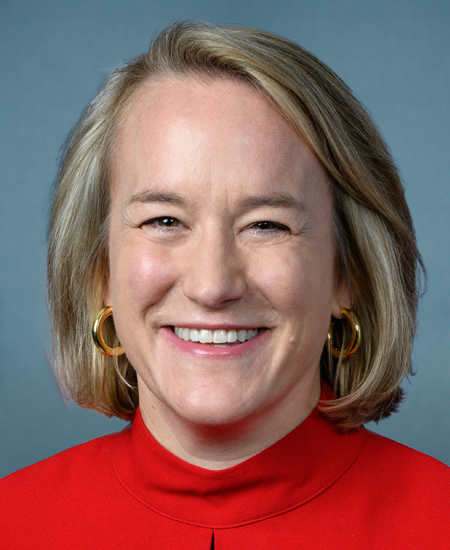
Rep. Nikki Budzinski
Sponsored bills
Maddy summaryHR 2955, the Stop Institutional Child Abuse Act, establishes a Federal Work Group to improve data collection and best practices for youth in residential programs (like therapeutic schools, treatment centers, and group homes). The Work Group, composed of federal agency representatives and diverse stakeholders, must develop national data standards, create risk assessment tools, and issue biennial reports with recommendations to enhance safety, reduce restraints, and expand community-based alternatives. It directly affects youth with mental health, substance use, or disability needs placed in these facilities, as well as agencies overseeing them. The bill also mandates a National Academies study to examine funding, oversight, and barriers to community care. These mechanisms aim to standardize data tracking and promote less restrictive, trauma-informed care for youth in residential programs.
Maddy summaryHRES 334 is a symbolic resolution recognizing "Community College Month" to celebrate over 1,000 community colleges across the United States. It highlights how these institutions support accessible higher education, workforce training, and economic prosperity - serving 10.2 million students annually while charging affordable tuition (averaging $3,860 for in-district students). The resolution does not create new laws or requirements but formally acknowledges community colleges' role in strengthening local communities and the national economy. This acknowledgment applies broadly to all community colleges and their students, without imposing any obligations.
Maddy summaryThe AID Act creates a new student loan allowance for parents with federal student debt to reduce their income when calculating financial aid for dependent children. Parents with outstanding federal student loans can subtract an allowance equal to the lesser of $4,000 or 15% of their debt (adjusted for inflation), but only if their adjusted gross income is below $200,000 (single) or $400,000 (married). The allowance amount automatically increases yearly based on inflation, as measured by the Consumer Price Index. The Department of Education must report annually by 2026 on how many students benefit, including breakdowns by Pell Grant eligibility and average allowance amounts. This policy directly affects parents with student debt and their dependent children's financial aid calculations under the Higher Education Act.
Maddy summaryThe PSLF Payment Completion Fairness Act (HR 2949) amends the Higher Education Act to clarify eligibility for the Public Service Loan Forgiveness (PSLF) program. It revises Section 455(m)(1)(B) by removing the phrase "is employed" and related text, replacing it with "has been" to focus solely on payment completion. This change ensures borrowers qualify for loan forgiveness once they've made 120 qualifying payments, regardless of current employment status. The bill directly affects federal student loan borrowers working in public service jobs who are seeking loan forgiveness under the PSLF program.
Maddy summaryThe Child Care for Working Families Act establishes a federal entitlement program providing subsidized child care for working families with children under age 6 who are not yet in kindergarten. It creates a sliding fee scale where families at or below 85% of State median income pay no copayment, while higher-income families pay up to 7% of their income based on income thresholds. The bill requires states to develop quality rating systems for child care providers and ensures providers receive sufficient funding to meet quality standards, including wages equivalent to elementary educators. It prioritizes access for underserved populations including children with disabilities, infants and toddlers, children experiencing homelessness, and families in low-income communities. The program is funded with $20 billion for fiscal year 2024 and subsequent years through 2029.
Fresh Start Act of 2023 This bill allows grants under the National Criminal History Improvement Program (NCHIP) to be used to implement a state law that provides for the automatic expungement or sealing of certain criminal records. The NCHIP provides grants to state and tribal governments to enhance the quality, completeness, and accessibility of criminal history record information and ensure the implementation of effective background check systems.
Maddy summaryThe Apprenticeship Hubs Across America Act of 2023 creates a federal grant program to fund organizations (called "workforce intermediaries") that help employers establish registered apprenticeship programs in high-growth industries like health care, technology, and advanced manufacturing. These intermediaries receive competitive grants of up to $6 million each (with a 20% non-federal matching requirement) to provide employer outreach, program design support, and apprentice services, prioritizing sectors with low current apprenticeship participation. The program requires grantees to focus on expanding opportunities for underrepresented groups (such as women, minorities, and veterans) and tracks outcomes like program completion rates and post-apprenticeship earnings. Authorized at $25 million annually from 2024-2028, the bill mandates performance evaluations to determine future funding based on results in creating accessible, high-quality apprenticeships.
Performing Artist Tax Parity Act of 2023 This bill modifies the above-the-line tax deduction for the expenses of performing artists (including commissions paid to managers or agents) to provide for a phaseout of such deduction for taxpayers whose adjusted gross income exceeds $100,000 ($200,000 for joint return filers). The $100,000 phaseout threshold is adjusted for inflation annually for taxable years beginning after 2023.
Maddy summaryHR 2918, the Fair Housing for Survivors Act of 2023, amends the Fair Housing Act to explicitly protect survivors of domestic violence, sexual assault, and sex trafficking from housing discrimination. It adds "survivor of domestic violence, sexual assault, or severe forms of trafficking" as a protected class under the law, prohibiting landlords and housing providers from refusing to rent, evicting, or charging more based on this status. The bill also clarifies that discrimination based on survivor status - including denial of housing due to protective orders, shelter stays, or prior incidents - is illegal. This directly affects survivors who face barriers like denied rentals, evictions, or higher costs when seeking safe housing, addressing documented discrimination reported by 67% of survivors in New York studies. The law preserves survivors' ability to pursue other discrimination claims under the Fair Housing Act.