

Maddy summaryHRES 439 is a non-binding resolution expressing the House of Representatives' support for keeping the U.S. Postal Service (USPS) as an independent federal agency, not subject to privatization. It highlights USPS's constitutional role, self-sustaining nature (relying on service revenue, not taxpayer funds), and its importance to rural communities, e-commerce, and over 600,000 employees. The resolution urges Congress to take action to preserve USPS's independence, emphasizing that privatization could raise prices, reduce services, and harm the nation's mail infrastructure. As a procedural resolution, it does not change law but formally states the House's position.
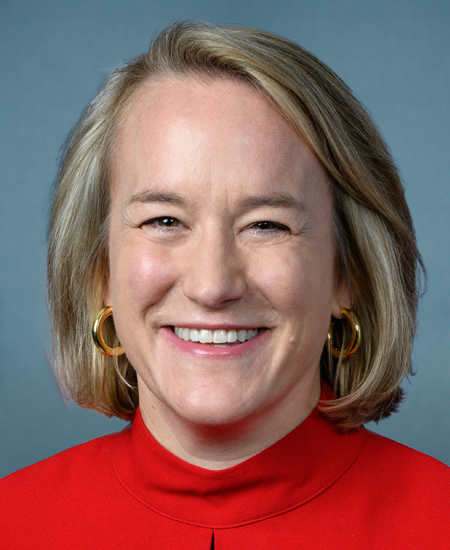
Rep. Nikki Budzinski
Sponsored bills
Maddy summaryThe AIR PUMP Act requires airlines to provide nursing crew members (like flight attendants and pilots) with reasonable break time to express breast milk for up to one year after their child's birth, as well as a private, non-bathroom space for this purpose. It specifically excludes breaks during critical flight phases and ensures accommodations won't compromise safety, security, or require significant costs (e.g., aircraft modifications). The bill includes anti-retaliation protections for employees who request accommodations or file complaints, and enforces these requirements through the Department of Labor using existing Fair Labor Standards Act mechanisms. This directly affects airline employees who are nursing parents and their employers, aligning airline workplace policies with federal breastfeeding protections.
Maddy summaryThis bill would designate approximately 1.7 million acres of public land in Utah's Colorado Plateau and Great Basin regions as wilderness areas, protecting them from development while preserving traditional uses by Indigenous communities. It establishes specific wilderness areas across Utah's red rock canyons, including the Great Basin Wilderness Areas, Grand Staircase-Escalante Wilderness Areas, and others, with detailed acreage for each designated zone. The bill includes administrative provisions for managing these areas, such as maintaining existing livestock grazing rights, setting road setbacks to protect wilderness character, and reserving water rights for the wilderness areas. This legislation directly affects how the Bureau of Land Management administers public lands in Utah and defines the boundaries for public use of these designated wilderness areas.
Maddy summaryHRES 425 is a non-binding House resolution designating July 19, 2023, as "Glioblastoma Awareness Day" to increase public recognition of glioblastoma, an aggressive brain cancer. It directly supports patients, caregivers, and families affected by the disease, which has a low 5-year survival rate (6.9%) and no effective screening methods. The resolution encourages greater public awareness, honors those impacted by the disease, and urges continued research investments, including through the Glioblastoma Therapeutics Network. It does not create new laws or alter funding but serves as a symbolic statement to advance understanding and support for glioblastoma research.
Maddy summaryHR 3548, the Pursuing Equity in Mental Health Act, aims to reduce mental health disparities for racial and ethnic minority groups by directing federal funding and policy changes. It increases annual grants for primary/behavioral health services to $60 million in 2023 and $80 million yearly through 2029, prioritizing entities serving minority communities. The bill requires the NIH to study mental health disparities within 9 months and mandates new training for mental health professionals (including social work and psychiatry) on culturally appropriate care. Additionally, it funds a $15 million annual outreach strategy to combat stigma and improve access to care, requiring materials tailored to cultural and language needs of minority groups.
Maddy summaryHR 3523, the Perinatal Workforce Act, provides $15 million annually from 2024 to 2028 to expand and diversify maternity care providers. It directs HHS to issue guidance for states on recruiting diverse providers (including midwives, nurses, and community health workers) and requires grant recipients to prioritize students from racial/ethnic minority groups, implement bias training, and target health professional shortage areas. The bill also mandates annual reporting on workforce diversity and outcomes, and requires a GAO report assessing barriers to equitable access in maternal healthcare. This legislation directly affects hospitals, nursing schools, midwifery programs, and insurers by funding targeted workforce development to address racial disparities in maternal care.
Maddy summaryThis bill requires that AM radio receivers be included as standard equipment in all new motor vehicles (such as cars and trucks) sold in the United States, with a rule to be issued by the Department of Transportation within one year. The rule must ensure AM radio is easily accessible on the dashboard and allows manufacturers to use digital AM radio technology instead of traditional AM. During the one-year period between the bill's enactment and the rule's effective date, manufacturers must clearly label vehicles without AM radio. The bill also directs a study to evaluate whether an alternative system could deliver emergency alerts as reliably as AM radio across the country, especially during crises.
Support, Treatment, and Overdose Prevention of Fentanyl Overdoses Act of 2023 or the STOP Fentanyl Overdoses Act of 2023 This bill addresses data collection, treatment, harm reduction, and other issues related to substance misuse and addiction. It particularly focuses on opioids, fentanyl, and related substances. Specifically, the bill expands surveillance of fentanyl and related substances. This includes requiring a study on how to track overdoses by type of drug (including fentanyl) and awarding grants to states for collecting data about fentanyl-involved overdoses. The bill also provides for (1) training on detecting and handling fentanyl for law enforcement, and (2) grants for forensic laboratories to facilitate surveillance of controlled substances seized by law enforcement. Additionally, the bill establishes and modifies requirements to increase access to treatment and prevention services. For example, the Bureau of Prisons must make certain services, including medication-assisted treatments, available to individuals in its custody. The bill also establishes grants and requires other efforts to expand access to medications that temporarily reverse opioid overdoses (e.g., naloxone) and related harm reduction activities. Furthermore, the bill extends, subject to some conditions, liability protections for those who administer aid in an emergency (commonly known as Good Samaritan laws) to individuals who administer opioid overdose reversal drugs and to individuals who seek medical attention for themselves or on behalf of another for a drug overdose. The bill also requires multiple reports, including a report by the Department of State on foreign sources of certain drugs.
Maddy summaryHR 3337, the Fuels Parity Act, removes a prohibition that previously excluded corn starch ethanol from being counted as "advanced biofuel" under the Clean Air Act. This change directly affects corn-based ethanol producers by allowing corn starch ethanol to qualify under renewable fuel standards. The bill also requires the EPA to update its methodology for calculating greenhouse gas emissions from corn-based ethanol and biomass-based diesel every five years, starting 90 days after enactment, with the first update mandating the use of the Argonne National Laboratory's GREET model. These provisions aim to standardize how emissions are assessed for these fuels under federal renewable fuel programs.
Maddy summaryThe Maternal Vaccination Act amends public health law to specifically target vaccination outreach for pregnant and postpartum individuals and their children, directly affecting public health campaigns and health agencies. It updates existing provisions to include these groups in awareness efforts, requires new activities to increase vaccination rates - particularly among racial and ethnic minority communities - and increases annual funding from $15 million to $17 million for fiscal years 2024-2028. Key mechanisms include revising language in the Public Health Service Act to explicitly cover pregnant/postpartum individuals in campaign descriptions and adding a new requirement (Section 317(k)(1)(E)(vii)) to address vaccination equity. The bill focuses on concrete policy changes to expand access and awareness, not on predicting outcomes.