

This resolution supports the designation of National FFA Week. It also (1) recognizes the important role of the National FFA Organization (Future Farmers of America) in developing the next generation of globally conscious leaders who will change the world; and (2) celebrates the 10th anniversary of the Give the Gift of Blue program, which has donated more than 17,000 FFA blue jackets to FFA members in need.
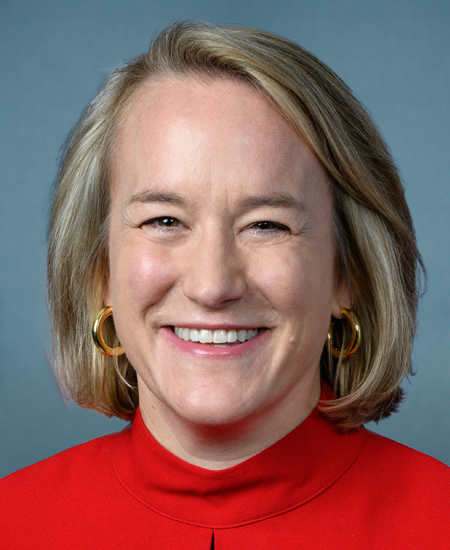
Rep. Nikki Budzinski
Sponsored bills
Maddy summaryThis bill authorizes a single Congressional Gold Medal to honor Peter McGuire, a key figure in the 19th-century labor movement known as the "Father of Labor Day" and co-founder of the American Federation of Labor. The medal, designed by the Treasury and Labor Departments, will be presented by congressional leaders and permanently displayed at the Smithsonian’s National Museum of American History. Bronze duplicates may be sold to cover production costs, with proceeds going to the U.S. Mint. The bill is purely ceremonial, recognizing McGuire’s historical contributions to workers’ rights, the 8-hour workday, and labor union organization. It does not create new policy or affect current legislation.
Maddy summaryHR 6531, the TRAIN VA Employees Act, requires the Department of Veterans Affairs (VA) to create mandatory training for all VA supervisors and certain other designated employees. The training program, to be developed within one year of enactment, covers key supervisor duties like performance appraisals, addressing workplace issues (including hostile environments), and managing employee conduct. All affected employees must complete the initial training within 18 months and refresher sessions every two years. The bill directly impacts VA supervisors and specific leadership roles, focusing on improving management practices through structured, adult-learning-based instruction.
Maddy summaryHR 9274, the SHAWL Act, establishes two new Smithsonian museums: the National Museum of the American Latino and the American Women’s History Museum. It authorizes both museums to be located within the National Mall’s "Reserve" area, overriding prior restrictions, and requires federal agencies managing potential sites to transfer jurisdiction to the Smithsonian after notifying congressional committees. The bill mandates that both museums accurately represent diverse cultures, histories, and viewpoints within Latino and women’s communities through exhibits and programs, requiring input from a broad range of community experts. It also requires the Smithsonian to submit biennial reports to Congress detailing compliance with these representation requirements.
Maddy summaryThis bill increases funding for replacing insecure communication networks from $1.9 billion to $4.98 billion and allocates $3.08 billion for fiscal year 2024. It overhauls the Affordable Connectivity Program (ACP) by requiring all providers to use the National Verifier for eligibility checks, ending eligibility based on providers' own low-income programs, and removing device subsidies. The bill also mandates new antifraud controls, requires providers to certify households won't face early termination fees, and demands a report on program effectiveness within one year. These changes directly affect low-income households receiving subsidized broadband and internet service providers participating in the ACP.
Maddy summaryThis bill establishes a federal program under the EPA to improve indoor air quality in schools and childcare facilities, directly affecting local educational agencies and covered childcare providers. It requires the EPA to develop science-based guidelines for harmful indoor contaminants (like mold, radon, and chemicals), conduct a national assessment of school air quality within three years, and provide technical assistance to schools. The bill also creates voluntary certification programs for buildings meeting high indoor air quality standards and authorizes $100 million annually for implementation. Key mechanisms include mandatory assessments, updated ventilation standards, and funding for schools to reduce exposure to air contaminants.
Maddy summaryThe LET'S Protect Workers Act increases civil penalties for employers who violate labor and workplace safety laws. It significantly raises fines for child labor violations (up to $700,000 for serious injuries/deaths), wage and hour violations (up to $50,000 per violation for repeated/willful violations), and workplace safety violations (up to $800,000). The bill also increases penalties for farmworker protections (to $30,000), mine safety violations, and unfair labor practices (up to $100,000). New provisions require employers to pay penalties, with withdrawal orders for mines that fail to pay fines. These changes apply to violations occurring on or after January 1, 2025, with some provisions taking effect immediately.
Maddy summaryHR 9140 requires the Secretary of the Interior to issue a report within 180 days of enactment about how mine subsidence affects communities. The report must detail economic and welfare impacts on communities and describe current Department efforts to minimize subsidence risks. This procedural bill mandates a review of existing conditions but does not change laws or create new requirements. It directly affects communities near active or abandoned mines experiencing land sinking from underground mining.
Maddy summaryHRES 1385 designates the week of August 4-10, 2024, as "National Farmers Market Week" to recognize the economic and community role of farmers markets. The resolution highlights that farmers markets generated $1.7 billion in income for U.S. farmers in 2020, supported 8,771 markets nationwide by 2019, and connect urban and rural communities while promoting sustainable farming and nutrition access. It does not create new laws or funding but formally acknowledges these markets’ contributions to local economies, public health, and community engagement. The resolution aims to raise awareness of farmers markets’ importance, directly affecting farmers, vendors, and consumers who rely on these venues.
Maddy summaryThe BRAIN Act (HR 9113) establishes new research networks and funding mechanisms to advance brain tumor treatment and care. It requires the NIH to create a searchable database of brain tumor biospecimens, authorizes $50 million annually for a Glioblastoma Therapeutics Network, and allocates $10 million yearly for CAR-T cell therapy research. The bill also mandates a national awareness campaign about clinical trials and biomarker testing, and funds pilot programs to improve long-term care for brain tumor survivors. These provisions directly affect researchers, patients, healthcare providers, and survivors, with funding allocated for fiscal years 2026 through 2030.