

Maddy summaryThe Caring for All Families Act expands family medical leave eligibility under the FMLA to include domestic partners, adult children, children of domestic partners, and extended family members such as grandparents, grandchildren, siblings, and in-laws. It also adds new "parental involvement and family wellness" leave allowing employees to attend school activities for their children/grandchildren or meet routine medical needs for themselves, their children, spouse/domestic partner, or elderly individuals with family-like relationships. Employees may take up to 4 hours per 30-day period or 24 hours per year for these purposes, with the leave being in addition to existing FMLA protections. This bill directly affects private sector employees covered by the FMLA and federal employees, broadening who qualifies for leave and expanding leave purposes to include family wellness activities.
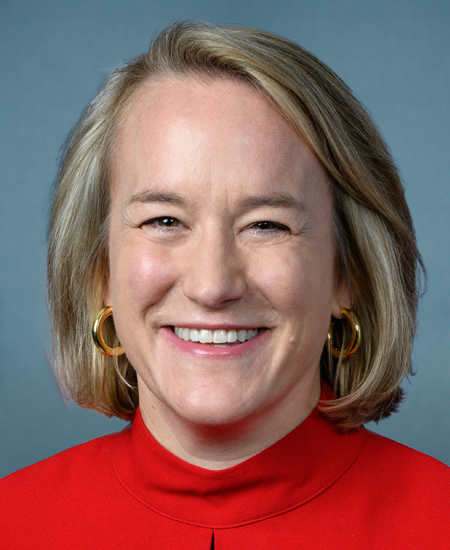
Rep. Nikki Budzinski
Sponsored bills
This resolution supports federal investment in public K-12 schools, affirms that the Department of Education (ED) plays a vital role in the public education system, and states that public education funding should not be diverted (e.g., through the use of vouchers) to privately run K-12 schools. The resolution also rejects any claim that the executive branch has the legal authority to (1) dismantle or relocate ED or any of its major offices; or (2) reduce federal funding for public education, block federal grants for education, or transfer funding burdens for education to state and local governments.
Maddy summaryHR 942, the "Banning SPR Oil Exports to Foreign Adversaries Act," prohibits the export of petroleum products drawn from the U.S. Strategic Petroleum Reserve to China, North Korea, Russia, Iran, and any entity owned or controlled by these countries or the Chinese Communist Party. The Secretary of Energy may grant a waiver for such exports if certified as serving U.S. national security interests, but must issue implementing rules within 60 days of enactment. This policy directly affects U.S. energy exports and entities seeking to purchase SPR oil from the listed adversaries.
Maddy summaryThis bill reauthorizes the Dr. Lorna Breen Health Care Provider Protection Act, extending mental health support programs for healthcare professionals through 2030 (previously ending in 2024). It requires funded programs to specifically address reducing administrative burdens on healthcare workers while continuing to promote access to mental health and substance use disorder services. The legislation directly affects healthcare providers across the U.S. who may access these federally supported resources. Key provisions include extending funding periods and mandating that grant recipients focus on easing workplace administrative tasks, alongside maintaining existing awareness initiatives. The bill does not create new programs but continues and refines existing mental health support for the healthcare workforce.
Maddy summaryHR 922, the Period PROUD Act of 2025, allocates $1.9 billion annually (2025-2028) through the Social Services Block Grant Program, with $200 million specifically dedicated each year (2026-2029) to provide free menstrual products to low-income menstruating individuals. It requires states to distribute these funds to eligible nonprofits with experience in community distribution of basic needs, integrating the program with existing services like SNAP, Medicaid, and WIC. The bill mandates that funds supplement, not replace, other existing programs, prohibits limiting where products can be distributed, and caps administrative costs at 9% of allocated funds. States must report annually and an evaluation of the program’s effectiveness will be completed by 2031.
Stop Antiabortion Disinformation Act or the SAD Act This bill prohibits deceptive advertising for reproductive health services. Specifically, the bill makes it unlawful for a person (i.e., individual, partnership, corporation, association, or organization) to deceptively advertise the reproductive health services they offer, including by misrepresenting that the person (1) offers or provides contraception or abortion services (or referrals for such contraception or abortion services), or (2) employs or offers access to licensed medical personnel. The bill provides for enforcement by the Federal Trade Commission. In addition to any other penalty, violations are subject to a civil penalty that may not exceed the greater of $100,000 (adjusted annually for inflation) or 50% of the revenue earned during the preceding 12-month period by the ultimate parent entity of the person who violated the bill.
Maddy summaryHR 869, the Keep Our PACT Act, mandates specific annual funding levels for two key education programs: Title I of the Elementary and Secondary Education Act (ESEA) and the Individuals with Disabilities Education Act (IDEA). For Title I, it requires funding in fiscal years 2026-2035 that equals the difference between the 2025 funding level and set annual dollar targets (e.g., $20.5 billion for 2026). For IDEA, it sets mandatory annual funding levels that gradually increase to reach 40% of the national average per-pupil expenditure for students with disabilities by 2035. The bill directly affects public school districts and students, particularly those with disabilities, by guaranteeing these funding levels rather than relying on annual appropriations.
Maddy summaryThe SAFE Act creates a new category of "fentanyl-related substances" that would automatically be controlled under Schedule I of the Controlled Substances Act based on specific chemical modifications to fentanyl. This affects anyone involved in the production, distribution, or use of substances meeting this broad definition. The bill establishes a process for removing or rescheduling these substances if they're determined to have less potential for abuse than Schedule I substances, and allows courts to review past convictions involving substances that have since been removed from this category. It also creates new research procedures for Schedule I substances and requires a GAO report analyzing the law's implementation and impact within four years.
Medicare Patient Access and Practice Stabilization Act of 2025 This bill increases certain payment adjustments under the Medicare physician fee schedule for services furnished between April 1, 2025, and January 1, 2026.
Maddy summaryHCONRES 4 is a symbolic resolution expressing Congress's support for tax-exempt fraternal benefit societies (like mutual aid organizations). It recognizes these groups, which have over 7 million members nationwide, as historically and currently providing critical community benefits - including life/health insurance, charitable work, and volunteer services - valued at over $3.8 billion annually. The resolution affirms that their tax-exempt status under Section 501(c)(8) of the Internal Revenue Code remains beneficial and should continue to be promoted. This is a non-binding expression of congressional sentiment, not a policy change.