

Maddy summaryThis resolution (HRES 680) recognizes suicide as a serious public health issue and designates September 8, 2025, as "988 Day" to highlight the national three-digit crisis hotline (988 Suicide and Crisis Lifeline). It does not create new laws or funding but formally supports existing efforts to raise awareness about the 988 hotline, which connects people in mental health crisis to 24/7 support services. The resolution emphasizes the hotline's role in suicide prevention, citing data showing it handled nearly 18 million contacts since 2022 and was reported as helpful by 98% of users. It urges continued public education about the hotline, particularly for high-risk groups like LGBTQI+ youth, and encourages broader access to mental health services.
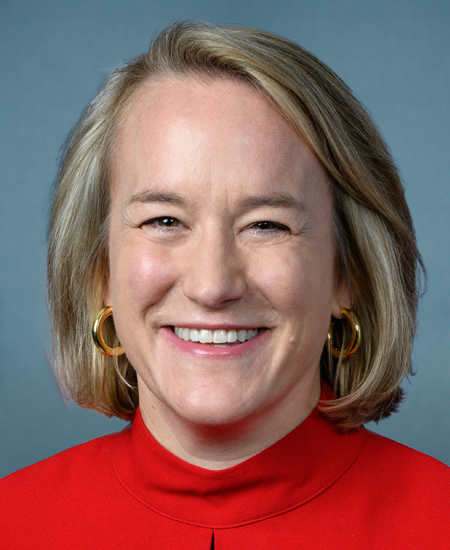
Rep. Nikki Budzinski
Sponsored bills
Sickle Cell Disease Comprehensive Care Act This bill allows state Medicaid programs to establish health homes to provide coordinated care for individuals with sickle-cell disease. (Under current law, state Medicaid programs may establish health homes to provide coordinated care for individuals with specified chronic conditions.) States must ensure that such care includes dental and vision services. The Centers for Medicare & Medicaid Services must issue best practices for states on how to design and implement such health homes.
Maddy summaryThis bill amends the Social Security Act to remove an exclusion for rural facilities primarily treating mental health conditions from Medicare coverage. It specifically changes Section 1861(aa)(2) by deleting the phrase "or a facility which is primarily for the care and treatment of mental diseases," allowing these facilities to qualify for Medicare reimbursement. The change directly affects rural behavioral health centers specializing in mental health care that were previously excluded. The amendment takes effect on January 1, 2027, enabling these facilities to access federal Medicare funding for services.
Maddy summaryHR 5198, the Rural Health Clinic Location Modernization Act of 2025, changes Medicare eligibility rules for rural health clinics by updating the definition of "urban area" used to determine clinic qualification. It replaces the current "urbanized area" standard with a clearer definition: any urban area (per Census Bureau data) having a population of 50,000 or more. This adjustment directly affects clinics seeking Medicare certification, ensuring they meet consistent geographic criteria for rural designation. The change takes effect January 1, 2027, aiming to simplify qualification rules without altering Medicare coverage or benefits.
Maddy summaryThe Empowering Striking Workers Act of 2025 would expand unemployment insurance eligibility to workers unable to work due to labor disputes, including strikes or lockouts. It sets a 14-day waiting period (or earlier if replacements are hired, a lockout starts, or the dispute ends) before benefits begin, treating these workers as "unemployed" under federal law. The bill also removes the standard requirement for these workers to actively seek other employment to qualify for benefits. This directly affects workers involved in labor disputes, such as those on strike or unable to work due to employer lockouts.
Maddy summaryThe Nationwide Right to Unionize Act (HR 5159) would repeal a federal provision allowing states to pass "right-to-work" laws, which currently prevent workers from being required to join a union or pay dues as a condition of employment. By removing this allowance, the bill would permit unions and employers to negotiate agreements requiring membership or dues in all states, including those with existing right-to-work laws. This change would directly affect workers and employers in the 27 states that currently have such laws. The bill focuses on eliminating state-level barriers to union security agreements without mandating union formation or membership.
Maddy summaryThis bill requires the EPA to establish guidelines for indoor air contaminants like radon, formaldehyde, and carbon monoxide that affect schools and childcare facilities. It mandates a national assessment of indoor air quality in these buildings, with updates every five years, and provides technical assistance to schools and childcare providers to implement air quality improvements. The EPA must publish science-based guidelines with recommended concentration limits for key contaminants and support voluntary building certifications for healthier indoor environments. These provisions directly impact local schools, childcare centers, and state/local governments responsible for building maintenance and health standards.
Maddy summaryThis bill prohibits Members of Congress, their spouses, and dependent children from owning or trading certain investments, including stocks, commodities, and derivatives (referred to as "covered investments"). It requires affected individuals to divest these investments within 90-180 days, with specific exemptions for Treasury bonds, diversified mutual funds, small business interests, and family trusts meeting strict conditions. Violations incur penalties of 10% of the investment's value plus disgorgement of profits, paid directly to the U.S. Treasury. The law applies to all covered individuals during federal service, with exceptions for investments acquired through inheritance or occupational trading (e.g., a spouse’s finance job).
Maddy summaryThe HANDS Act (HR 5120) requires Medicare, Medicaid, and TRICARE to cover opioid overdose reversal drugs (such as naloxone) at no cost for patients at risk of opioid overdose who are being discharged from hospitals, emergency departments, or ambulatory surgical centers. Starting January 1, 2026, these drugs must be provided at the time of discharge along with administration instructions, eliminating all cost-sharing (like deductibles or copays) for eligible patients. The bill defines "preventive opioid overdose reversal drugs" as intranasal or intramuscular medications administered by healthcare providers (e.g., doctors or nurses) to at-risk patients during discharge. This policy aims to increase access to life-saving medication at critical care transition points without mandating provider administration.
Maddy summaryThe Preventing HEAT Illness and Deaths Act of 2025 establishes a National Integrated Heat Health Information System (NIHHIS) within NOAA to coordinate federal efforts on heat-related health risks. It creates an interagency committee to develop a strategic plan for improving data sharing, forecasting, and decision support tools for heat events, with a focus on communities disproportionately affected by extreme heat. The bill authorizes a Community Heat Resilience Program that provides grants to states, tribes, and local governments for projects like urban forestry, cooling centers, and heat action plans, requiring at least 40% of funds to target communities with environmental justice concerns. The legislation also mandates a study to identify gaps in heat information and response capabilities across the country. This comprehensive approach aims to reduce heat-related health impacts, particularly for vulnerable populations including older adults, outdoor workers, and communities of color.