

Maddy summaryThis non-binding House Resolution (HRES 848) expresses congressional support for U.S. funding of Gavi, the Vaccine Alliance, to expand vaccine access in low-income countries. It highlights Gavi’s role in immunizing over 1.1 billion children since 2000, averting an estimated 18.8 million deaths, and delivering malaria vaccines to combat a disease killing 580,000 children annually in Africa. The resolution emphasizes that U.S. investment leverages global health security by reducing disease spread and returning $54 in economic benefits for every $1 spent. It urges continued U.S. financial commitments to Gavi’s 2026-2030 strategy, which aims to deliver 50 million malaria vaccine doses and strengthen health systems.
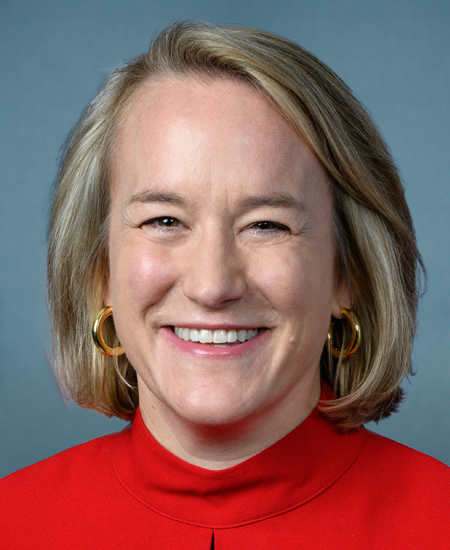
Rep. Nikki Budzinski
Sponsored bills
Maddy summaryThis non-binding resolution (HRES 844) expresses the U.S. House of Representatives' support for designating October 2025 as "Crime Prevention Month." It encourages federal agencies to fund evidence-based crime prevention programs - like youth mentorship, mental health services, and neighborhood safety initiatives - and urges state/local governments to adopt strategies such as Crime Prevention Through Environmental Design. The resolution also commends community workers and calls on all citizens to participate in public safety activities during October. It has no legal effect but aims to raise awareness and foster collaboration across communities, government, and private sectors to reduce crime.
Maddy summaryThis bill changes how Social Security cost-of-living adjustments (COLAs) are calculated for seniors. It requires using either the standard CPI-W index or a new CPI-E index (measuring inflation specifically for seniors' spending patterns), whichever results in a higher payment increase. The change applies to COLAs determined for cost-of-living computation quarters ending on or after September 2026. It directly affects Social Security beneficiaries aged 62 and older, potentially increasing their monthly payments based on the more senior-focused CPI-E index.
Maddy summaryThe American Energy Independence and Affordability Act extends multiple clean energy tax credits that were set to expire between 2025 and 2026. It specifically extends residential clean energy credits through 2034, clean electricity investment credits for wind and solar through 2032, and clean vehicle credits for electric vehicles through 2032. The bill also reinstates special rates for sustainable aviation fuel and modifies requirements for energy-efficient home improvements. These provisions directly affect homeowners installing solar panels, businesses investing in clean energy infrastructure, and manufacturers producing clean energy equipment.
Head Start Shutdown Protection Act of 2025 This bill requires the Department of Health and Human Services to reimburse a state, local government, or school district that uses its funds to maintain participation in the Head Start program or the Early Head Start program during a government shutdown in which there is a lapse in federal appropriations for the programs. The Head Start programs provide comprehensive early childhood education and development services to low-income children. The programs seek to promote school readiness through the provision of educational, health, nutritional, social, and other services.
Maddy summaryThis bill restores the pre-January 20, 2025, administrative structure of the Head Start program within the Department of Health and Human Services. It establishes a central Office of Head Start with 12 regional offices, requiring the Secretary to maintain all prior staffing levels, organizational structure, and functions. The bill prohibits the Secretary from restructuring the office or reducing staff without providing 60 days' notice to Congress and the public, ensuring continuity in program oversight. It directly affects the Office of Head Start, its regional offices, and HHS staff managing Head Start operations.
Maddy summaryHR 647, the Ensuring Veterans’ Final Resting Place Act of 2025, amends a provision in U.S. Code (38 U.S.C. § 2306(h)) to change how burial benefits are provided for veterans. It removes the requirement that a veteran’s family must provide an urn or plaque for the Department of Veterans Affairs (VA) to offer additional burial benefits; the VA will now automatically provide these benefits regardless of whether the family supplies such items. This change directly affects veterans’ families arranging burial services, making it easier to access burial benefits without needing to procure specific items first. The amendment applies to veterans who die on or after January 5, 2021, updating existing eligibility rules.
Maddy summaryHCONRES 57 is a symbolic resolution honoring Wadee Alfayoumi, a 6-year-old Palestinian-American boy murdered in a hate crime in Illinois on October 14, 2023. It commemorates his life and condemns the perpetrator’s anti-Muslim, anti-Palestinian hate speech that led to his death. The resolution states that the U.S. has "zero tolerance for hate crimes, Islamophobia, anti-Semitism, and anti-Palestinian and anti-Arab discrimination." As a concurrent resolution, it does not create new laws or policies but serves to recognize the victim and affirm national principles against hate-based violence.
Maddy summaryThe Fair Warning Act of 2025 requires employers with 50 or more employees (or $2 million+ annual payroll) to provide 90 days' written notice before site closings or mass layoffs. This notice must include details about the layoff, recall dates, available benefits, and job opportunities at other locations, and must be provided to affected employees, state workforce agencies, and local governments. Exceptions include natural disasters, terrorist attacks, public health emergencies, and situations where new business or financing would be jeopardized by the notice. The bill creates a public database tracking all notices and increases penalties for non-compliance, including liquidated damages equal to 30 days of back pay.
Maddy summaryThis bill makes federal funding for the WIC program mandatory by requiring Congress to appropriate necessary funds annually for fiscal year 2026 and each subsequent year. It removes discretionary language from WIC funding requirements and clarifies that eligible participants must be served without participation limits. The bill directly affects low-income pregnant women, new mothers, and young children who rely on WIC for nutrition assistance, ensuring continued access to critical food, health, and education services.