

Maddy summaryThis bill amends federal energy conservation law to require federal agencies to consider mechanical insulation as a standard energy-saving measure during building evaluations. It defines "mechanical insulation property" as materials that reduce energy loss in mechanical systems while meeting ASHRAE 90.1 standards, including insulation placed in service with those systems. The law adds mechanical insulation to the list of measures agencies must evaluate for potential installation in federal buildings as part of their required energy and water assessments. This directly affects federal agencies managing buildings, ensuring they formally assess this specific efficiency measure during routine evaluations.
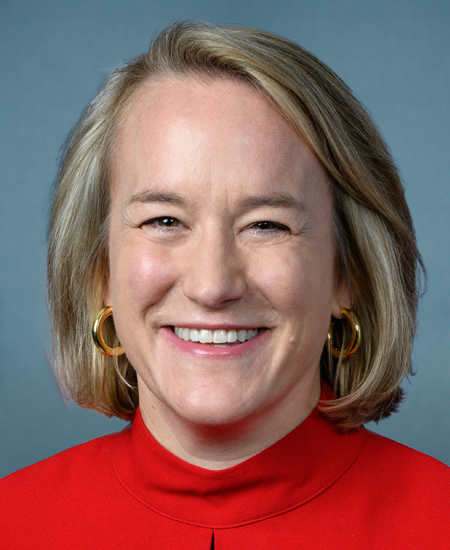
Rep. Nikki Budzinski
Sponsored bills
Maddy summaryThis bill expands Medicare incentives to increase mental health and substance use disorder care in underserved areas. It adds a 15% bonus payment to Medicare for specific mental health and substance use services provided by qualified non-physician providers (like clinical social workers, psychologists, and counselors) in designated "mental health professional shortage areas." The bonus applies to services furnished on or after January 1, 2027, directly benefiting Medicare beneficiaries in these areas and encouraging more providers to work there. The change modifies existing Medicare payment rules to include these new provider types and service categories.
Maddy summaryThis bill would improve Medicare reimbursement for specific care services needed by people with ALS (amyotrophic lateral sclerosis). It creates a new payment system for eight key services including specialized physician support, occupational therapy, speech pathology, physical therapy, dietary support, respiratory support, registered nurse support, and coordination of medical equipment. The bill sets a base payment of $800 for these services in 2027, with annual increases based on a specific formula. This directly affects ALS patients who would have better access to these services and the medical facilities that provide them.
Maddy summaryThe Family Violence Prevention and Services Improvement Act of 2026 amends federal law to enhance support for victims of family violence, domestic violence, and dating violence. The bill authorizes $270 million annually for fiscal years 2027-2031 to fund state, tribal, and community programs, with specific funding reserved for tribal programs (12.5%), national hotlines ($20.5 million for general hotline, $4 million for Indian hotline), and services for underserved populations. It requires grantees to provide trauma-informed, culturally appropriate services while prohibiting discrimination and protecting victim confidentiality, and mandates accessibility for people with disabilities and limited English proficiency. The bill also establishes new technical assistance centers, Tribal resource centers, and community-based prevention programs to address the needs of underserved populations including Native Hawaiians, Alaska Natives, and racial and ethnic minorities.
Maddy summaryThis bill extends dependency and indemnity compensation to surviving spouses of veterans who die from amyotrophic lateral sclerosis (ALS), treating ALS-related deaths as qualifying for benefits regardless of how long the veteran had the disease before death. It requires surviving spouses to have been married to the veteran for at least eight continuous years prior to death to qualify for compensation. The changes apply to veterans dying from ALS on or after October 1, 2025. Additionally, the bill requires the Veterans Affairs Secretary to submit a report within 180 days of enactment identifying other service-connected disabilities with high mortality rates that might warrant similar treatment.
Maddy summaryHR 6635, the Bus Operator Safety and Security Act, requires new fixed-route buses over 30 feet long (with a 10+ year lifespan) purchased using federal transit funds to have physical barriers at the driver's workstation. These barriers must extend from floor to ceiling, fully enclose the workstation to block entry of people or objects, and not obstruct the driver's view. Transit agencies must install these barriers within two years of the law's enactment, unless the labor union representing bus drivers agrees to waive the requirement. The rule applies only to new buses bought with federal funds (excluding those from rural transportation programs) and directly affects transit agencies and bus drivers operating large fixed-route vehicles.
This resolution supports the designation of the International Year of the Woman Farmer and recognizes the critical role of women in agriculture. The resolution also encourages citizens to celebrate the impact these women have on the food systems and agricultural workforce of the United States by encouraging and empowering women to pursue careers in agriculture and cultivate leadership opportunities.
Maddy summaryThis bill requires most employers (those with 50+ employees for 20+ weeks annually) to display a clear notice about veterans' benefits in visible workplace areas. The notice, developed by the Labor and Veterans Affairs Departments, includes the Veterans Crisis Line, how to apply for benefits, and state-specific veteran resources. Employers must post the notice starting one year after the bill's enactment, with the notice updated twice yearly and made available online. A 180-day information campaign will also inform employers about the requirement.
Maddy summaryHJRES 144 is a congressional disapproval resolution targeting a specific rule issued by the Department of Veterans Affairs (VA) on December 31, 2025, which addressed "Reproductive Health Services" (90 Fed. Reg. 61310). This resolution directs Congress to disapprove the VA rule under Chapter 8 of Title 5, U.S. Code, meaning the rule would have no legal effect if passed. The bill directly affects the VA's implementation of reproductive health services for veterans, as it seeks to nullify the agency's existing policy. This is a procedural measure, not a substantive policy change, aimed solely at blocking the VA's rule through congressional action.
Maddy summaryHCONRES 68 would require the President to remove U.S. military forces from Venezuela unless Congress has explicitly authorized their use through a declaration of war or a specific law. This applies to any U.S. Armed Forces currently stationed in Venezuela without such authorization. The resolution is based on the War Powers Resolution, which mandates congressional oversight of military deployments. It directs the immediate withdrawal of unapproved forces without adding new time limits or conditions.