Violence Against Women Extension Act of 2021 This bill reauthorizes for FY2022 various programs and activities authorized by the Violence Against Women Act of 1994 and subsequent legislation and administered by the Office on Violence Against Women within the Department of Justice.
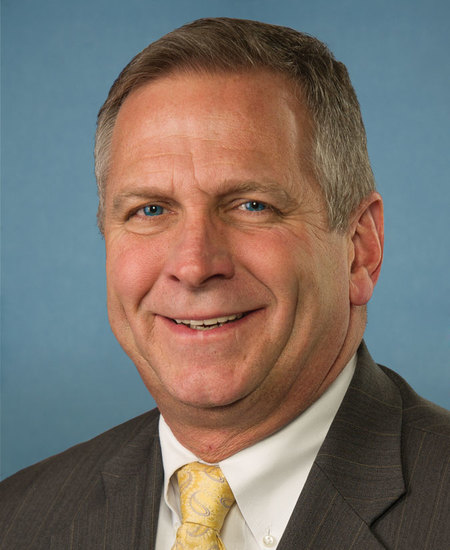
Rep. Mike Bost
Sponsored bills
Regulations from the Executive in Need of Scrutiny Act of 20 21 This bill revises provisions relating to congressional review of agency rulemaking. Specifically, the bill establishes a congressional approval process for a major rule. A major rule may only take effect if Congress approves of the rule. A major rule is a rule that results in (1) an annual effect on the economy of $100 million or more; (2) a major increase in costs or prices for consumers, individual industries, government agencies, or geographic regions; or (3) significant adverse effects on competition, employment, investment, productivity, innovation, or the ability of U.S.-based enterprises to compete with foreign-based enterprises. In addition, the bill establishes a congressional disapproval process for a nonmajor rule. A nonmajor rule may only take effect if Congress does not disapprove of the rule.
Lawful Interstate Transportation of Firearms Act This bill revises criminal provisions related to the interstate transportation of firearms and ammunition. An individual may transport a firearm between two places (e.g., states) where it is legal to possess, carry, or transport the firearm. During transport, the firearm must be unloaded and secured or securely stored. Additionally, an individual may transport ammunition, or a detachable magazine or feeding device, between two places where it is legal to possess, carry, or transport the ammunition, magazine, or feeding device. During transport, the ammunition, magazine, or feeding device must not be loaded into a firearm and must be securely stored. The term transport includes staying in temporary lodging; stopping for food, fuel, vehicle maintenance, an emergency, or medical treatment; or any other activity incidental to the transport. The bill prohibits the arrest or detention of an individual for a state or local firearm or ammunition violation unless there is probable cause to believe the individual failed to comply with the provisions of this bill, and there is probable cause to believe the individual committed another crime.

Police Officers Protecting Children Act This bill specifies that certain active and retired law enforcement officers who are authorized to carry concealed firearms are not subject to the federal prohibition on possessing (or discharging) a firearm in a school zone.
Adoptee Citizenship Act of 2021 This bill provides for the automatic acquisition of citizenship for certain individuals adopted by a U.S. citizen. A child born outside the United States and adopted by a U.S. citizen shall automatically acquire citizenship upon meeting certain requirements, regardless of when the adoption was finalized. Currently, adoptees who were over the age of 18 on February 27, 2001, do not automatically acquire citizenship. An individual born outside the United States and residing in the United States shall automatically acquire citizenship if the individual (1) was adopted by a citizen before becoming 18 years old, (2) was physically present in the United States in the citizen parent's custody pursuant to lawful admission before becoming 18 years old, (3) never acquired citizenship before this bill's enactment, and (4) was lawfully residing in the United States on this bill's enactment date. An individual born outside the United States and residing outside the United States but who otherwise meets all of the requirements shall automatically acquire citizenship upon being physically present in the United States pursuant to lawful admission. Such an individual shall be subject to a background check. If the background check reveals the individual has committed a crime that was not properly resolved, the individual may not receive a visa unless the Department of Homeland Security and Department of State have coordinated with law enforcement to ensure that action was taken to resolve the issue.
Sarah's Law This bill requires U.S. Immigration and Customs Enforcement (ICE) to detain an alien who is unlawfully present in the United States and has been charged with a crime that resulted in the death or serious bodily injury of another person. ICE shall make reasonable efforts to obtain information about the identity of any victims of the crimes for which such alien was charged or convicted. ICE shall provide the victim, or a relative or guardian of a deceased victim, with information about such alien, including name, date of birth, nationality, immigration status, criminal history, and a description of any related removal efforts.
This concurrent resolution expresses the sense of Congress that a carbon tax would be detrimental to American families and businesses and is not in the best interest of the United States.
Save Local Business Act This bill provides that a person may be considered a joint employer in relation to an employee under federal labor law only if such person directly, actually, and immediately (and not in a limited and routine manner) exercises significant control over the essential terms and conditions of employment. Such control may by demonstrated by hiring and discharging employees, determining individual employee rates of pay and benefits, day-to-day supervision of employees, assigning individual work schedules, positions, and tasks, and administering employee discipline.
Metastatic Breast Cancer Access to Care Act This bill expedites payment of Social Security Disability Insurance (SSDI) benefits and eligibility for Medicare coverage for those with metastatic breast cancer (i.e., breast cancer that has spread to other sites in the body). Specifically, the bill eliminates the 5-month waiting period for SSDI benefits and the subsequent 24-month waiting period for Medicare coverage for individuals with metastatic breast cancer. Under current law, individuals generally must wait five months after the onset of disability to begin receiving SSDI benefits and an additional 24 months to become eligible for Medicare.
Public Safety Employer-Employee Cooperation Act This bill requires the Federal Labor Relations Authority to determine whether a state substantially provides public safety officers or employees the right to form and join a labor organization; recognition by public safety employers of the employees' labor organization, agreement to bargain with the organization, and reduction of any agreements to writing in a contract or memorandum of understanding; the right to bargain over hours, wages, and terms and conditions of employment; and binding interest arbitration to resolve an impasse in collective bargaining negotiations. The bill makes the authority responsible for (1) determining the appropriateness of units for labor representation; (2) supervising elections; (3) conducting hearings and resolving complaints of unfair labor practices; and (4) protecting the right of employees to form, join, or assist any labor organization, or to refrain from doing so. An employer, public safety officer, or labor organization may not engage in a lockout, sickout, work slowdown, strike, or any other organized job action that will measurably disrupt the delivery of emergency services and is designed to compel an employer, public safety officer, or labor organization to agree to the terms of a proposed contract.