

Pregnancy Loss Mental Health Research Act of 2021 This bill expands research and related activities that address mental health complications following a pregnancy loss (i.e., miscarriage, stillbirth, or abortion). Specifically, the National Institutes of Health and the National Institute of Mental Health (NIMH) must expand and intensify research on mental health complications following pregnancy loss. In particular, NIMH must conduct a longitudinal study to determine the prevalence and other information about such mental health complications. Additionally, the Department of Health and Human Services must award grants to health providers, state or local governments, or other appropriate nonprofits to deliver services to individuals with mental health conditions following a pregnancy loss. Funding made available under this bill may not be provided to an entity (or an entity's affiliate, subsidiary, successor, or clinic) that performs abortions other than in the case of a pregnancy (1) that is the result of rape or incest; or (2) when the life of the woman is in danger due to a physical disorder, injury, or illness.
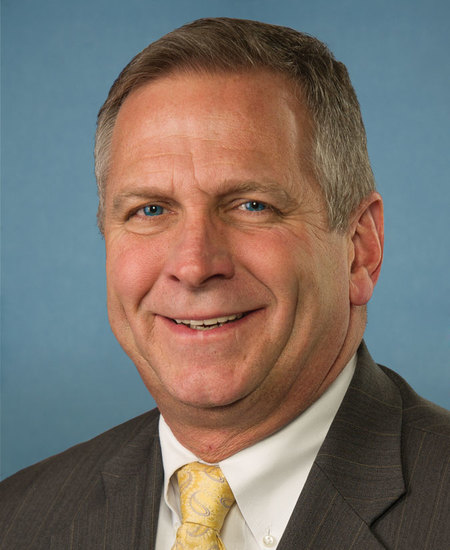
Rep. Mike Bost
Sponsored bills
This joint resolution nullifies a Department of Labor emergency temporary standard for preventing the transmission of COVID-19 in employment settings. Under the standard issued on November 5, 2021, employers with 100 or more employees must require their onsite employees to either be fully vaccinated against COVID-19 or undergo weekly COVID-19 testing.
Keep Innovation in America Act This bill modifies provisions enacted by the Infrastructure Investment and Jobs Act relating to the definitions of broker and digital assets and their reporting requirements. The bill redefines broker , for tax reporting purposes, to mean any person who (for consideration) stands ready in the ordinary course of business to effect sales of digital assets at the direction of their customers. The bill redefines digital asset to mean any digital representation of value which is recorded on a cryptographically secured distribution ledger (this revised definition eliminates the discretion of the Department of the Treasury to include similar technology in the definition of digital asset). The bill eliminates the cash reporting requirement for digital assets (i.e., receipt of more than $10,000) but requires Treasury to conduct a study of, and report on, the effect of expanding the definition of cash to include any digital asset.
VITAL Assessment Act This bill implements changes related to the Department of Veterans Affairs (VA) Veterans Integration to Academic Leadership (VITAL) program, which focuses on enhancing student veterans' academic success and retention by assisting with things like mental and physical health. The VA must report on the program and establish best practices, goals, and measures for the program that are uniform among the VA's medical centers. The bill also requires the VA to conduct outreach among the Armed Forces, veterans service organizations, institutions of higher learning, and noncollege degree programs regarding the VITAL program. Additionally, the VA must assess the feasibility and advisability of including the suicide rate for student veterans in the National Veteran Suicide Prevention Annual Report.
VA Assessment by Independent Measures Act or the VA AIM Act This bill requires the Department of Veterans Affairs (VA) to, at least once every 10 years, enter into a contract with a private sector entity or entities to conduct an independent assessment of the hospital care, medical services, and other health care furnished by the VA. The contracted entities must have experience and proven outcomes in health care management and in optimizing the performance of the health care delivery systems of the Veterans Health Administration and the private sector. The entities must also specialize in implementing large-scale organizational and cultural transformations.
Student Veterans Counseling Centers Eligibility Act This bill requires the Department of Veterans Affairs (VA) to furnish counseling, including counseling through a Vet Center, to veterans or members of the Armed Forces who are pursuing a course of education using specified Department of Defense or VA educational assistance benefits. Specifically, such counseling must be provided to veterans or members of the Armed Forces who are utilizing educational assistance benefits under the Montgomery GI Bill (Active Duty), Montgomery GI Bill (Selected Reserve), Veteran Readiness and Employment program, Post-Vietnam Era Veterans Educational Assistance Program, Post-9/11 GI Bill, Reserve Educational Assistance Program, VA High Technology Pilot Program, or Veteran Rapid Retraining Assistance Program.
This resolution recognizes the members of the Armed Forces who conducted the noncombatant evacuation operation airlift from Hamid Karzai International Airport in Kabul, Afghanistan, and honors the service and sacrifice of the men and women who participated in and supported Operation Allies Refuge. The resolution applauds the members of the U.S. Transportation Command and the Air Mobility Command of the Air Force who provided hope, saved lives, and executed their mission.
IDEA Full Funding Act This bill provides permanent, mandatory funding for the grant program that assists states and outlying areas in providing special education and related services to children with disabilities.
This concurrent resolution declares that Congress should not impose any new performance fee, tax, royalty, or other charge relating to the public performance of sound recordings on a local radio station for broadcasting sound recordings over the air, or on any business for such public performance of sound recordings.
Federal Initiative to Guarantee Health by Targeting Fentanyl Act This bill places fentanyl-related substances as a class into schedule I of the Controlled Substances Act. A schedule I controlled substance is a drug, substance, or chemical that has a high potential for abuse; has no currently accepted medical value; and is subject to regulatory controls and administrative, civil, and criminal penalties under the Controlled Substances Act. Additionally, the bill prohibits the application of a mandatory minimum prison term for certain drug offenses involving fentanyl-related substances.