

No Taxpayer Funding for the U.N. Population Fund This bill prohibits the use of funds to provide contributions directly or indirectly to the United Nations Population Fund (UNFPA). The UNFPA is a United Nations agency that supports access to sexual and reproductive health services, including voluntary family planning, maternal health care, and sexuality education.
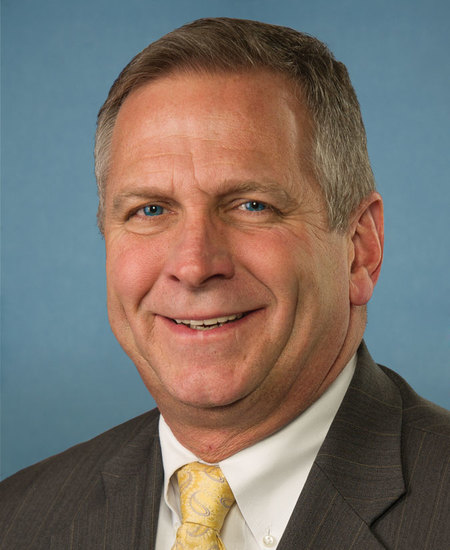
Rep. Mike Bost
Sponsored bills
Life at Conception Act This bill declares that the right to life guaranteed by the Constitution is vested in each human being at all stages of life, including the moment of fertilization, cloning, or other moment at which an individual comes into being. Nothing in this bill shall be construed to authorize the prosecution of any woman for the death of her unborn child.
Standardizing Thresholds Of Penalties for Fentanyl Act or the STOP Fentanyl Act This bill reduces the drug quantity thresholds that trigger a mandatory minimum prison term for a defendant who manufactures, distributes, imports, exports, or possesses with intent to distribute fentanyl. The bill also creates enhanced criminal penalties for certain violations involving fentanyl that was imported along the U.S.-Mexico border. Specifically, the bill reduces from 400 to 5 grams the fentanyl quantity and from 100 to 0.05 grams the fentanyl analogue quantity that trigger a mandatory minimum prison term for high-level first-time or repeat offenders. It also reduces from 40 to 0.5 grams the fentanyl quantity and from 10 to 0.005 grams the fentanyl analogue quantity that trigger a mandatory minimum prison term for low-level first-time or repeat offenders. Additionally, the bill creates enhanced mandatory minimum prison terms for importing or exporting fentanyl that was imported along the U.S.-Mexico border.
Maddy summaryHR 330, the Title X Abortion Provider Prohibition Act, prohibits federal funding under the Title X family planning program for clinics that perform or fund abortions, except in cases of rape, incest, or when a physician certifies a life-threatening condition. It requires clinics receiving Title X funds to certify they do not provide or fund abortions (with the specified exceptions), and hospitals are exempt if they don't fund non-hospital abortion providers. The bill mandates annual reports to Congress listing all funded clinics, the number of abortions performed under exceptions (including rape/incest cases), and the certification dates for each clinic. This directly affects Title X-funded clinics nationwide that provide abortion services or fund such services, altering their eligibility for federal funding. The law aims to restrict federal support for abortion access within the Title X program while maintaining limited exceptions.
Maddy summaryHR 128, the Defund Planned Parenthood Act of 2023, blocks federal funding to Planned Parenthood Federation of America and its affiliates for one year unless they certify they will not perform or fund abortions (except in cases of rape, incest, or life-threatening conditions for the patient). This directly affects Planned Parenthood clinics and their federal funding streams. The bill redirects $235 million to community health centers under the Public Health Service Act to continue providing women’s health services like contraception, cancer screenings, and prenatal care. It requires repayment of funds if Planned Parenthood violates the certification and explicitly states the law won’t reduce overall federal funding for women’s health services.
Protect Our Military Families' 2nd Amendment Rights Act This bill broadens the scope of allowable firearms transactions involving active duty service members and their spouses. Specifically, the bill allows a licensed gun dealer, importer, or manufacturer to sell or ship a firearm or ammunition to the spouse of a member of the Armed Forces on active duty outside the United States. Current law already allows a licensed dealer, importer, or manufacturer to sell or ship a firearm or ammunition to a member of the Armed Forces on active duty outside the United States. The bill also specifies that, for purposes of federal firearms laws, a member of the Armed Forces on active duty, or his or her spouse, is a resident of the state in which (1) the member or spouse maintains legal residence, (2) the permanent duty station of the member is located, and (3) the member maintains a home from which he or she commutes to the permanent duty station.
American Workforce Empowerment Act This bill allows tax-preferred college savings plans (529 plans) to fund certain postsecondary certificate programs and apprenticeship programs.
Maddy summaryHR 297 requires the military Secretary to reinstate service members who were involuntarily separated solely for refusing a COVID-19 vaccine. It applies specifically to those separated only due to vaccine refusal, not other reasons. If a covered member chooses reinstatement, they must be returned to their previous rank and branch of service. The bill mandates this action without requiring the member to receive the vaccine.
Maddy summaryHR 287, the CRT Transparency Act, requires states and local school districts to publicly post all curriculum materials for every elementary and secondary school grade level on accessible websites. Specifically, it amends the Elementary and Secondary Education Act to mandate that states ensure local agencies post curricula online, and that local agencies themselves must make their grade-level curricula publicly available. This directly affects all public K-12 schools and their governing bodies by creating a new transparency requirement for teaching materials. The bill focuses solely on making curriculum content publicly accessible online, without specifying content types or subject areas. It does not alter curriculum content itself but requires existing materials to be posted online for public review.
Maddy summaryHJRES 8 proposes a constitutional amendment to permanently set the Supreme Court's size at nine justices. The bill would require any future changes to the Court's composition to follow this specific number, locking in the current structure. It does not alter the existing Court size (which has been nine since 1869) but aims to prevent future adjustments through legislative action. The amendment must be ratified by three-fourths of state legislatures within seven years to take effect. This is a procedural proposal focused on constitutional structure, not a direct policy affecting citizens or programs.