

Maddy summaryThis bill requires FEMA to revise its disaster aid evaluation rules to consider local economic conditions like median income, poverty rates, and tax revenue when deciding whether to grant disaster assistance. It directly affects rural communities that have been denied federal aid despite significant damage, as FEMA currently focuses primarily on physical damage assessments. The key change mandates that both public (community) and individual assistance programs must factor in these economic indicators during need evaluations. Additionally, it sets a minimum 10% non-Federal cost share for repair projects under the Stafford Act. The rule changes apply to all disaster declarations denied since January 2012.
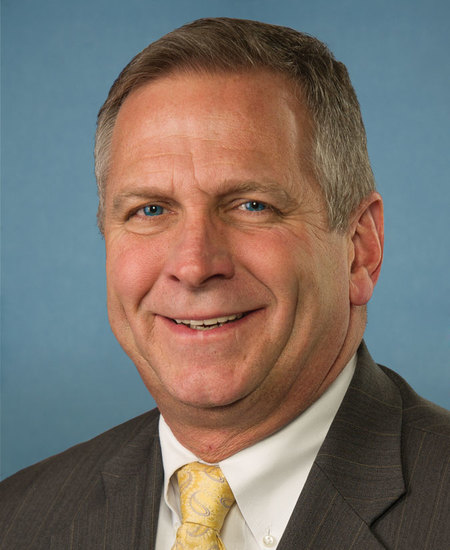
Rep. Mike Bost
Sponsored bills
Maddy summaryThis bill amends the Public Health Service Act to improve how the Organ Procurement and Transplantation Network (OPTN) is operated. It changes the contracting process by allowing the Secretary to award grants, contracts, or cooperative agreements to public or private entities for the OPTN, with specific provisions to ensure distinct operations for the network and its governing board. The bill also includes technical corrections to existing law and requires a GAO review of the OPTN's historical financing within two years of enactment. This legislation directly affects the organizations and processes managing organ donation and transplantation in the United States.
Maddy summaryHRES 720 designates the week of September 24-30, 2023 (and annually thereafter) as "Gold Star Families Remembrance Week" to honor families who have lost loved ones in military service. It specifically recognizes the sacrifices of families of fallen service members and veterans, and encourages Americans to observe the week through community service and celebrating the lives of those who died protecting the nation. This resolution is procedural and symbolic, with no new funding, regulations, or policy changes - only a formal designation to honor these families. It directly affects Gold Star families (those with members who died in military service) and the broader public through its call for observance.
Maddy summaryHRES 684 is a symbolic congressional resolution passed by the U.S. House of Representatives on September 14, 2023, condemning New Mexico Governor Michelle Lujan Grisham's emergency order that temporarily suspended open and concealed carry firearm rights for 30 days. The resolution asserts the order violated the Second Amendment, citing Supreme Court precedents (Heller, McDonald, Bruen) and noting a federal judge had already blocked the order's firearm restrictions. It does not change any laws or impose legal consequences - it is solely a formal expression of disapproval from Congress. The resolution directly addresses the Governor's actions but has no effect on New Mexico's laws or citizens' rights.
Maddy summaryHR 5558 would establish the Prairie du Rocher French Colonial National Historical Park in Illinois to preserve and interpret key sites of French colonial history. The park would include Fort de Chartres (a National Historic Landmark), the Creole House, the ASC Convent (built 1876), the Pierre Menard Home, and the Kolmer Site, recognizing the area's multi-ethnic community and contributions of enslaved Africans, Native Americans, and religious groups like the Adorers of the Blood of Christ. It aims to provide educational programs about the region's French colonial heritage and support preservation efforts for these historic properties. The National Park Service would manage the park under standard national park system guidelines.
Maddy summaryHR 1435, the Preserving Choice in Vehicle Purchases Act, amends the Clean Air Act to restrict states from implementing vehicle emissions rules that limit the sale or use of new gasoline-powered cars. It directly affects states with stricter emissions standards (like California) by adding a new definition that blocks state rules "directly or indirectly" limiting internal combustion engine vehicles as defined in federal regulations as of January 1, 2023. The bill requires the EPA to revoke existing state emissions waivers granted between January 2022 and the bill’s enactment if they don’t comply with this new definition. This creates a concrete federal standard preventing states from advancing policies that could reduce demand for conventional vehicles.
Maddy summaryHR 5455, the Collision Avoidance Systems Act of 2023, allows automakers to install pulsating light systems as rear-end collision avoidance technology on new vehicles. The bill requires the Secretary of Transportation to issue new regulations within 180 days updating Federal Safety Standard 108 to include performance-based rules for these systems. Specifically, it defines a "pulsating light system" as a high-mounted brake light that flashes rapidly (up to 4 times for no more than 1.2 seconds) before switching to steady light, with a 5-second lockout period after braking stops. This directly affects vehicle manufacturers who must comply with the updated safety standards for brake lights.
Maddy summaryThe Life.Gov Act (HR 5406) requires the U.S. Department of Health and Human Services to create a federal website called life.gov within one year of enactment. The website will provide pregnant and postpartum women with locally tailored resources - such as health services, financial assistance, and mental health support - via zip code searches, multilingual access, and user feedback tools. States must submit resource recommendations meeting strict criteria (e.g., no abortion providers, 3+ years of service), and the website cannot list "prohibited entities" (defined as abortion providers or supporters). The Secretary must report to Congress within 180 days on website usage, user feedback, and gaps in resources, using existing HHS funding.
Maddy summaryThe Freedom to Breathe Act (HR 5368) prohibits the use of federal funds to enforce mask mandates for passengers traveling on air carriers, public transit, or in elementary, secondary, and higher education institutions from enactment until December 31, 2024. It bans federal agencies from requiring masks in these settings and prevents transportation providers or schools from denying service to individuals who refuse to wear masks. The law also overrides conflicting state or local rules during the applicable period. This applies specifically to settings receiving federal funding, such as public schools and federally supported transit systems.
Maddy summaryHR 3152, the "Fight CRIME Act," aims to maintain international restrictions on Iran's missile-related activities by requiring diplomatic efforts to extend these restrictions before they expire in October 2023. The bill mandates annual reports detailing U.S. diplomatic strategies, potential impacts of expiration, and measures to deter missile technology transfers to Iran. It establishes sanctions against foreign individuals or entities that knowingly support Iran's missile or drone programs, including asset freezes and visa restrictions. These sanctions apply regardless of whether UN restrictions remain in effect after their expiration, directly affecting foreign entities involved in these activities.