

Maddy summaryThis bill expands eligibility for federal clean water funds to include qualified nonprofit organizations for constructing or improving water treatment works. It also creates new funding pathways for privately owned water treatment facilities to implement efficiency upgrades, conservation measures, water reuse, and security improvements. Crucially, it requires that any assistance to private operators must directly benefit the facility's customers (not shareholders), as determined by the administering state agency. These changes modify existing Clean Water Act provisions to broaden access to infrastructure funding while maintaining customer-focused benefit requirements.
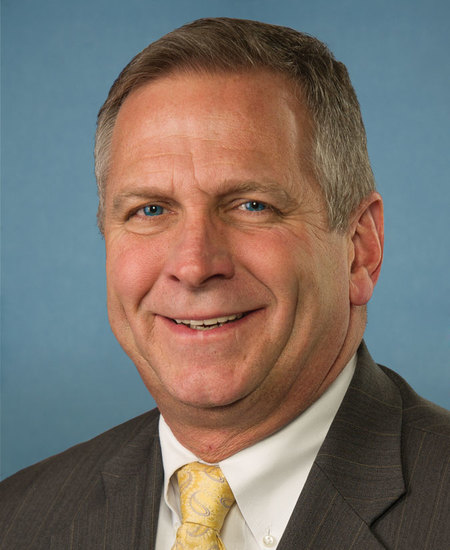
Rep. Mike Bost
Sponsored bills
Maddy summaryThe Conscience Protection Act of 2024 would strengthen protections for health care providers, facilities, and organizations that refuse to participate in or provide coverage for abortions, assisted suicide, or other procedures conflicting with their religious or moral beliefs. It creates a private right of action allowing individuals or entities to sue when their conscience rights are violated, and requires the Department of Health and Human Services to enforce existing conscience protections through the Office for Civil Rights. The bill prohibits discrimination against health care entities that decline to provide or facilitate these services, while ensuring these protections don't interfere with emergency care requirements under existing law. It also establishes clearer enforcement mechanisms, including the ability to terminate federal funding for non-compliance with conscience protections.
Maddy summaryThe VA Home Loan Program Reform Act establishes a new "Partial Claim Program" to help veterans avoid foreclosure on VA-guaranteed home loans. Under this program, the VA can purchase up to 20% of a defaulted or at-risk loan, requiring veterans to repay the VA with 0% interest if they agree to monthly payments within a year (0.5% otherwise), while the VA receives a secondary claim on the property. The bill also amends existing law to give the VA more authority to prevent foreclosure, such as paying loan holders to avoid foreclosure and requiring loan holders to place loans in forbearance. The program expires on September 30, 2026, and includes administrative rules for processing payments and conducting audits.
Maddy summaryHRES 901 is a U.S. House resolution expressing support for democracy and human rights in Pakistan. It calls on the U.S. President and Secretary of State to collaborate with Pakistan to uphold democratic processes, human rights, and the rule of law. The resolution urges Pakistan to protect freedoms of speech, assembly, and press, and to avoid arbitrary detention or suppression of political participation. It also condemns efforts to undermine Pakistan's electoral or judicial systems, including harassment of citizens during protests or interference with elections.
Maddy summaryHR 8766 allows flags to be displayed upright and secured directly beside the graves of deceased military members (per Title 10) or veterans (per Title 38) at national cemeteries. This amendment to Title 4 of the U.S. Code modifies existing flag display rules by explicitly permitting this adjacent placement. The bill specifically affects how flags are displayed at veterans' gravesites in national cemeteries nationwide. It changes the current regulation that restricted flag placement to the grave itself.
Maddy summaryHR 537 authorizes a Congressional Gold Medal to honor 60 diplomats who saved Jewish lives during the Holocaust by issuing visas and passports against their governments' orders, risking expulsion and personal danger. The medal will be presented to the next of kin of these diplomats, alongside representatives from their home countries, and permanently displayed at the United States Holocaust Memorial Museum. The bill also permits the sale of bronze duplicates to cover production costs, with proceeds going to the U.S. Mint. This legislation recognizes the diplomats' humanitarian actions without creating new government programs or altering existing laws.
Maddy summaryHR 192 prohibits noncitizens from voting in all District of Columbia elections, including for public office and ballot initiatives. It directly affects noncitizen residents of Washington D.C. who currently have voting rights under the repealed Local Resident Voting Rights Amendment Act of 2022. The bill's key mechanism is repealing that 2022 amendment, restoring the requirement that only U.S. citizens may vote in DC elections. This changes the voting eligibility rules for noncitizens living in the District. The law would take effect upon enactment, removing noncitizens from the voter rolls for all local elections.
Maddy summaryHR 5403, the CBDC Anti-Surveillance State Act, prohibits the Federal Reserve from issuing or facilitating central bank digital currency (CBDC) directly or indirectly to individuals through financial institutions. It specifically bans Federal Reserve banks from offering digital products to individuals, maintaining individual accounts, or using CBDC for monetary policy implementation. The bill also clarifies that its restrictions do not apply to existing physical cash or private, permissionless digital payment systems. This bill directly affects the Federal Reserve's ability to develop or deploy a government-run digital dollar. The law aims to prevent the Federal Reserve from creating a digital currency that could enable transaction tracking or government oversight of personal financial activity.
Maddy summaryHJRES 160 is a joint resolution seeking congressional disapproval of a rule issued by the Department of Health and Human Services (HHS) on May 6, 2024, regarding nondiscrimination in health programs and activities. If passed, the resolution would nullify the HHS rule, preventing it from taking effect and rendering it legally unenforceable. The bill directly affects the implementation of the HHS rule, which was published in the Federal Register (89 Fed. Reg. 37522), but does not alter the rule's content or create new policy.
Maddy summaryHJRES 152 is a congressional resolution seeking to block an Environmental Protection Agency (EPA) rule on managing coal ash waste from power plants, specifically for older disposal ponds (legacy CCR surface impoundments). The rule, published on May 8, 2024, established requirements for electric utilities to handle coal ash, including safety standards for existing disposal sites. If passed, this resolution would prevent the EPA rule from taking effect, removing the compliance requirements for utilities. This directly affects electric utilities that manage coal ash and the EPA's regulatory authority over waste disposal practices.