

Maddy summaryHJRES 133 is a congressional resolution seeking to block an Environmental Protection Agency (EPA) rule titled "Greenhouse Gas Emissions Standards for Heavy-Duty Vehicles-Phase 3." This rule, published in the Federal Register on April 22, 2024, established new emissions requirements for large trucks and commercial vehicles. The resolution, if passed, would prevent the EPA rule from taking effect by formally disapproving it under standard congressional review procedures. The measure directly affects the EPA’s regulatory authority and vehicle manufacturers who would have been required to comply with the proposed standards.
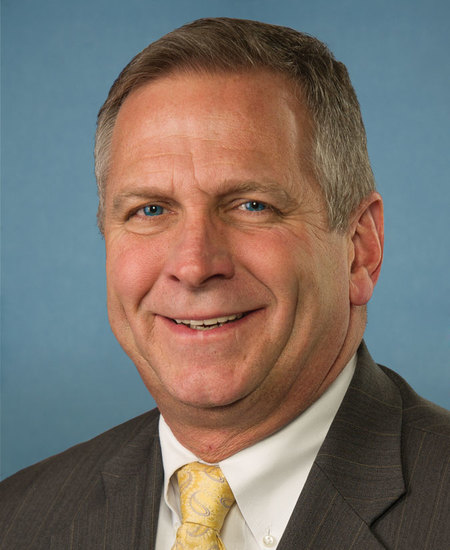
Rep. Mike Bost
Sponsored bills
Maddy summaryH.J. Res. 117 is a joint resolution that would disapprove an Environmental Protection Agency (EPA) rule concerning the reconsideration of National Ambient Air Quality Standards for particulate matter. The EPA rule, published on March 6, 2024, was part of the agency’s process to review these standards, which set limits for harmful air pollutants. This resolution invokes a congressional disapproval procedure under federal law to block the rule from taking effect. If enacted, the rule would have no force or effect, preserving the existing air quality standards for particulate matter.
Maddy summaryThis bill amends existing law to expand eligibility for mental health services under the Public Health Service Act. It redefines "covered institution" to include both career and technical education (CTE) schools (as defined by the Perkins Act) and traditional colleges (as defined by the Higher Education Act). This change ensures CTE schools - previously excluded - can now access federal funding for student mental health and substance use disorder services that were previously only available to traditional colleges. The bill does not create new programs but adjusts terminology to include CTE schools under existing service provisions.
Maddy summaryThis bill requires the Department of Veterans Affairs (VA) to commission an independent review of its notices sent to veterans applying for benefits. The review, to be completed within 30 days of the bill's enactment, must assess whether notices can be made clearer for claimants while reducing paper use and government costs. The VA must then implement the recommended changes within 90 days and report the findings to Congress. This directly affects veterans receiving VA claims communications by aiming to make those notices more understandable and efficient.
Maddy summaryHR 7100, the Prioritizing Veterans’ Survivors Act, clarifies that the Office of Survivors Assistance is part of the Office of the Secretary within the Department of Veterans Affairs, rather than being located within the Department itself. This procedural change updates the organizational structure of the VA by moving the office under direct Secretary oversight. The bill does not alter benefits, services, or eligibility for veterans' survivors but aims to streamline internal VA operations. It affects VA administrative processes, not the public or beneficiaries.
Maddy summaryThis bill establishes a three-year pilot program allowing the VA Secretary to fill vacant shifts at certain VA medical facilities using non-VA health care providers, primarily targeting rural facilities or those with high vacancy rates. The VA would pay external entities a fixed rate per shift, but only after vacancies reach a minimum threshold set by the VA. To protect veterans' privacy, providers under the program would only access medical records directly related to the care they provide. The VA must report on the program's implementation, including how often shifts were filled, which specialties were most common, and the number of veterans served, to Congress within specified timelines.
Maddy summaryHR 9427, the Veterans’ Mental Health Access Act, establishes a three-year pilot program where the Department of Veterans Affairs provides grants to eligible non-profit mental health facilities to offer culturally competent, evidence-based mental health care specifically for veterans. The program prioritizes facilities in rural or medically underserved areas, near military bases, or serving high-risk veteran populations, with grants capped at $1.5 million per facility annually. Recipients must provide care free of charge to veterans, train clinicians in culturally competent care, and demonstrate accountability through data reporting. The bill authorizes $20 million yearly (2025-2027) for this initiative, requiring a final report on veterans served, demographics, care types, and enrollment in VA healthcare systems.
Maddy summaryHR 705, the Veterans 2nd Amendment Protection Act, prohibits the Department of Veterans Affairs (VA) from automatically sending veterans' personal information to the national background check system solely because a fiduciary (like a guardian) manages their benefits. It specifically blocks the VA from sharing this data with the Justice Department without a court order finding the veteran a danger to themselves or others. This directly affects veterans who have a fiduciary appointed due to incapacity but are not deemed dangerous, preventing automatic barriers to firearm purchases based only on their fiduciary status. The bill amends 38 U.S.C. § 5501B to require judicial authorization before such data can be transmitted.
Maddy summaryHRES 1447 is a non-binding resolution expressing support for designating the week of September 22-28, 2024, as "Gold Star Families Remembrance Week." It directly honors families who lost loved ones while serving in the U.S. military (referred to as "Gold Star Families") and families of veterans. The resolution encourages Americans to observe the week by performing community service and celebrating the sacrifices of fallen service members, without creating new laws or obligations. It aligns with existing recognition of Gold Star Mother’s Day (the last Sunday in September) but expands the focus to all affected families.
Maddy summaryThe context provided for HR 9146 does not include the full text of the amendment or the specific language added to Section 1703(d)(2) of title 38, U.S. Code. Without the actual provisions of the new subparagraph (F) titled "Continuity of care," it is impossible to describe the bill's key mechanisms, who it affects, or its concrete policy changes. The bill's title suggests it relates to veterans' health care continuity under the Veterans Community Care Program, but the details are omitted in the provided excerpt. Therefore, a complete and accurate summary cannot be generated from the available information.