

Maximizing Outcomes for Moms through Medicaid Improvement and Enhancement of Services Act or the MOMMIES Act This bill establishes a series of programs and requirements under Medicaid and the Children's Health Insurance Program (CHIP) relating to maternal health. For example, the bill expands eligibility for coverage under Medicaid and CHIP from 60 days to one year after the last day of pregnancy and requires such coverage to include oral health services. The bill also establishes a demonstration program in which states receive grants to implement or expand models for maternity care homes that provide services to Medicaid or CHIP beneficiaries. The Government Accountability Office must report on (1) gaps in coverage under Medicaid and CHIP for pregnant and postpartum women, and (2) the use of telehealth by state Medicaid programs to increase access to maternity care.
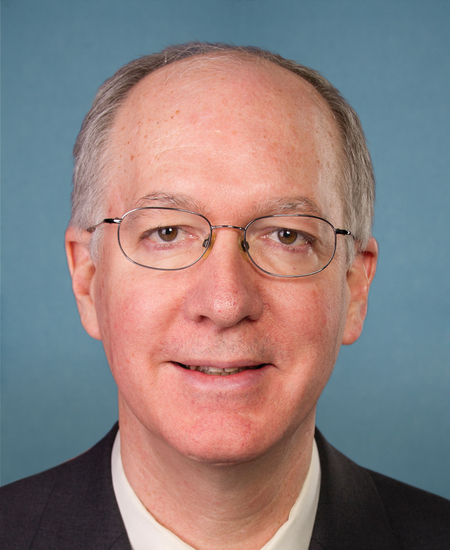
Rep. Bill Foster
Sponsored bills
Pandemic Leave Extension Act This bill extends until the end of the COVID-19 public health emergency the availability of emergency paid sick leave and emergency family and medical leave.
Coronavirus Frontline Workers Fair Pay Act This bill provides hazard pay, in addition to regular pay, to health care and essential workers for specified periods during the COVID-19 public health emergency. Health care workers, which include physicians and support staff, among others, are eligible for a maximum of $35,000 in aggregate hazard pay. Essential workers, as determined by the Cybersecurity and Infrastructure Security Agency, are eligible for a maximum of $25,000 in aggregate hazard pay. The Department of the Treasury must make payments to employers based on an employer's quarterly projections of the number of hours worked by eligible employees, including specified hours worked prior to the enactment of this bill. Employers must issue hazard payments to eligible employees not later than 14 days after receiving payments from Treasury. The bill establishes and provides funding for the Coronavirus Essential and High-Risk Health Care Workers Hazard Payment Fund to implement this program.
Examining Opioid Treatment Infrastructure Act of 2021 This bill requires the Government Accountability Office to report on the availability of and unmet need for substance use disorder treatment and recovery services, including for specified populations. The report must also address barriers to real-time reporting of drug overdoses at the federal, state, and local levels.
This resolution thanks the teachers of the United States and promotes the teaching profession by encouraging students, parents, school administrators, and public officials to recognize National Teacher Appreciation Week.
Mark Takai Atomic Veterans Healthcare Parity Act This bill includes veterans who participated in the cleanup of Enewetak Atoll in the Marshall Islands between January 1, 1977, and December 31, 1980, as radiation-exposed veterans for purposes of the Department of Veterans Affairs presumption of service-connection for specified cancers. Under a presumption of service-connection, specific conditions diagnosed in certain veterans are presumed to have been caused by the circumstances of their military service. Health care benefits and disability compensation may then be awarded.
This concurrent resolution (1) affirms, on the 400th anniversary of the arrival of the first slave ship, that the nation owes a debt of remembrance not only to those who lived through the injustices of slavery but also to their descendants; and (2) urges the establishment of a U.S. Commission on Truth, Racial Healing, and Transformation to properly acknowledge, memorialize, and be a catalyst for progress, including toward permanently eliminating persistent racial inequities.
This joint resolution proposes a constitutional amendment declaring that women shall have equal rights in the United States and every place subject to its jurisdiction. The amendment prohibits the United States or any state from denying or abridging equal rights under the law on account of sex.
This resolution expresses support for National Sexual Assault Awareness and Prevention Month.
This resolution condemns and denounces all forms of anti-Asian sentiment, including those related to COVID-19 (i.e., coronavirus disease 2019), and calls on federal law enforcement officials, working with state and local agencies, to take specified steps. The resolution calls on federal officials to expeditiously investigate and document all credible reports of hate crimes, harassment, bullying, and threats against the Asian American and Pacific Islander communities; the Attorney General to work with state and local agencies and Asian American and Pacific Islander community-based organizations to prevent discrimination and to expand culturally competent and linguistically appropriate education campaigns on public reporting of hate crimes; and the Department of Health and Human Services to issue guidance describing best practices to mitigate racially discriminatory language in describing the pandemic. The resolution recommits the United States to serving as a world leader in building more inclusive, diverse, and tolerant societies by (1) prioritizing language access and inclusivity in communication practices, and (2) combating misinformation and discrimination that put Asian Americans and Pacific Islanders at risk.