

Maddy summaryThe Improving Digital Identity Act of 2024 establishes a 3-year task force within the Executive Office of the President to coordinate digital identity verification improvements across federal, state, local, tribal, and territorial governments. The task force will develop strategies for creating secure digital versions of existing identity credentials like driver's licenses and passports, while prioritizing privacy, security, equity, and accessibility. It must submit initial and interim reports to Congress within 180 days and after 18 months, and is prohibited from recommending a single government-mandated digital ID or central registry. The bill aims to reduce identity theft and fraud while enabling secure online transactions for individuals and businesses.
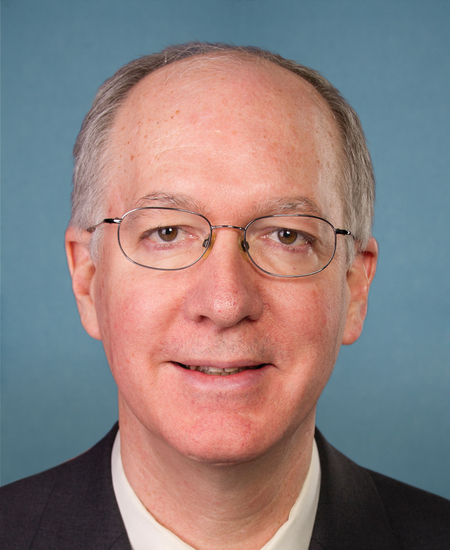
Rep. Bill Foster
Sponsored bills
Maddy summaryHR 6319 (the 911 SAVES Act of 2023) requires the Office of Management and Budget to reclassify public safety telecommunicators as "Protective Service Occupations" within 30 days of enactment. This change corrects their current misclassification in the federal Standard Occupational Classification (SOC) system, which is used for statistical data on jobs. The bill directly affects how these professionals - critical in emergency calls involving missing children, active threats, and officer safety - are officially categorized in government workforce data. It does not create new benefits or funding but aims to better recognize their lifesaving role through accurate federal job classification.
Maddy summaryThe Strengthening Science Through Diplomacy Act (HR 9619) would authorize the U.S. President to extend existing legal protections - such as immunity from certain lawsuits - to CERN, the European Organization for Nuclear Research. This would allow CERN to operate in the U.S. with the same legal safeguards typically granted to international scientific organizations the U.S. collaborates with through treaties. The bill does not involve funding changes or new programs but adjusts the legal framework to formally include CERN under current international organization immunity provisions.
Maddy summaryHR 9614, the ENABLE Act, permanently extends key tax benefits for ABLE accounts, which help people with disabilities save money without losing government benefits. The bill removes an expiration date (previously set for January 1, 2026) for higher contribution limits and the savers credit for ABLE accounts, and allows permanent rollovers of funds from 529 college savings plans into ABLE accounts. These changes directly affect individuals with disabilities and their families who use ABLE accounts for savings. The bill makes these provisions permanent, applying to future taxable years and distributions after enactment.
Maddy summaryHRES 1448 is a non-binding House resolution stating that the House believes every person has the right to emergency health care, including abortion care, during medical emergencies. It specifically addresses concerns that abortion restrictions force medical providers to choose between treating patients in life-threatening situations or risking criminal charges. The resolution highlights that such restrictions disproportionately harm Black, Indigenous, people of color, immigrants, low-income individuals, and LGBTQI+ patients. It does not change existing laws but expresses congressional support for ensuring access to emergency care without legal barriers. The resolution was introduced by multiple House members and referred to the Energy and Commerce Committee.
Maddy summaryThe National STEM Week Act designates an annual National STEM Week to promote science, technology, engineering, and math (STEM) education. It directs a federal committee to coordinate activities encouraging schools, families, and STEM industry partners to host events like student mentorship programs and home-based learning. The bill requires annual reports to Congress on participation rates and the impact of these activities on improving STEM engagement. It directly affects educational institutions (from elementary to college), students, families, and STEM businesses across all 50 states and territories.
Maddy summaryHR 9497, the AI Advancement and Reliability Act of 2024, creates a new Center for AI Advancement and Reliability within the Commerce Department to advance U.S. leadership in AI safety and reliability. The Center will conduct research, develop voluntary standards, and collaborate with federal agencies, industry, and researchers to address AI reliability, security, and safety risks - such as system flaws and adversarial attacks - through testing and benchmarking. It prohibits new regulatory authority or mandatory data sharing from private entities, requires annual reports to Congress, and is funded at $10 million for fiscal year 2025 with a six-year sunset provision. This bill directly affects federal agencies (like NIST and the National Science Foundation), research institutions, and private sector partners working on AI systems, without imposing new compliance requirements.
Maddy summaryThe AI Development Practices Act of 2024 requires the National Institute of Standards and Technology (NIST) to develop voluntary guidance for AI developers on best practices for creating, releasing, and assessing artificial intelligence systems. This guidance will cover defining risk tolerances (including security, economic, and social risks), documenting system characteristics like fairness and safety, and public reporting of capabilities and limitations. NIST must update the guidance periodically, base it on international standards and industry practices, and report to Congress within 18 months on new materials and policy recommendations. The bill does not mandate specific actions but aims to foster industry-wide communication and coordination on AI development practices.
Maddy summaryThe Expanding AI Voices Act directs the National Science Foundation to provide competitive grants to institutions not among the top 100 in federal research spending, Historically Black Colleges and Universities, minority-serving institutions, Tribal Colleges, or consortia of these entities. These grants fund concrete AI capacity-building activities like developing research programs, recruiting AI faculty, creating student bridge programs, and providing access to computing resources and partnerships. The program specifically aims to broaden participation in AI from underserved communities and avoid duplicating existing federal initiatives. It requires outreach to underrepresented groups and mandates that funded activities integrate ethical AI practices and workforce development.
Maddy summaryHR 9402, the NSF AI Education Act of 2024, creates new funding programs to expand artificial intelligence education across U.S. schools and colleges. It establishes scholarships and fellowships for undergraduate and graduate students in AI-related fields, with priority for programs focused on K-12 AI education, AI in manufacturing/agriculture, and outreach to rural institutions and Tribal Colleges. The bill also creates "Centers of AI Excellence" at community colleges and career technical schools to integrate AI into curricula and workforce development, and provides research funding specifically for AI teaching methods in K-12 schools serving low-income, rural, and Tribal communities. Additionally, it incorporates AI skills development into the National STEM Teachers Corps to prepare educators to teach AI concepts in classrooms.