

Maddy summaryThis bill makes it a federal crime to steal packages that have been delivered by private carriers (like FedEx or UPS) but not yet received by the recipient. It directly affects package recipients, carriers, and thieves who target unclaimed deliveries left on porches or in mailboxes. The key provision amends federal law to include these delivered-but-unclaimed packages under the same legal protections as mail in transit. This changes the law to treat stolen packages at the delivery stage as a federal offense, similar to theft of postal mail. The bill does not create new penalties but expands existing theft statutes to cover this specific scenario.
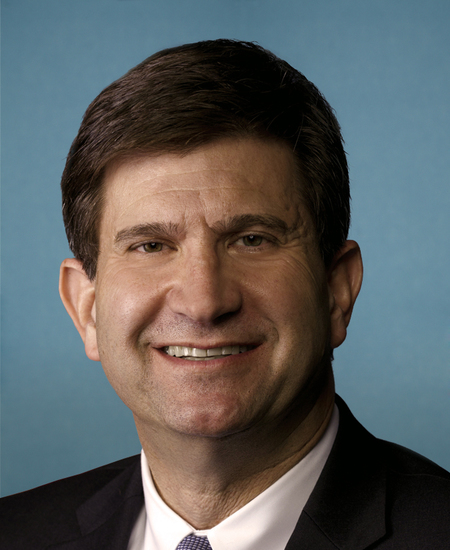
Rep. Bradley Scott Schneider
Sponsored bills
Maddy summaryThis bill establishes a federal grant program to help state, local, and tribal prosecutors' offices hire and retain legal staff. It provides competitive grants covering up to 75% of costs for hiring, training, or retaining prosecutors and support staff, with preference given to rural, tribal, and areas affected by budget cuts. The program requires annual reporting on outcomes and includes $10 million in annual funding for fiscal years 2025-2029.
Maddy summaryH.J. Res. 193 proposes a constitutional amendment to eliminate legal immunity for federal officials, including the President, from criminal prosecution for actions taken while performing official duties. It also prohibits the President from granting a pardon to themselves. The amendment would apply to all federal officers (such as the President, Vice President, and members of Congress) except for Congress members acting in their legislative role as defined in the Constitution. If ratified by 38 states, this change would become part of the U.S. Constitution, requiring no further congressional action.
Maddy summaryHR 7914, the Accountability for Terrorist Perpetrators of October 7th Act, imposes U.S. sanctions on the Popular Resistance Committees (PRC) and associated individuals or groups, including blocking property transactions and denying visas to members. The bill requires the President to enforce these sanctions 90 days after enactment, with exceptions for United Nations operations and national security activities, and allows temporary 180-day waivers for national security reasons. It also mandates a 90-day report to Congress on whether the PRC and the group "Lion's Den" meet criteria for designation as terrorist organizations under existing laws. Ongoing reports every two years will track new entities linked to the PRC.
Maddy summaryHRES 1350 is a non-binding resolution expressing concern about lead exposure affecting approximately one-third of the world’s children (up to 800 million globally), per WHO and UNICEF data. It calls on the U.S. Agency for International Development (USAID) and relevant agencies to integrate lead exposure prevention into global health, education, and environmental programs, particularly targeting vulnerable communities in low- and middle-income countries. The resolution highlights lead’s irreversible neurological harm to children, its economic costs ($6 trillion globally), and the need for cost-effective interventions like preventing lead in consumer goods and recycling. It does not create new laws but urges existing U.S. international programs to prioritize lead prevention as part of global health and environmental efforts.
Maddy summaryHRES 1349 is a symbolic House resolution recognizing the success of the Food for Peace Act, which provides U.S. humanitarian food aid to global populations facing hunger. It does not create new policy or funding but formally acknowledges the program’s impact - such as reaching 53 million people with emergency aid in 2022 - and highlights global hunger statistics (e.g., 783 million people hungry in 2022). The resolution urges continued U.S. funding prioritization for the program but has no binding effect or direct policy changes. It directly affects no new groups, as it solely expresses congressional support for an existing aid program.
Maddy summaryThis bill (HR 2365, Public Law 118-66) directs the U.S. Department of Health and Human Services (HHS) to establish the National Parkinson’s Project. It requires HHS to create and update a coordinated national plan for preventing, diagnosing, treating, and researching Parkinson’s disease and related disorders (including multiple system atrophy and progressive supranuclear palsy), while coordinating federal research and care efforts across agencies like the NIH, CDC, and VA. The law mandates annual progress assessments, an advisory council with patient advocates and diverse experts, and annual reports to Congress on federal Parkinson’s programs and recommendations for improvement. It affects federal agencies managing Parkinson’s-related programs and aims to improve care coordination and research efficiency for patients and caregivers, with the law sunsetting in 2035.
Maddy summaryHRES 1337 is a ceremonial resolution commemorating the July 4, 2022, Highland Park, Illinois, Independence Day Parade shooting. It honors the seven victims (Katie Goldstein, Irina McCarthy, Kevin McCarthy, Stephen Strauss, Jacquelyn Sundheim, Nicolas Toledo-Zaragoza, and Eduardo Uvaldo) and over 40 wounded survivors, while acknowledging the community's healing two years post-tragedy. The resolution expresses the House's solidarity with Highland Park residents, first responders, and healthcare providers who aided victims. It does not enact new laws or policies but serves as a symbolic tribute to the victims and survivors. This is a procedural resolution with no concrete policy changes, solely focused on remembrance and support.
Maddy summaryHRES 1330 is a non-binding resolution supporting Alzheimer’s and Brain Awareness Month in June. It recognizes the significant impact of Alzheimer’s disease on millions of Americans, including high prevalence among women and racial/ethnic minorities. The resolution encourages the public to educate themselves about Alzheimer’s, advocate for research and support services, and offer assistance to affected individuals, families, and caregivers. It does not create new programs, funding, or legal obligations. The resolution is directed at raising public awareness and fostering community support during the designated month.
Maddy summaryHRES 1327 is a symbolic congressional resolution condemning Azerbaijan for actions it claims constitute ethnic cleansing against Armenians in Nagorno-Karabakh. It specifically calls for the U.S. government to impose targeted sanctions on Azerbaijani officials, halt military aid to Azerbaijan under Section 907 of the FREEDOM Support Act, provide humanitarian aid to Armenian refugees, and strengthen U.S.-Armenia security cooperation. The resolution affirms displaced Armenians' right to return to Nagorno-Karabakh with security protections. It directly affects Azerbaijan's government officials, Armenian refugees in Armenia, and U.S. foreign policy implementation. As a non-binding resolution, it does not create new law but urges specific policy actions.