

Maddy summaryHRES 1476 is a non-binding House resolution encouraging the U.S. Department of State and civil society to support educational reforms aligned with the Abraham Accords. It specifically urges diplomatic engagement to help countries like the UAE, Bahrain, Morocco, Saudi Arabia, and Indonesia remove antisemitic content and hate speech from school curricula while adding materials promoting peace, tolerance, and mutual respect. The resolution directs the State Department to prioritize curriculum reform discussions in bilateral talks with Middle Eastern partners. It also calls on international organizations like the UN to strengthen counter-incitement efforts in education and supports expanding the Abraham Accords to other nations. This resolution focuses on fostering educational changes to build regional stability, not on mandating specific policy outcomes.
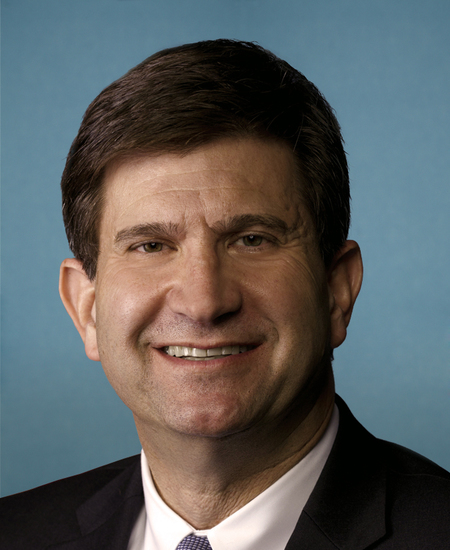
Rep. Bradley Scott Schneider
Sponsored bills
Maddy summaryHRES 1473 is a non-binding resolution passed by the U.S. House of Representatives that condemns racism, bigotry, and misinformation targeting Haitian people and their descendants. It celebrates the historical contributions of Haitian Americans to U.S. society, including founding cities (like Chicago via Jean Baptiste Point du Sable), advancing civil rights (W.E.B. Du Bois), and enriching healthcare, education, and culture. The resolution specifically calls on all Americans to reject racist tropes and misinformation, and urges elected officials to promote inclusivity and responsible communication. It was introduced in response to recent false claims that fueled threats against Haitian communities, such as the bomb threats in Springfield, Ohio.
Maddy summaryThis bill reauthorizes and increases funding for U.S.-Israel energy cooperation programs. It extends annual funding for the BIRD Energy Foundation from $2 million to $5 million and for the U.S.-Israel Energy Center from $4 million to $7 million, covering fiscal years 2025 through 2030. The bill adds new energy focus areas like hydrogen, fusion, carbon management, agrivoltaics, and grid cybersecurity to existing collaboration efforts. These changes directly affect U.S. and Israeli entities collaborating on clean energy research, commercialization, and infrastructure projects.
Maddy summaryHR 9691 establishes the Julius Rosenwald and Rosenwald Schools National Historical Park as a unit of the National Park System. The park will preserve specific sites, including the San Domingo School in Maryland and the St. George Rosenwald School in South Carolina, plus a Chicago headquarters at the former Sears complex. It aims to commemorate Julius Rosenwald's philanthropy - particularly his partnership with Booker T. Washington to build over 5,000 schools for African-American students in the segregated South - and his broader legacy of social justice. The bill directs the Secretary of the Interior to administer the park, develop a management plan, and create a national network connecting related Rosenwald School sites for educational interpretation.
Maddy summaryHR 6319 (the 911 SAVES Act of 2023) requires the Office of Management and Budget to reclassify public safety telecommunicators as "Protective Service Occupations" within 30 days of enactment. This change corrects their current misclassification in the federal Standard Occupational Classification (SOC) system, which is used for statistical data on jobs. The bill directly affects how these professionals - critical in emergency calls involving missing children, active threats, and officer safety - are officially categorized in government workforce data. It does not create new benefits or funding but aims to better recognize their lifesaving role through accurate federal job classification.
Maddy summaryThis bill modifies Medicaid and CHIP rules to let eligible out-of-state healthcare providers enroll without extra state screening. It applies to providers already in Medicare or their home state program, with low fraud risk, serving children under 21 with complex medical conditions. Providers would receive 5 years of enrollment under this streamlined process, eliminating state-level barriers. The change directly affects children seeking specialized care across state lines and the providers who serve them.
Maddy summaryThis bill expedites U.S. defense sales to Jordan by treating Jordan as a preferred country under specific arms export laws for three years, streamlining approvals for weapons and services. It requires a cost-sharing agreement between the U.S. and Jordan before joint missile defense projects can begin, including shared costs for research and semiannual financial reports. The bill mandates developing a plan to integrate Jordan into a multinational air and missile defense system to counter threats from Iran and its proxies. Authority for these provisions expires December 31, 2028.
Maddy summaryHRES 1448 is a non-binding House resolution stating that the House believes every person has the right to emergency health care, including abortion care, during medical emergencies. It specifically addresses concerns that abortion restrictions force medical providers to choose between treating patients in life-threatening situations or risking criminal charges. The resolution highlights that such restrictions disproportionately harm Black, Indigenous, people of color, immigrants, low-income individuals, and LGBTQI+ patients. It does not change existing laws but expresses congressional support for ensuring access to emergency care without legal barriers. The resolution was introduced by multiple House members and referred to the Energy and Commerce Committee.
Maddy summaryHRES 1436 is a symbolic resolution (not a law) introduced in the U.S. House of Representatives. It recognizes suicide as a preventable public health crisis by citing statistics from the CDC, VA, and SAMHSA showing rising suicide rates across age groups, including veterans and adolescents. The resolution formally supports designating September as "National Suicide Prevention Month" and September 10, 2024, as "World Suicide Prevention Day." It does not create new policies, allocate funding, or directly affect any individuals - its purpose is solely to express congressional support for suicide prevention awareness and efforts.
Maddy summaryHR 7159, the Pacific Partnership Act, mandates the U.S. government to develop a comprehensive strategy for engagement with Pacific Island nations. It requires the President, by January 1, 2026, and every four years thereafter, to submit a detailed strategy to Congress outlining U.S. diplomatic, defense, and economic goals in the region, including assessments of threats like natural disasters, illegal fishing, and foreign military activity. The strategy must detail plans to address these threats, coordinate with Pacific Island governments and regional organizations like the Pacific Islands Forum, and outline required resources and staffing. This bill directly affects U.S. foreign policy operations and shapes how the federal government engages with Pacific Island nations on shared security, economic, and environmental priorities.