

Maddy summaryThis bill simplifies participation in Medicare's Accountable Care Organization (ACO) program by removing distinctions between small and large ACOs and eliminating the requirement for new ACOs to assume financial risk for three years before joining shared savings models. It creates a new "100% shared savings" option where ACOs keep all savings from cost reductions but bear full financial responsibility for losses. The bill also mandates clearer, transparent benchmark calculations for ACO performance, establishes appeal processes for disputed benchmarks, and requires technical assistance for rural and underserved providers. These changes directly affect Medicare ACOs, particularly smaller or newer organizations in rural or safety-net settings, aiming to make value-based care participation more accessible.
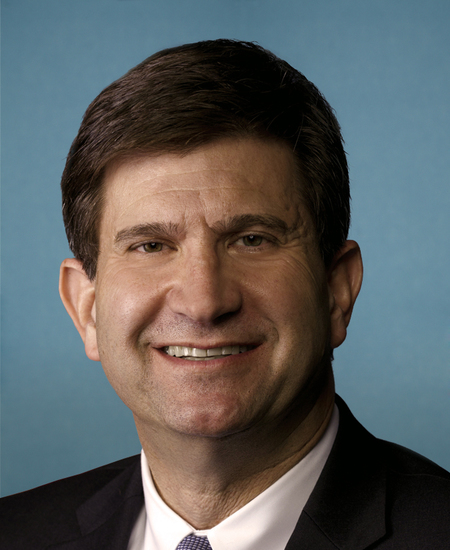
Rep. Bradley Scott Schneider
Sponsored bills
Maddy summaryThe Pathways to Health Careers Act creates a federal grant program to help low-income individuals (those with family income at or below 200% of the Federal poverty level) enter health professions. It provides $425 million annually for fiscal years 2024-2028 to fund training programs that must include support services like adult basic education, child care, transportation, and career coaching. The bill requires grant recipients to serve at least 10% of participants who qualify for Temporary Assistance for Needy Families (TANF) and sets aside funding for demonstration projects focused on people with arrest/conviction records and maternal health career pathways. Recipients must track outcomes including credential attainment, employment in health professions, and earnings. This program directly affects low-income individuals seeking health careers and the organizations that will administer these training programs.
Maddy summaryHR 4753 requires the Department of Health and Human Services to study how health career training grants (under the Health Profession Opportunity Grants program) affect participants' employment and earnings over time. It mandates that at least 4% of annual grant funding be used for this evaluation, including tracking short-, medium-, and long-term outcomes. The law applies directly to individuals participating in these health career training programs and takes effect October 1, 2023.
Maddy summaryThe Social Security 2100 Act would significantly enhance Social Security benefits for millions of Americans by increasing monthly payments for retirees, disabled workers, widows/widowers, and children. Key provisions include raising the minimum benefit for long-term low earners, improving cost-of-living adjustments using a more accurate index, eliminating the 5-month waiting period for disability benefits, and extending child benefits to age 26. The bill also changes how Social Security taxes are calculated by applying them to income above $400,000 and establishes a unified Social Security Trust Fund to manage program finances. Most provisions would apply to benefits payable from 2025 through 2034, affecting all current and future Social Security beneficiaries.
Maddy summaryHR 4307, the Medical Supply Chain Resiliency Act, establishes a framework for the U.S. to negotiate agreements with trusted foreign partners to secure reliable supplies of critical medical goods like drugs and devices. It directs the President to create "trusted trade partner agreements" with countries that maintain open trade during health emergencies, protect intellectual property, and reduce unnecessary trade barriers. These agreements would eliminate duties or restrictions on medical goods, diversify supplier networks, and harmonize regulatory standards to prevent shortages like those seen during the pandemic. The bill directly affects U.S. manufacturers, healthcare providers, and importers by aiming to reduce over-reliance on a few nations for essential medical products.
Maddy summaryThis bill, the Public Servants Protection and Fairness Act of 2023, amends Social Security to better protect public servants who work in jobs not covered by Social Security (such as certain government positions). It creates a new formula for calculating retirement benefits that combines both covered and noncovered earnings, ensuring public servants receive the higher of two benefit calculations. The bill also provides an additional $150 monthly payment for certain public servants whose benefits were previously reduced by the windfall elimination provision. It improves Social Security account statements to clearly show noncovered earnings and requires a study of how state retirement plans handle these benefits. These changes will apply to benefits starting in 2025.
Maddy summaryHR 3729, the Social Security Caregiver Credit Act of 2023, would allow unpaid family caregivers to count their caregiving hours toward Social Security retirement credits. It defines "qualifying months" as 80+ hours monthly providing unpaid care to a dependent child under 12 or a chronically dependent adult (requiring daily help with basic activities like bathing or meal prep). For these months, caregivers would be deemed to have earned 50% of the national average wage index (or the difference if they had some income), boosting their future Social Security benefits. This applies only to the last 60 qualifying months before retirement, excludes caregivers after retirement age, and requires medical documentation for non-child dependents.
Maddy summaryThe FAMILY Act (HR 3481) would establish a national paid family and medical leave insurance program administered by the Social Security Administration. Eligible workers would receive wage replacement benefits (up to 85% of average earnings, with a maximum of $4,000 monthly) for up to 60 caregiving days per 12-month benefit period for qualifying reasons like caring for a sick family member, personal serious health conditions, or responding to domestic violence. The program would be funded through 0.2% payroll taxes from employees and employers (with self-employed individuals paying 0.4%), with benefits coordinated with existing state programs. The law includes protections against employer retaliation for taking leave and requires employers to maintain health coverage during leave periods.
Maddy summaryHR 3086, the "Find It Early Act," requires health insurance plans to cover breast cancer screenings with no cost-sharing for certain individuals at higher risk of breast cancer. The bill affects people with increased risk (based on medical criteria or dense breast tissue) or those needing screening due to factors like age, race, ethnicity, or family history. Key provisions mandate coverage for 2D/3D mammograms, ultrasounds, MRI, and other technologies without frequency limits for these groups. This applies to group health plans, Medicare, Medicaid, TRICARE, and VA healthcare systems starting January 1, 2024. The law aims to improve early detection by removing financial barriers to necessary screenings.
Maddy summaryThis bill changes tax rules to treat direct primary care (DPC) membership fees as deductible medical expenses. It defines DPC as a fixed monthly fee (capped at $150 per person, $300 for families) for primary care services only, excluding procedures requiring anesthesia, prescription drugs (except vaccines), or lab tests. The law ensures these fees can be claimed on tax returns like other medical costs, while clarifying DPC arrangements aren’t considered health insurance plans. It applies to fees paid for DPC services provided through employment or directly to patients, effective for 2024 tax years.