

Maddy summaryThe Equality Act (HR 15) amends federal civil rights laws to explicitly prohibit discrimination based on sexual orientation and gender identity in employment, housing, public accommodations, credit, and jury service. It expands existing protections under the Civil Rights Act of 1964 by adding sexual orientation and gender identity as protected characteristics under sex discrimination prohibitions. The bill clarifies that discrimination against LGBTQ people is a form of sex discrimination, consistent with the Supreme Court's Bostock decision, and adds specific definitions for gender identity and sexual orientation. This legislation directly affects businesses, employers, housing providers, financial institutions, and government entities that serve the public. The bill creates a more comprehensive legal framework to address discrimination that LGBTQ people face in multiple aspects of daily life.
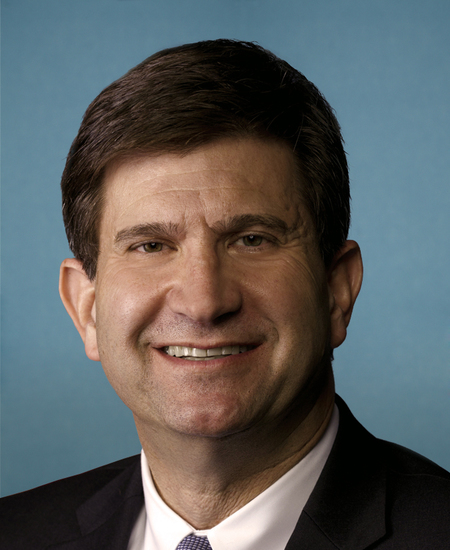
Rep. Bradley Scott Schneider
Sponsored bills
Maddy summaryHR 3067, the Arctic Refuge Protection Act, repeals the existing oil and gas program for the Arctic National Wildlife Refuge (ANWR) and designates approximately 1.56 million acres of the refuge's Coastal Plain as wilderness. This directly affects federal management of the ANWR, halting potential oil drilling in the designated area. The bill requires the Secretary of the Interior to administer the newly designated wilderness area under the Wilderness Act, treating it as part of the existing wilderness within ANWR. The change prevents future oil and gas development on this specific portion of the refuge.
Maddy summaryHRES 341 is a symbolic House resolution expressing support for Earth Day, not a substantive bill. It urges the President to issue an Earth Day proclamation, encourages Americans to address environmental challenges (like climate change and litter), and calls for rejoining the Paris Agreement - though these are non-binding recommendations with no legal force. The resolution references historical environmental legislation (like the Clean Air Act) but does not create new policies, allocate funds, or change regulations. It directly affects no specific group, as it solely serves to affirm environmental values through symbolic recognition. (Note: The document header incorrectly lists "Federal Water Pollution Control Act" as the bill text, but this is a formatting error; the actual resolution is about Earth Day.)
Maddy summaryHR 2536, the New Producer Economic Security Act, establishes a new program within the Farm Service Agency to help new and small-scale farmers, ranchers, and forest owners access land, capital, and markets. The program provides grants and capital support to eligible community organizations (like tribal governments, cooperatives, or local nonprofits) to directly assist "qualified beneficiaries" - defined as individuals new to farming, operating on rented land, with low income, or facing economic hardship. Key provisions include funding for land acquisition, down payment assistance, succession planning, technical support (including translation services), and conservation practices. The program aims to strengthen food system security by increasing land access and supporting long-term business viability for underserved agricultural producers.
Maddy summaryThe Hunger-Free Future Act of 2025 amends the SNAP program to require that any update to the thrifty food plan must not increase food insecurity. It mandates that adjustments to the diet cost must continue following existing rules while explicitly ensuring updates do not worsen food insecurity, defined as households lacking adequate food due to insufficient money or resources. This directly affects SNAP beneficiaries by setting a new standard for how the program's cost calculations are reviewed. The bill changes the procedural requirement for SNAP re-evaluations without altering benefit amounts or eligibility rules.
Maddy summaryThe Advancing Water Reuse Act creates a 30% tax credit for businesses investing in qualifying water recycling systems. It directly affects industrial, manufacturing, data center, and food processing facilities that replace freshwater use with recycled water from municipal sources, as well as projects building municipal water recycling infrastructure to serve these sectors. The credit covers 30% of the cost for eligible equipment, such as new onsite recycling systems or municipal infrastructure upgrades. This policy is available for projects completed by December 31, 2032, with specific rules allowing businesses to claim the credit even if equipment is later transferred to water utilities.
Maddy summaryThis bill amends the Elementary and Secondary Education Act to explicitly include accounting education as part of a well-rounded K-12 curriculum. It requires schools to develop and strengthen programs teaching accounting, including increasing access to high-quality accounting courses for students from groups historically underrepresented in accounting careers. The key provision inserts specific language into existing law, directing schools to promote accounting career awareness and expand course availability through grade 12. This directly affects K-12 students, particularly those from underrepresented backgrounds, by making accounting education a recognized component of career-focused learning.
Maddy summaryHRES 327 is a procedural resolution requesting the President to provide the House of Representatives with specific documents about Social Security Administration (SSA) operations after March 12, 2025. It seeks information on policies ending phone applications for benefits (effective March 18 and 26, 2025), office closures/consolidations, and staffing reductions. The resolution does not change laws but asks for records related to how these changes may affect public access to SSA services. This is a request for information, not a policy change.
Promoting Affordable Childcare for Everyone Act or the PACE Act This bill increases and makes refundable the tax credit for qualified child and dependent care expenses. The bill also increases the exclusion from gross income for employer-provided child and dependent care benefits. Under current law, a nonrefundable tax credit is allowed for up to 35% (maximum tax credit percentage) of qualified child and dependent care expenses incurred by an individual to work or look for work, up to a maximum amount. The percentage of such expenses allowed as a tax credit may be reduced, but not below 20% (minimum tax credit percentage), based on an individual’s adjusted gross income. The bill generally increases the tax credit for qualified child and dependent care expenses by increasing the maximum tax credit percentage to 50%, increasing the minimum tax credit percentage to 35%, and adjusting the maximum credit amounts annually for inflation. The bill also makes the tax credit for qualified child and dependent care expenses refundable. Finally, the bill increases and adjusts for inflation the amount that may be excluded from gross income for employer-sponsored child and dependent care benefits (e.g., dependent care flexible spending arrangements) to $7,500 (from $5,000).
Maddy summaryThis bill repeals a restriction that previously prevented individuals from rolling over funds directly from their Individual Retirement Accounts (IRAs) to donor-advised funds (DAFs) for charitable giving. It directly affects IRA account holders who wish to make tax-advantaged charitable contributions through DAFs. The key provision amends the Internal Revenue Code to remove the specific language barring such rollovers, allowing these transfers to occur without triggering taxable distributions. The change becomes effective after the bill's enactment, streamlining a pathway for donors to support charities via DAFs using IRA assets.