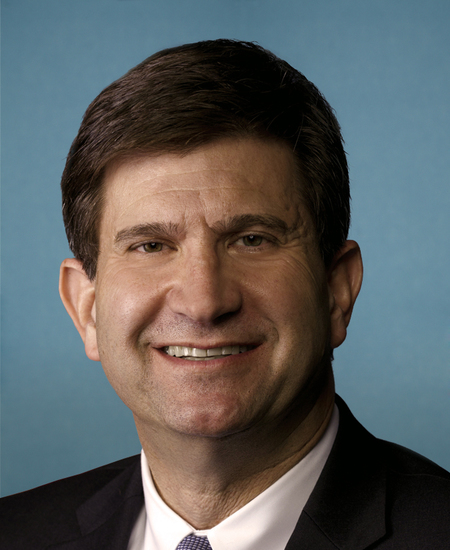
Photo of Bradley Scott Schneider
D United States House · District 10 · Illinois On the 2026 ballot

Rep. Bradley Scott Schneider

Compare
Total votes
2,837
all sessions
Attendance
98%
46 missed
Near the chamber average
With party
97%
of cast votes
Near the chamber average
Bipartisan score
2%
crosses aisle rarely
Near the chamber average
Sponsored
1,263
bills & resolutions
Near the chamber average
Committees
5
assignments
1,263 bills and resolutions

Sponsored bills

Total
1,263
Primary
116
Co-sponsor
1,147
This page
1,263
matching current filters
Co-sponsor HR 5434
In committee · Indiana House · Co-sponsor
988 LGBTQ+ Youth Access Act of 2025

Maddy summaryThis bill requires the 988 Suicide Prevention Lifeline to establish a dedicated "Press 3" option (via IVR) for LGBTQ+ youth seeking crisis support, directly affecting LGBTQ+ youth who face a four times higher suicide risk than peers. It mandates that at least 9% of funds allocated for the lifeline's services be reserved specifically for these specialized LGBTQ+ youth services. The bill amends existing law to formalize this dedicated resource, building on current services that handled over 1.5 million contacts from LGBTQ+ youth in 2025. This creates a concrete policy change for accessing tailored crisis support without altering other lifeline operations.

In committee Sep 17, 2025 1 co-sponsor
Co-sponsor HR 5343
In committee · Indiana House · Co-sponsor
Ensuring Patient Access to Critical Breakthrough Products Act

Maddy summaryThis bill ensures Medicare coverage for new medical devices designated as "breakthrough devices" during a 4-year period after FDA approval. To qualify, devices must meet specific criteria, including FDA priority review, clinical data from Medicare beneficiaries, and a safety review showing benefits outweigh risks. Medicare must finalize coverage decisions within 6 months of manufacturer applications and before the 4-year period ends. The law appropriates $10 million annually (2025-2030) for Medicare to administer this process.

In committee Sep 17, 2025 1 co-sponsor
Co-sponsor HR 5401
In committee · Indiana House · Co-sponsor
Pay Our Troops Act of 2026

Maddy summaryHR 5401, the Pay Our Troops Act of 2026, ensures military personnel, civilian Defense workers, and supporting contractors receive pay during government funding gaps in fiscal year 2026. It appropriates emergency funds for active-duty service members, reserves, and their supporting personnel (including Coast Guard staff under DHS) if regular appropriations aren't enacted by the end of the fiscal year. The bill provides necessary pay and allowances during any period when full-year funding is unavailable, covering both active service and support roles. Funding expires when regular appropriations are passed, a funding resolution is enacted, or January 1, 2027, whichever comes first. This is a procedural measure to prevent pay delays for military and support staff during fiscal year 2026 funding lapses.

In committee Sep 16, 2025 1 co-sponsor
Primary HR 5376
In committee · Indiana House · Lead sponsor
Impacts and Outcomes for Health Career Training Act

Maddy summaryThis bill requires the U.S. Department of Health and Human Services to study the employment and earnings outcomes of participants in health career training programs funded through existing grants. It mandates that at least 4% of annual funding for these programs must cover rigorous evaluations of their short-, medium-, and long-term impacts. The study will assess how well these training initiatives prepare participants for careers in health fields, directly affecting current and future grant recipients. The requirement takes effect on October 1, 2025.

In committee Sep 16, 2025 0 co-sponsors
Co-sponsor HR 5370
In committee · Indiana House · Co-sponsor
To provide low-income individuals with opportunities to enter and follow a career pathway in the health professions, and for other purposes.

Maddy summaryThe Pathways to Health Careers Act creates federal grants to help low-income individuals (with family income up to 200% of the Federal poverty level) enter health profession careers. It funds training programs that include adult basic education, career coaching, child care, transportation, and legal assistance for people with arrest or conviction records. The bill specifically supports two demonstration projects: one helping individuals with criminal records enter health careers, and another focused on training doulas and midwives for pregnancy, birth, and postpartum care. Programs must provide structured career pathways to recognized health profession credentials and include support services like case management. The bill requires evaluations to assess effectiveness in addressing workforce shortages and improving participant outcomes.

In committee Sep 16, 2025 1 co-sponsor
Co-sponsor HR 5390
In committee · Indiana House · Co-sponsor
FAMILY Act

Maddy summaryThe FAMILY Act would establish a national paid family and medical leave insurance program that provides wage replacement benefits for workers needing time off for caregiving or medical reasons. It defines "qualified caregiving" to include caring for a family member with a serious health condition, personal medical needs, or recovery from violence (including domestic violence, sexual assault, or stalking). Benefits would be calculated based on earnings, with a minimum monthly benefit of $580 and maximum of $4,000, administered by a new Office of Paid Family and Medical Leave within the Social Security Administration. Eligible individuals would need to have worked for at least 8 quarters in the previous year and file an application with required documentation, while existing state paid leave programs would continue to operate alongside this federal program.

In committee Sep 16, 2025 1 co-sponsor
Co-sponsor HR 492
In committee · Indiana House · Co-sponsor
Saving the Civil Service Act

Saving the Civil Service Act This bill generally prohibits changes to the classification of positions in the competitive service and excepted service unless certain conditions are met. (Competitive service positions are subject to competitive examination while excepted service positions are appointed under one of five schedules. Competitive service positions have notice and appeal requirements for adverse actions that are not applicable to most excepted positions, including those of a confidential, policy-determining, policy-making, or policy-advocating character under Schedule C.) On October 21, 2020, President Donald Trump issued an executive order that placed executive agency positions that are of a confidential, policy-determining, policy-making, or policy-advocating character, and that are not normally subject to change as a result of a presidential transition, under a new Schedule F in the excepted service. The order was subsequently revoked by President Joe Biden. The bill prohibits executive agency positions in the competitive service from being placed in the excepted service, unless such positions are placed in a schedule in the excepted service as in effect on September 30, 2020. The bill also prohibits positions in the excepted service from being placed in any schedule other than the aforementioned schedules. Additionally, agencies may not (1) transfer occupied positions from the competitive or excepted service into Schedule C without the consent of the Office of Personnel Management, or (2) transfer employees in the excepted service to another schedule or transfer employees in the competitive service to the excepted service without employee consent.


In committee Sep 16, 2025 1 co-sponsor
Co-sponsor HR 5361
In committee · Indiana House · Co-sponsor
George Floyd Justice in Policing Act of 2025

Maddy summaryThe George Floyd Justice in Policing Act of 2025 would establish a National Police Misconduct Registry to track officer complaints, disciplinary actions, and misconduct records across all law enforcement agencies. It would require law enforcement agencies to implement body-worn camera programs with specific recording and retention policies, ban chokeholds and no-knock warrants in drug cases, and reform qualified immunity to make it easier to hold officers accountable for misconduct. The bill mandates comprehensive data collection on use of force incidents, requiring agencies to report detailed information about stops, searches, and force used, disaggregated by race, ethnicity, gender, and other demographics. These provisions would directly affect all Federal, State, and local law enforcement agencies that receive federal grant funding, with requirements for policy changes, training, and data reporting.

In committee Sep 15, 2025 1 co-sponsor
Co-sponsor HR 5369
In committee · Indiana House · Co-sponsor
Azerbaijan Sanctions Review Act of 2025

Maddy summaryThe Azerbaijan Sanctions Review Act of 2025 requires the President to review within 180 days whether 53 specific Azerbaijani officials meet criteria for sanctions under the Global Magnitsky Human Rights Accountability Act. These officials include military commanders, security service heads, and judges implicated in human rights violations related to the Nagorno-Karabakh conflict. The review must include a detailed justification and determine if sanctions should be imposed on individuals linked to alleged war crimes, arbitrary detention, and torture of Armenians. The bill mandates this assessment without imposing new sanctions, focusing instead on evaluating existing legal authority for action.

In committee Sep 15, 2025 1 co-sponsor
Co-sponsor HRES 701
In committee · Indiana House · Co-sponsor
Of inquiry requesting the President of the United States to furnish certain information to the House of Representatives relating to the Department of Government Efficiency's access to and usage of NUMIDENT and other personally identifiable information in the possession of the Social Security Administration.

Maddy summaryHRES 701 is a House resolution requesting the President to provide documents about the Department of Government Efficiency's (DOGE) access to Social Security Administration data. It specifically seeks records related to a cloud system hosting the Social Security Numerical Identification System (NUMIDENT), including security plans, the purpose of the cloud copy (e.g., audits, benefits decisions, AI training), and access by named individuals. The resolution requires the President to submit these materials within 14 days of adoption. This is an inquiry, not a policy change, focused solely on transparency about government data access.

In committee Sep 11, 2025 1 co-sponsor
Showing 171 to 180 of 1,263 bills
Previous 1 … 17 18 19 … 127 Next