

Maddy summaryThis bill requires federal agencies to acquire and maintain opioid overdose reversal kits (like naloxone) and train employees annually on their use, effective within 270 days of enactment. It mandates these actions for all federal agencies - including the Veterans Health Administration - while providing non-mandatory guidance to private employers on similar practices. The law directly affects federal workplaces by making kits and training a requirement, and indirectly encourages private employers to adopt similar safety measures. Key provisions include a 270-day deadline for the Labor Department to issue regulations for federal agencies and non-binding guidance for other employers. The bill focuses on practical workplace safety measures without altering existing federal health or safety laws.
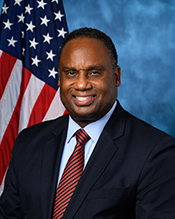
Rep. Jonathan L. Jackson
Sponsored bills
Maddy summaryHR 5369, the Tipped Worker Protection Act, requires employers to pay tipped workers the full federal minimum wage (currently $7.25/hour) instead of the current lower "tip credit" rate ($2.13/hour). It phases in this change over time, starting with a $3.60/hour cash wage in the first year, increasing by $1.50 annually until matching the standard minimum wage. The bill prohibits employers from keeping or using customer tips for any purpose (including covering costs like credit card fees) and mandates that all tips go directly to employees, with new rules governing voluntary tip pools. It directly affects restaurant, bar, and similar service workers who rely on tips for income.
Maddy summaryThis bill would prevent government shutdowns by automatically continuing federal funding at the previous year's level if Congress fails to pass annual budget bills by October 1. It requires Congress to prioritize budget legislation over other matters during funding gaps, with only limited exceptions for true emergencies like national security threats. All federal programs and agencies would operate using prior-year funding rates until a new budget is enacted, applying broadly across the government unless specific exemptions exist under current law. The bill does not create new spending but changes the process to avoid shutdowns by default.
Maddy summaryThis resolution supports designating August as National Black Business Month to honor the economic contributions of Black-owned businesses across the U.S. It recognizes that Black businesses, which contributed $83.6 billion in receipts in 2023 and employed over 1.3 million people, continue to face barriers like limited access to capital and higher loan denial rates. The resolution does not create new laws or programs but symbolically acknowledges their historical and current impact on the economy. It is a non-binding House resolution passed to raise awareness, not to mandate policy changes.
Maddy summaryHR 5322, the Time Off to Vote Act, requires most private employers (with 25+ employees) to provide two consecutive hours of paid leave for employees to vote in federal elections. Employers must grant this leave upon request, can schedule it during early voting periods if permitted by state law, and cannot include lunch breaks in the leave period. The bill prohibits retaliation against employees who take this leave and ensures it does not affect accrued employment benefits. Violations could result in civil penalties up to $10,000 per offense, enforced by the Department of Labor.
Maddy summaryThis bill expands the Gus Schumacher Nutrition Incentive Program (GusNIP) to increase access to healthy food for low-income SNAP participants. It raises the incentive funding percentage from 50% to 80% for eligible purchases, creates new cooperative agreements to scale state programs (requiring 90% of funds to be used for redeemed incentives at retailers), and expands a produce prescription program where healthcare providers can refer patients to buy fresh produce. The bill allocates increased annual funding through 2029, including $57.5 million annually for 2024-2028, and requires a study on transitioning produce prescription costs to health insurance within 10 years. It directly affects SNAP recipients, participating retailers (including farmers markets), and community health centers.
Maddy summaryThis bill expands SNAP eligibility for college students by modifying existing rules. It allows students attending higher education institutions (as defined by the Higher Education Act) to qualify for SNAP benefits if they have a zero expected family contribution (EFC) from FAFSA or meet specific criteria for independent student status under the Higher Education Act. The changes replace outdated language about "employment" with "attending school or working" and remove barriers that previously excluded many low-income students. This directly affects low-income undergraduate and graduate students who may face food insecurity while enrolled in college. The policy change takes effect 180 days after enactment.
Maddy summaryThe America Grows Act of 2023 sets automatic annual funding increases for four specific USDA agencies: the Agricultural Research Service, Economic Research Service, National Agricultural Statistics Service, and National Institute of Food and Agriculture. It requires each agency to receive 105% of its prior year's funding, adjusted annually for inflation based on the Consumer Price Index. This funding is exempt from automatic budget cuts (sequestration) and remains available for the full fiscal year. The bill directly affects these agencies' budgets but does not create new programs or alter their core functions.
Voters on the Move Registration Act of 2023 This bill requires the Consumer Financial Protection Bureau to develop, and specified agencies to distribute, a statement providing individuals with information on how to register to vote and their voting rights. This information must be provided to individuals upon their participation in certain rental assistance programs or application for certain residential mortgages.
Maddy summaryThe People Over Long Lines Act (POLL Act) requires states to develop public plans ensuring voting wait times don't exceed 30 minutes at polling places for federal elections, particularly addressing documented disparities where voters in communities of color wait significantly longer than others. It establishes standards for minimum voting systems, poll workers, and resources based on factors like population demographics, voter turnout, and needs of disabled or limited English proficiency voters. The bill provides $500 million annually in federal funding to help states implement these changes, creates a private right of action allowing voters to sue states for violations with penalties including $50 per hour of wait time, and mandates remedial plans for states with excessive wait times. The law applies to federal elections starting in 2025, with states required to comply by January 1, 2025.