

Maddy summaryThis bill extends the funding period for the Distance Learning and Telemedicine Program from 2023 to 2028. It directly affects rural communities by ensuring continued access to telehealth services and educational programs through this existing federal initiative. The key provision is a simple amendment to the program's authorization date in existing law, without creating new requirements or altering the program's scope. The change ensures uninterrupted support for rural healthcare and education providers relying on this funding.
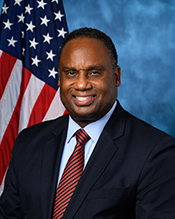
Rep. Jonathan L. Jackson
Sponsored bills
Maddy summaryHR 5086, the COLAs Don’t Count Act of 2023, amends the Food and Nutrition Act to exclude certain cost-of-living adjustments (COLAs) from counting as income for Supplemental Nutrition Assistance Program (SNAP) eligibility. Specifically, it removes increases from Social Security (Title II), Supplemental Security Income (Title XVI), Railroad Retirement, and Veterans benefits (38 U.S.C. §5312) from SNAP income calculations when determining household eligibility. This change directly affects SNAP recipients whose benefits include these COLAs, potentially allowing more households to qualify for assistance. The amendment takes effect October 1, 2024.
Maddy summaryThe Agricultural Worker Justice Act (HR 4978) improves working conditions for agricultural and meatpacking workers through several key provisions. It requires USDA to only purchase from entities paying prevailing wages (based on local rates and collective bargaining agreements), prohibits stock buybacks by USDA-funded companies, and creates a list of companies with labor violations that would be ineligible for USDA contracts. The bill establishes new safety standards for meatpacking plants including restrictions on line speeds (requiring safety inspections before increases), requirements for toilet facilities, and enhanced protections for workers reporting safety concerns. It also mandates a GAO report on racial disparities in meatpacking employment and authorizes $400 million for local food purchase programs. The bill directly affects meatpacking facilities, agricultural businesses receiving USDA funds, and the workers employed in these industries.
This bill amends the Emergency Watershed Protection (EWP) Program to allow the Department of Agriculture (USDA) to provide for certain restoration activities. The EWP Program offers technical and financial assistance, including the purchase of floodplain easements, to safeguard people and property from floods, drought, fires, windstorms, and other natural disasters that impair a watershed. Under the bill, USDA may allow restoration above pre-disaster conditions if that restoration is in the best interest of the long-term health and protection of the watershed.
Maddy summaryHCONRES 67 designates the week of September 17-23, 2023, as "National Fall Prevention Awareness Week" to highlight fall risks among older adults (aged 65+). It cites CDC data showing falls cause ~39,000 preventable deaths and $50 billion in annual medical costs for this group. The resolution supports existing evidence-based fall prevention programs - like balance exercises, home hazard reduction, and medication management - and encourages collaboration between federal agencies, community organizations, and healthcare providers to raise awareness. It does not create new laws but formally recognizes ongoing efforts to reduce falls.
Maddy summaryHRES 700 is a non-binding congressional resolution expressing support for designating September 2023 as "National Prostate Cancer Awareness Month." It highlights that prostate cancer affects 1 in 8 U.S. men and has significantly higher mortality rates among African-American men, while urging increased public awareness, early screening promotion, and research funding. The resolution does not create new laws or allocate funds but encourages the public, healthcare providers, and organizations to promote awareness and support efforts to improve detection and treatment. It aligns with existing federal cancer research investments, such as the $7.1 billion allocated to the National Cancer Institute in 2023.
Maddy summaryHRES 693 designates September 9 as "National African Immigrant and Refugee HIV/AIDS and Hepatitis Awareness (NAIRHHA) Day" to highlight health disparities affecting African immigrant and refugee communities in the U.S. It recognizes these communities face significantly higher rates of HIV (6x the general population) and hepatitis B (10% prevalence) due to barriers like stigma, language gaps, immigration status fears, and misclassification in health data. The resolution aims to raise awareness, reduce stigma, and promote culturally appropriate education, testing, and treatment access. As a symbolic measure, it does not create new laws or funding but encourages greater attention to these health needs.
Maddy summaryHRES 703 is a symbolic resolution supporting the designation of September 2023 as "National Voting Rights Month" to raise awareness about voting access. It encourages all U.S. citizens to uphold voting rights, urges Congress to pass specific voting rights legislation (like the Freedom to Vote Act and Democracy Restoration Act), and recommends that schools teach about voting history and current voter access issues. The resolution does not create new laws or directly affect specific groups, but it aims to promote broader public engagement with voting rights through education and advocacy. As a non-binding resolution, it expresses support for these goals without implementing any concrete policy changes.
Maddy summaryThis bill establishes a new Office within the Department of Justice to address racial disparities in missing and murdered Black women and girls cases. The Office will collect data on case resolution times, coordinate with law enforcement, and create a public dashboard tracking these cases. It also creates grants for community organizations to provide culturally appropriate services, prevention programs, and training for law enforcement targeting violence against Black women and girls. The bill directly affects Black women and girls who are victims of violence and their communities, focusing on improving data collection and support systems rather than changing criminal laws.
Maddy summaryThe Better CARE for Animals Act of 2023 amends the Animal Welfare Act to strengthen enforcement of animal welfare standards. It gives the Attorney General authority to bring civil cases for violations, including seeking penalties up to $10,000 per day per violation and injunctions to remove or relocate animals. The bill also requires the Secretary of Agriculture and Attorney General to coordinate through a new Memorandum of Understanding, focusing on repeat violators. These changes directly affect dealers, exhibitors, and enforcement agencies by expanding civil enforcement tools and clarifying jurisdiction over rule violations.