

Maddy summaryHR 6203 extends funding for the Emergency Food Assistance Program (EFAP) through fiscal year 2028, increasing annual commodity funding to $500 million per year for 2024-2028. It raises storage and distribution funding from $100 million to $200 million annually and creates new delivery options for geographically isolated states (Hawaii, Alaska, Puerto Rico, Northern Mariana Islands, U.S. Virgin Islands, and Guam), including allowing them to order through the Department of Defense Fresh Fruit and Vegetable Program. The bill also permits these states to use up to 20% of allocated funds to directly purchase locally grown food. Finally, it allows the Secretary to consider factors like product variety and transportation distance when awarding contracts for fresh produce packages, while maintaining nutritional goals.
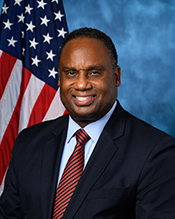
Rep. Jonathan L. Jackson
Sponsored bills
This concurrent resolution honors the lives and work of Mary and John Meachum and recognizes the importance of the Mary Meachum Freedom Crossing, which is part of the National Underground Railroad Network to Freedom.
Maddy summaryHR 7412, the Rural Housing Voucher Enhancement Act of 2024, aims to protect rural tenants who rely on USDA housing vouchers - primarily seniors and people with disabilities - from housing instability. The bill requires the USDA to provide clear, accessible notices (in preferred formats like large print or translation) to tenants when their property faces prepayment or loan maturity, explaining how to secure a voucher. It also mandates a 5-year strategic plan to identify at-risk properties, coordinate with landlords to maintain housing options, and track tenant outcomes. The law ensures tenants eligible for vouchers can access them without unnecessary delays, focusing on preventing homelessness when housing contracts end.
Maddy summaryThis bill requires the U.S. Department of Education to automatically send information about Supplemental Nutrition Assistance Program (SNAP) eligibility to college students with a zero expected family contribution (EFC) who submit the Free Application for Federal Student Aid (FAFSA). It directs the Secretary to provide written and electronic details about SNAP benefits, including how to apply and contact information for state SNAP agencies, in both formats. The bill mandates consultation between the Education and Agriculture Departments to design this communication. It directly affects low-income undergraduate students who qualify for federal aid but may not know about SNAP food assistance. The policy change aims to connect eligible students with existing nutrition support programs.
Maddy summaryThis bill establishes an Interagency Task Force on Black Women and Girls, requiring the Attorney General and Health Secretary to create a group within 180 days of enactment. The Task Force will examine systemic issues affecting Black women and girls - including school discipline, economic opportunities, healthcare access, justice system involvement, and housing - and make policy recommendations across these areas. It mandates the U.S. Commission on Civil Rights to annually study specific disparities like maternal mortality rates, the school-to-prison pipeline, and housing barriers, then report findings to Congress. The bill directly targets policies impacting Black women and girls as defined in the legislation, with recommendations due within two years.
Maddy summaryHR 7378, the Frederick Douglass Congressional Gold Medal Act, authorizes Congress to posthumously award a gold medal to honor Frederick Douglass's legacy as a pivotal abolitionist, writer, and advocate for civil rights. The medal, designed by the Treasury Secretary, will be presented to the National Museum of African American History and Culture for display, with bronze duplicates available for sale to cover costs. This ceremonial bill does not create new laws or affect current policies - it solely commemorates Douglass's historical contributions to ending slavery and advancing equality.
Maddy summaryHR 7329, the Election Day Holiday Act of 2024, would designate November 5, 2024 (and subsequent general elections) as a federal public holiday. This change would require federal offices to close and provide federal employees a paid day off on Election Day. The bill amends Title 5 of the U.S. Code to add "Election Day" to the list of designated federal holidays, following Columbus Day. This directly affects federal employees and operations, ensuring they have a day off during general elections.
Maddy summaryThe FAAN Act (HR 7266) authorizes $1 billion in federal grants to schools of nursing in underserved areas to address nursing workforce shortages. It directly affects nursing schools in medically underserved communities, rural regions, and areas with health professional shortages, prioritizing institutions serving underrepresented racial/ethnic groups, rural populations, and low-income students. Key provisions include funding for faculty hiring (especially from underrepresented groups), modernizing classrooms with technology like simulation labs, expanding student support programs, and creating clinical partnerships with healthcare facilities. Schools receiving grants must report annually on student demographics, faculty diversity, and program outcomes, with a comprehensive report to Congress after five years. The bill aims to strengthen nursing education capacity and improve national readiness for public health emergencies.
Maddy summaryHR 7288, the Armenian Protection Act of 2024, repeals the waiver authority that allows the President to bypass restrictions on U.S. aid to Armenia. Specifically, it prevents the waiver of Section 907 of the Freedom Support Act for fiscal years 2024 and 2025, which currently blocks U.S. assistance to Armenia due to historical disputes. This bill directly affects Armenia's eligibility for certain U.S. foreign aid programs by removing the possibility of executive branch waivers for those years. The key mechanism is the permanent removal of the waiver option under the specified appropriations law, changing the policy landscape for U.S.-Armenia aid relations.
Maddy summaryHRES 990 is a non-binding resolution expressing the House of Representatives' support for fair treatment of paraprofessionals (like instructional assistants) and education support staff (such as clerical, custodial, and food service workers) in schools. It states these over 3 million frontline workers deserve livable wages, affordable health care, job security, paid leave, professional development, and safe working conditions. The resolution lists specific recommendations, including eligibility for family medical leave and protections against retaliation for reporting workplace issues. It does not create new laws but formally recognizes these staff as essential to school success and calls for policies addressing their current challenges.