

Maddy summaryThis resolution expresses the House of Representatives' position that Congress should take steps to prevent the privatization of the United States Postal Service (USPS), ensuring it remains a federal independent agency. It highlights USPS’s constitutional role, self-sustaining nature (relying on service revenue, not taxpayer funds), and critical functions - serving 168 million addresses daily, supporting rural communities, and underpinning e-commerce. The resolution opposes privatization, noting it would raise prices, reduce services, and harm the $1.9 trillion mailing industry. As a non-binding resolution, it reflects the House’s stance but does not create new law or policy.
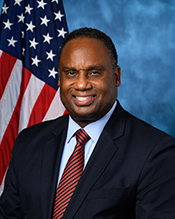
Rep. Jonathan L. Jackson
Sponsored bills
Maddy summaryThis bill authorizes the posthumous presentation of a Congressional Gold Medal to honor Colonel Young Oak Kim, a Korean American military leader and community advocate who died in 1994. It directs the Treasury Secretary to design and strike the medal, which will be displayed at the Smithsonian Institution, particularly at the National Portrait Gallery. The bill does not create new policies or affect any legal rights; it is purely a commemorative gesture recognizing Kim’s military service (including the Distinguished Service Cross and leadership in the 100th Infantry Battalion/442nd Regimental Combat Team) and his civic work founding community centers in Los Angeles. The medal is symbolic, with no financial or legal impact on any individuals or programs.
Mentoring to Succeed Act of 2025 This bill establishes grants to support mentoring programs for eligible youth (e.g., in-school youth, out-of-school youth, or youth who are failing academically or who meet specified criteria). Specifically, the bill directs the Department of Labor to award competitive grants for certain community-based organizations or partnerships involving community-based organizations to (1) establish, expand, or support mentoring programs; (2) assist eligible youth enrolled in secondary schools in developing cognitive and social-emotional skills; and (3) prepare eligible youth for success in high school, postsecondary education, and the workforce. Additionally, Labor must work with the Department of Justice's Office of Juvenile Justice and Delinquency Prevention and the Department of Education to (1) refer grant recipients to the National Mentoring Resource Center to obtain mentoring resources, and (2) provide grant recipients with information regarding transitional services for eligible youth returning from correctional facilities and transition services for students with disabilities. The bill also requires Labor's Chief Evaluation Office to study and report on mentoring programs.
Maddy summaryThe MAKERS Act (HR 812) establishes a National Science Foundation grant program to fund research and development of makerspaces at colleges and community organizations. It prioritizes funding for projects partnering with community colleges, historically Black colleges, minority-serving institutions, rural communities, and workforce training programs. Grants support equipment, research on makerspace effectiveness in teaching STEM skills, and sharing best practices - without funding new building construction. The bill directly affects higher education institutions and community groups seeking to build STEM skills through hands-on learning spaces.
Maddy summaryThis bill requires the U.S. Department of Education to proactively notify eligible college students about potential access to SNAP (food stamp) benefits. It targets students with a negative or zero student aid index (SAI) who file the Free Application for Federal Student Aid (FAFSA). The Department must send annual written and electronic notices explaining SNAP eligibility and providing state contact information for applying. The bill also mandates consultation between the Education and Agriculture Departments to design these notifications. This is a policy change focused on improving access to nutrition assistance for low-income students already enrolled in college.
Maddy summaryThis resolution celebrates the historical and ongoing contributions of Hindu Americans to the U.S. economy, culture, and society, including their roles in fields like Ayurveda, yoga, and the arts. It specifically condemns Hinduphobia, anti-Hindu bigotry, hate, and intolerance, addressing rising hate crimes against Hindu places of worship (mandirs) and individuals. As a non-binding symbolic resolution, it does not create new laws or policies but serves to affirm support for Hindu Americans' religious freedom and community.
Maddy summaryHRES 68 is a non-binding House resolution expressing strong disapproval of the President’s announcement to withdraw the U.S. from the Paris Agreement. It commends states, businesses, and citizens supporting the Agreement, urges the President to reverse the withdrawal decision, and calls for Congress to prioritize U.S. climate leadership. The resolution does not create new laws or affect specific groups but formally states the House’s position against withdrawing from the international climate accord. It was introduced by 115 co-sponsors and reflects broad congressional concern about reversing U.S. climate commitments.
Maddy summaryHR 728, the Expanding Head Start Eligibility Act of 2025, would amend the Head Start Act to broaden eligibility criteria. It adds a new definition of "public assistance" to include benefits from programs like SNAP (food stamps), housing assistance under Section 8, and state-funded food programs with similar income standards. This change directly affects low-income families seeking Head Start enrollment, as children in households receiving these benefits would now qualify under the expanded definition. The bill modifies the Head Start Act’s eligibility rules to count these additional benefits, making it easier for more children to access early childhood education programs.
Maddy summaryHRES 61 is a symbolic resolution designating January as "Muslim-American Heritage Month" to celebrate the contributions of Muslim Americans to U.S. society. It does not create new laws or affect specific groups legally, but formally recognizes their historical and cultural impact through non-binding support. The resolution highlights Muslim Americans' roles in fields like business, science, military service, and the arts, while acknowledging challenges like religious discrimination. It urges the public to observe the month with ceremonies celebrating their heritage.
Maddy summaryHRES 60 is a non-binding resolution expressing the House of Representatives' support for naming new or undedicated Department of Veterans Affairs (VA) facilities after women veterans and minority veterans. It aims to honor their service by reflecting the diversity of all military personnel who have served the U.S. since the Revolutionary War. The resolution specifically applies to future facility naming decisions, not existing names, and cites historical examples of women and minority veterans' contributions. It does not create new requirements or funding but seeks to recognize underrepresented groups in military history through symbolic recognition. The House states this would highlight the enduring presence of these veterans in the Armed Forces.