

Medicare for All Act This bill establishes a national health insurance program that is administered by the Department of Health and Human Services (HHS). Among other requirements, the program must (1) cover all U.S. residents; (2) provide for automatic enrollment of individuals upon birth or residency in the United States; and (3) cover items and services that are medically necessary or appropriate to maintain health or to diagnose, treat, or rehabilitate a health condition, including hospital services, prescription drugs, mental health and substance abuse treatment, dental and vision services, long-term care, gender affirming care, and reproductive care, including contraception and abortions. The bill prohibits cost-sharing (e.g., deductibles, coinsurance, and copayments) and other charges for covered services. Additionally, private health insurers and employers may only offer coverage that is supplemental to, and not duplicative of, benefits provided under the program. Health insurance exchanges and specified federal health programs terminate upon program implementation. However, the program does not affect coverage provided through the Department of Veterans Affairs or the Indian Health Service. The bill also establishes a series of implementing provisions relating to (1) health care provider participation; (2) HHS administration; and (3) payments and costs, including the requirement that HHS negotiate prices for prescription drugs. Individuals who are age 18 or younger, age 55 or older, or already enrolled in Medicare may enroll in the program starting one year after enactment of this bill; other individuals may buy into the program at this time. The program must be fully implemented two years after enactment.
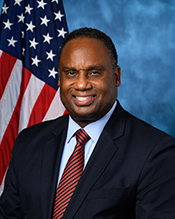
Rep. Jonathan L. Jackson
Sponsored bills
Maddy summaryThe Protecting America's Workers Act (HR 3036) strengthens workplace safety protections for all employees, including public sector workers and voluntary emergency responders, by expanding coverage under the Occupational Safety and Health Act. Key provisions include enhanced whistleblower protections against retaliation for reporting safety concerns, mandatory employer reporting of work-related injuries and deaths, and increased civil penalties for violations (up to $70,000 per violation). The bill also establishes new rights for victims and families of workplace incidents, requiring employers to preserve evidence after fatalities, and creates procedures for faster resolution of safety complaints through improved inspection and enforcement mechanisms. These changes directly affect employers across all industries, employees reporting safety concerns, and families of workers injured or killed on the job.
Maddy summaryHR 3045, the West Bank Violence Prevention Act of 2025, imposes U.S. sanctions on foreign individuals and entities responsible for violence, displacement, or property destruction in the West Bank. It targets those directly involved in attacks on civilians, forced displacement, or property seizures, including settler leaders or officials of groups engaged in such activities. Key provisions require freezing assets of sanctioned individuals within U.S. jurisdiction and blocking their entry into the United States via visa restrictions. The law applies to foreign nationals meeting specific criteria outlined in the bill, not U.S. citizens or entities.
Maddy summaryHRES 351 is a symbolic House resolution supporting the designation of April as National Arab American Heritage Month (NAAHM) to celebrate the cultural contributions of Arab Americans. It recognizes Arab Americans' historical and ongoing impacts on U.S. society, including their roles in economy, science, arts, and social justice movements. The resolution highlights that 48 states and numerous cities already observe April as NAAHM, building on the White House's 2023 proclamation. It urges the public to engage in activities celebrating Arab American heritage, without creating new laws or altering existing policies.
Maddy summaryThe Hunger-Free Future Act of 2025 amends the SNAP program to require that any update to the thrifty food plan must not increase food insecurity. It mandates that adjustments to the diet cost must continue following existing rules while explicitly ensuring updates do not worsen food insecurity, defined as households lacking adequate food due to insufficient money or resources. This directly affects SNAP beneficiaries by setting a new standard for how the program's cost calculations are reviewed. The bill changes the procedural requirement for SNAP re-evaluations without altering benefit amounts or eligibility rules.
Hot Foods Act of 2025 This bill expands the Supplemental Nutrition Assistance Program (SNAP) to permit the use of SNAP benefits to purchase hot foods or hot food products ready for immediate consumption.
Maddy summaryHR 2357, the Food Secure Strikers Act of 2025, removes a restriction that previously barred workers on strike from receiving Supplemental Nutrition Assistance Program (SNAP) benefits. The bill amends the Food and Nutrition Act of 2008 to eliminate language making workers ineligible for SNAP "as a result of being on strike," ensuring striking workers are not automatically denied food assistance during labor disputes. This change directly affects workers participating in strikes who would otherwise lose access to SNAP benefits. The key mechanism updates the eligibility rules to prevent SNAP ineligibility solely due to strike participation.
Maddy summaryHR 2948, the Safer Neighborhoods Gun Buyback Act of 2025, authorizes $360 million annually from 2025-2027 to fund gun buyback programs across the country. The bill creates a grant program for states, local governments, tribal governments, and eligible gun dealers to collect firearms from individuals using "smart prepaid cards" that cannot be used to purchase guns. Participants would pay 125% of a gun's market value (with possible increases for modified weapons) and must destroy all collected firearms and ammunition within 30 days. The program requires criminal background checks on all collected weapons and prohibits reselling any guns obtained through the initiative, with a new federal criminal provision making it illegal to use these cards for firearm transactions.
Maddy summaryHRES 332 is a resolution designating April 11-17, 2025, as "Black Maternal Health Week" to raise awareness about maternal health disparities affecting Black women and birthing people in the U.S. It references CDC data showing Black women are 2-3 times more likely to die from pregnancy-related causes than White women and that the U.S. has the highest maternal mortality rate among developed nations. The resolution emphasizes the need to address systemic inequities contributing to these outcomes without creating new laws or funding. It serves as a symbolic recognition to amplify community-led efforts, such as those by the Black Mamas Matter Alliance, rather than implementing policy changes.
Maddy summaryThe DRIVE Act of 2025 requires the Department of Veterans Affairs (VA) to set mileage reimbursement rates for veterans at the federal government's current standard rate for employees using personal vehicles on official business, replacing the previous fixed rate of 41.5 cents per mile. It also mandates that the VA process and pay these reimbursements within 90 days of a veteran's valid request. This directly affects veterans who travel for VA medical appointments or services using their personal vehicles. The bill aligns veteran travel reimbursements with federal employee standards and ensures timely payments.