

Maddy summaryThe Veterans STAND Act requires the Department of Veterans Affairs to provide annual preventative health assessments to veterans with spinal cord injuries or disorders. These assessments cover risks for health complications, chronic pain management, dietary needs, prosthetic equipment, and access to assistive technologies like spinal cord neuromodulation devices. The VA must consult with medical specialists and device manufacturers when creating guidelines and submit yearly reports to Congress on veterans' use of these services and devices. This policy directly affects veterans with spinal cord injuries by ensuring regular, tailored health evaluations to improve long-term management and independence.
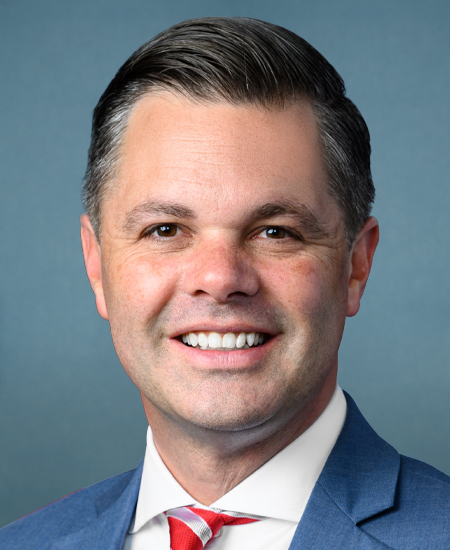
Rep. Zachary Nunn
Sponsored bills
Maddy summaryThis bill temporarily expands the Veterans Legacy Program to allow grant funds to be used for locating, identifying, and interring unclaimed or abandoned remains suspected to be those of veterans. The expansion applies to national cemeteries and runs for two fiscal years following the bill's enactment. A key provision ensures that these additional funds cannot be requested separately from existing budget allocations for the program. The legislation directly affects the Department of Veterans Affairs and the entities managing national cemeteries by providing a specific, time-limited authorization to handle these remains.
Maddy summaryHR 2152, the AI PLAN Act, requires the Treasury, Homeland Security, and Commerce departments to create annual reports addressing AI risks in financial crimes. These reports must detail current defenses against AI-driven fraud, misinformation, deepfakes, voice cloning, and foreign election interference, plus list available and needed resources (like technology and funding) to protect U.S. financial systems. The bill directs agencies to submit legislative recommendations within 90 days of each report to help combat these threats. It primarily affects federal agencies and indirectly impacts businesses and individuals targeted by AI-powered financial crimes.
Maddy summaryHR 941, the Small LENDER Act, creates a 3-year compliance period and a subsequent 2-year penalty-free period for small lenders required to report small business lending data under a new rule. It directly affects financial institutions that originated at least 500 small business loans in each of the previous two years (defined as loans to businesses with under $1 million annual revenue). The bill delays full enforcement of new data reporting requirements, giving lenders time to adjust without penalties during the grace periods. This changes how the Consumer Financial Protection Bureau enforces reporting rules for smaller lenders focused on small business loans.
Repealing Big Brother Overreach Act This bill repeals the Corporate Transparency Act. The act requires existing companies and newly created companies to report beneficial ownership information to the Department of the Treasury’s Financial Crimes Enforcement Network for purposes of addressing the financing of terrorism and money laundering.
Maddy summaryHR 2675, the Protecting Our Courts from Foreign Manipulation Act of 2025, requires parties and their lawyers in federal civil cases to disclose any foreign funding tied to case outcomes. It mandates written disclosure of foreign funders' identities (including country of origin) and certification about funding sources, while banning foreign states or sovereign wealth funds from funding litigation. The law also requires annual reports to Congress detailing foreign-funded cases, including amounts and jurisdictions. This directly affects parties using foreign-funded litigation, courts handling such cases, and foreign entities seeking to influence U.S. courts through financial support.
Maddy summaryHR 3429 establishes a formal US-Japan-ROK Inter-Parliamentary Dialogue to deepen trilateral cooperation. It creates a US delegation of up to 8 Congress members (2 each from House/Senate leadership, with committee requirements) to meet annually with Japanese and South Korean legislators. The bill mandates annual reports to the Foreign Affairs and Foreign Relations committees and requires the delegation to rotate leadership between House and Senate every two years. This legislation directly affects US congressional members appointed to the delegation and provides a structured mechanism for ongoing policy coordination among the three nations.
Maddy summaryThis bill requires the Commerce and State Departments to develop strategies preventing U.S. and allied technology exports to Iran for drone production. It specifically targets microchips, GPS modules, and other critical components (like microcontrollers and voltage regulators) used in Iranian drones that have been linked to attacks in Ukraine and against Israel via groups like Hamas. The strategy must identify U.S. and foreign manufacturers, track third-party distributors circumventing controls, and coordinate with allies to block these exports. It directly affects U.S. technology companies, global distributors, and foreign partners whose exports could enable Iran's drone program. The bill aims to disrupt technology flows supporting Iranian drones used in conflicts without making speculative claims about outcomes.
Maddy summaryThe BRIDGE Act directs the U.S. government to create a unified strategy to counter China's Belt and Road Initiative, which the bill defines as a global infrastructure project aimed at expanding Chinese influence. It requires the Secretary of State, along with other federal leaders, to submit a detailed report within 180 days outlining how China uses this initiative to challenge the U.S.-led international order and proposing a coordinated plan to respond. The legislation mandates that this strategy include specific goals, a timeline for execution, and a roadmap for aligning U.S. efforts with allies, particularly in the Indo-Pacific region. Additionally, the act requires a follow-up implementation plan within one year that sets clear metrics and evaluation methods to track progress against these objectives.
Maddy summaryThis bill, known as the Thwarting Regional Adversary Investments Now Act, aims to help governments in South and Central Asia better understand the risks associated with accepting investments from foreign adversaries. It requires the U.S. Secretary of State to provide training to officials in these countries on how to analyze and mitigate legal and financial dangers posed by such external investments. Additionally, the legislation mandates that the Secretary submit annual reports to Congress detailing the training provided and reviewing specific agreements between these nations and foreign adversaries. The law defines "foreign adversary" as entities with a history of actions harmful to U.S. national security and requires the State Department to consult with various federal agencies when carrying out these duties.