

Maddy summaryHR 1500 requires federal agencies to prioritize native plants over non-native plants in landscaping projects at federal facilities (like military bases, parks, and government buildings), where feasible considering cost and maintenance. It mandates agencies to update design standards within 270 days, include native plant requirements in contracts, and consider benefits like supporting pollinators and reducing water use. Agencies must also report annually on implementation, including case studies and environmental impacts, starting two years after the law takes effect. This affects all federal projects involving landscape improvements across all states and territories.
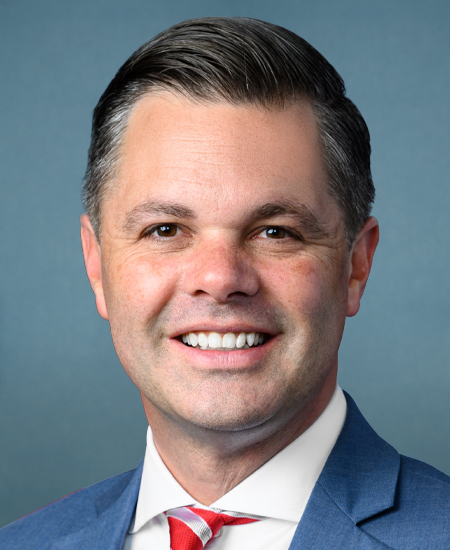
Rep. Zachary Nunn
Sponsored bills
Increasing Access to Dental Insurance Act This bill permits individuals to enroll in a dental benefits plan on a health insurance exchange without also enrolling in a qualified health plan.
Maddy summaryHR 1438, the *Protecting America’s Agricultural Land from Foreign Harm Act of 2025*, prohibits foreign governments of Iran, North Korea, China, and Russia (and entities they control) from purchasing or leasing U.S. agricultural land, including both public land managed by federal agencies and private land. It also bans such entities from participating in most U.S. Department of Agriculture (USDA) programs if they own or lease agricultural land, with limited exceptions for food safety and health programs. The bill expands disclosure requirements under the Agricultural Foreign Investment Disclosure Act to include leases and security interests, and mandates public data sets showing foreign ownership details and land values. These changes aim to increase transparency around foreign ownership of U.S. farmland while targeting specific foreign governments deemed national security concerns.
Maddy summaryHR 1363 designates the "Honor and Remember Flag" (created by Honor and Remember, Inc.) as the official symbol honoring U.S. military members who died in service. It requires federal locations - including the Capitol, White House, military memorials, VA medical centers, and all post offices - to display this flag on specific days like Memorial Day, Veterans Day, and Flag Day. The bill mandates visible public display at these locations and sets deadlines for implementing the requirement (180 days for regulations, 30 days for flag procurement). It does not alter military benefits or create new programs, focusing solely on symbolic recognition through flag display.
Goldie's Act This bill expands enforcement provisions under the Animal Welfare Act (AWA). Specifically, the bill directs the Department of Agriculture (USDA) to document and record detailed descriptions of violations of the act observed during inspections and investigations. USDA must provide a copy of all records documenting violations to state, local, and municipal animal control or law enforcement officials within 24 hours of such inspections or investigations. Inspections must be held at least once a year of each research facility, the premises of each animal dealer, and each exhibitor of animals. If violations are found during inspections, then USDA must conduct any necessary follow-up inspections until all the violations are corrected. Inspectors must confiscate or destroy in a humane manner animals found to be suffering physical or psychological harm as a result of failure to comply with the AWA. Violators are subject to civil penalties as outlined in the bill.
This concurrent resolution declares that Congress should not impose any new performance fee, tax, royalty, or other charge relating to the public performance of sound recordings on a local radio station for broadcasting sound recordings over the air, or on any business for such public performance of sound recordings.
Maddy summaryHRES 133 is a symbolic House resolution supporting the designation of February 15-22, 2025, as "National FFA Week." It recognizes the National FFA Organization’s role in developing student leadership through agricultural education and celebrates two milestones: the 90th anniversary of the New Farmers of America (which served Black students until merging with FFA in 1965) and the 75th anniversary of FFA’s federal charter (granted by Congress in 1950). The resolution has no policy impact or funding provisions - it simply expresses congressional support for these observances. It directly affects no individuals or entities, as it is a non-binding gesture honoring an educational organization.
Maddy summaryHR 1301, the Death Tax Repeal Act, would eliminate the federal estate tax and generation-skipping transfer tax for estates of individuals dying on or after its enactment date. It directly affects individuals inheriting significant assets, as it removes taxes on estates exceeding $10 million (adjusted for inflation) and repeals taxes on large transfers between generations. The bill modifies the gift tax by establishing a $10 million lifetime exemption with annual inflation adjustments, replacing previous tax brackets. It applies to estates, gifts, and transfers occurring on or after the bill's effective date.
Maddy summaryHR 1306, the Tax Fairness for Survivors Act, exempts certain payments received by survivors of sexual assault or harassment from federal income taxation. Specifically, it excludes from gross income any judgment, award, or settlement (including backpay, frontpay, punitive damages, and attorney fees) related to these claims, as defined under federal, tribal, state, or local law. The bill amends multiple tax codes (including income tax, Social Security, railroad retirement, unemployment, and wage withholding) to ensure these excluded payments are not subject to those taxes. This directly affects survivors who receive such compensation through legal settlements or court awards. The exemption applies to taxable years beginning after the bill's enactment.
Replacing Essential Passports and Licenses After Certain Emergencies Act or the REPLACE Act This bill automatically waives the fees to replace certain federal documents (e.g., passports, visas, or immigration documents) destroyed by a major disaster. Under current law, the Department of State and U.S. Citizenship and Immigration Services (USCIS) may waive replacement fees for these critical documents for individuals or households adversely affected by a major disaster. The bill requires the State Department and USCIS to waive these replacement fees when the documents are destroyed by a major disaster for which assistance is provided under the Federal Emergency Management Agency’s Individuals and Households Program. The agencies must notify the public of the availability of these waivers on their respective websites. The bill also requires the State Department and USCIS to annually report to Congress the number of such fee waivers granted and the resulting cost to the respective agencies.