

Maddy summaryThis bill updates highway safety laws to better protect people involved in roadside incidents and work zones. It expands definitions to include "occupants and pedestrians associated with disabled vehicles" in safety programs and requires collecting data on roadside deaths and work zone fatalities. The bill creates two new working groups - one focused on disabled vehicle crashes and another on work zone safety - to analyze data, develop solutions, and share best practices with the National Highway Traffic Safety Administration. It also mandates annual reports from the Federal Highway Administration on how states use work zone safety funds, including spending details and effectiveness. These changes directly affect drivers, pedestrians, construction workers, and emergency responders by improving data collection and safety planning.
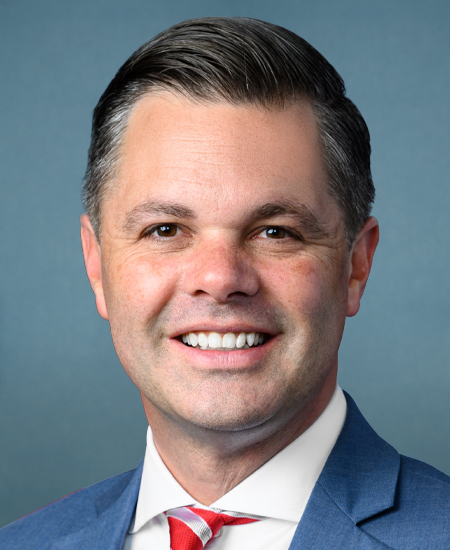
Rep. Zachary Nunn
Sponsored bills
Maddy summaryHR 2536, the New Producer Economic Security Act, establishes a new program within the Farm Service Agency to help new and small-scale farmers, ranchers, and forest owners access land, capital, and markets. The program provides grants and capital support to eligible community organizations (like tribal governments, cooperatives, or local nonprofits) to directly assist "qualified beneficiaries" - defined as individuals new to farming, operating on rented land, with low income, or facing economic hardship. Key provisions include funding for land acquisition, down payment assistance, succession planning, technical support (including translation services), and conservation practices. The program aims to strengthen food system security by increasing land access and supporting long-term business viability for underserved agricultural producers.
Hot Foods Act of 2025 This bill expands the Supplemental Nutrition Assistance Program (SNAP) to permit the use of SNAP benefits to purchase hot foods or hot food products ready for immediate consumption.
Maddy summaryHR 2955, the Smart Ship Repair Act of 2025, extends the maximum timeframe for "short-term work" on Navy combatant and escort vessel construction projects from 12 to 18 months. This change directly affects Navy shipbuilding contracts and project management by allowing more time for temporary work assignments during vessel construction. The bill amends Section 8669a(c)(4) of Title 10, U.S. Code, to adjust the definition of short-term work for these specific projects. It is a procedural change focused solely on modifying a timeframe, not altering broader policy or funding.
Maddy summaryHR 2937, the PROTECT 911 Act, creates federal resources and grants to support the mental health of 911 operators (public safety telecommunicators). It requires the Secretary to develop evidence-based best practices for preventing and treating PTSD and related disorders among these workers, and to create educational materials for mental health professionals about their unique workplace stressors. The bill also authorizes grants for states and local emergency communications centers to establish or enhance evidence-based wellness programs, including peer-support initiatives, to address job-related mental health challenges. These programs aim to improve support for 911 operators who handle emergency calls in 911 centers.
Maddy summaryHR 2910, the Youth Workforce Readiness Act of 2025, establishes a federal grant program to fund community-based organizations in creating after-school and out-of-school-time workforce readiness programs for youth aged 6-18. The bill authorizes $100 million annually (2026-2030) to support activities like career pathway planning, paid work experiences (including apprenticeships), occupational skill training aligned with local job needs, and employer partnerships. It directly affects eligible youth - particularly those in underserved communities - and requires grantees to coordinate with schools, employers, and local workforce boards, while mandating youth councils to advise on program design. The program emphasizes measurable outcomes, including improved school attendance, skill development, and transitions to postsecondary education or employment.
Maddy summaryThis concurrent resolution (HCONRES 26) expresses Congress's condemnation of the lack of accountability for Serbian sexual war crimes committed against Vasfije Krasniqi Goodman, a U.S. citizen raped by Serbian forces during the 1999 Kosovo war. It specifically references her case - where perpetrators were acquitted and later released despite multiple legal appeals - amid reports that only one perpetrator has been convicted of such crimes out of approximately 20,000 victims. The resolution calls on Kosovo to prioritize prosecuting 1999 war rape cases, urges Serbia to investigate and extradite perpetrators, and directs the U.S. government to elevate Goodman’s case in diplomatic engagements and support rehabilitation efforts. As a non-binding resolution, it formally urges action but does not create new legal obligations.
This joint resolution nullifies requirements for persons effectuating decentralized financial (DeFi) transactions to report certain information regarding digital asset sales to the Internal Revenue Service (IRS). Specifically, the joint resolution nullifies the requirements included in the rule titled Gross Proceeds Reporting by Brokers That Regularly Provide Services Effectuating Digital Asset Sales and issued by the IRS on December 30, 2024. Decentralized finance refers to the suite of financial activities and services that are facilitated by cryptocurrency and intended to be conducted without any sort of reliance on traditional financial tools or intermediaries.
Maddy summaryThe Neighborhood Homes Investment Act creates a new tax credit for developers who build or rehabilitate affordable homes in distressed communities. The credit is calculated as the lesser of (1) the difference between development costs and sale price, (2) 40% of development costs, or (3) 32% of the national median home price. It applies only to homes sold to qualified homeowners with income up to 140% of area median income in designated "qualified census tracts" (areas with high poverty rates, low median home values, and low median family income). Developers must meet quality standards and repay the credit if the home is sold within 5 years of the affordable sale. This credit aims to address the "value gap" that prevents housing development in distressed communities by incentivizing affordable home construction and rehabilitation.
Maddy summaryHR 2818, the Early Childhood Nutrition Improvement Act, updates federal child care nutrition program rules to improve administration and reduce burdens. It requires annual eligibility reviews for for-profit child care centers (Section 2), overhauls how "serious deficiency" findings are handled (Section 3), and allows up to 3 meals per day for children in extended care (Section 4), including a study on third-meal reimbursement. The bill also creates an advisory committee (Section 6) to reduce paperwork for providers, parents, and states, focusing on streamlining applications, digital documentation, and eliminating duplicative State requirements. These changes directly affect child care centers, family day care homes, and state agencies administering the program.