

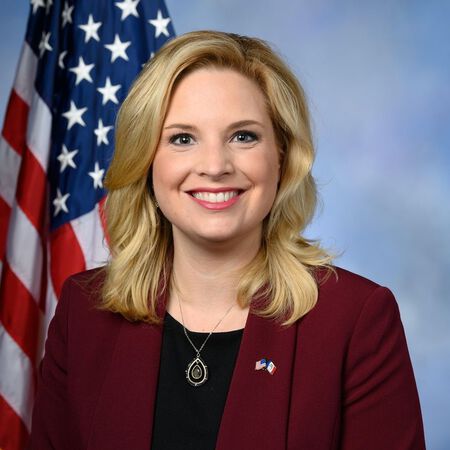
Photo of Ashley Hinson
R United States House · District 2 · Iowa

Rep. Ashley Hinson

Compare
Total votes
2,837
all sessions
Attendance
99%
32 missed
Near the chamber average
With party
93%
of cast votes
Higher than 86% of chamber peers
Bipartisan score
4%
crosses aisle rarely
Lower than 87% of chamber peers
Sponsored
1,027
bills & resolutions
Near the chamber average
Committees
5
assignments
1,027 bills and resolutions

Sponsored bills

Total
1,027
Primary
96
Co-sponsor
931
This page
1,027
matching current filters
Co-sponsor HR 3271
In committee · Indiana House · Co-sponsor
Empowering Employer Child and Elder Care Solutions Act

Maddy summaryThis bill amends the Fair Labor Standards Act to exclude the value of employer-provided child or dependent care services from calculations used to determine overtime pay. It directly affects employers who offer childcare benefits and their employees, as these benefits will no longer count toward an employee's regular rate of pay for overtime purposes. The key provision adds a new category to the list of non-wage benefits that employers can provide without triggering higher overtime compensation requirements. The change applies to overtime pay for workweeks beginning after the bill's enactment date.

In committee May 11, 2023 1 co-sponsor
Co-sponsor HR 3270
In committee · Indiana House · Co-sponsor
Permanent Tax Cuts for American Families Act of 2023

Permanent Tax Cuts for American Families Act of 2023 This bill permanently increases the standard tax deduction for nonitemizing taxpayers. It also requires an inflation adjustment to the increased deduction amounts.

In committee May 11, 2023 1 co-sponsor
Co-sponsor HR 3238
In committee · Indiana House · Co-sponsor
Affordable Housing Credit Improvement Act of 2023

Maddy summaryHR 3238, the Affordable Housing Credit Improvement Act of 2023, updates the Low-Income Housing Tax Credit (LIHTC) program to increase the availability of affordable housing across the United States. The bill makes several key changes including increasing state funding formulas, modifying tenant eligibility rules to better serve vulnerable populations (such as domestic violence victims and students), and expanding credit eligibility for projects in rural and Native American communities. Specific provisions raise the credit for properties serving extremely low-income households, clarify rules around tenant income increases, and require housing providers to protect victims of domestic violence. The bill also updates terminology from "low-income" to "affordable" throughout the tax code and enhances program transparency through data sharing requirements. These changes aim to make the LIHTC program more effective at creating and preserving affordable housing units for low-income households nationwide.

In committee May 11, 2023 1 co-sponsor
Co-sponsor HR 3170
In committee · Indiana House · Co-sponsor
HELPER Act of 2023

Maddy summaryThe HELPER Act of 2023 creates a new FHA mortgage insurance program specifically for first responders and K-12 teachers. It allows eligible first-time homebuyers in these professions to secure mortgages with 100% financing (no down payment required) for purchasing or repairing a primary residence. To qualify, applicants must be employed as law enforcement, firefighters, paramedics, or K-12 teachers, have completed housing counseling, and meet specific employment history requirements (e.g., 4 years in the role or disability-related release). The program authorizes $660,000 for fiscal year 2024 and $160,000 annually through 2030, with authority expiring after 5 years.

In committee May 10, 2023 1 co-sponsor
Co-sponsor HR 3139
In committee · Indiana House · Co-sponsor
ACRE Act of 2023

Maddy summaryThe ACRE Act of 2023 amends the tax code to exclude interest income from certain rural and agricultural loans from taxable income for eligible lenders. It directly affects banks, savings associations, and their wholly-owned entities that provide qualified loans secured by rural or agricultural real estate, including single-family homes in designated rural areas (with a $750,000 loan balance cap) or aquaculture facilities. The key provision allows these lenders to exclude interest earned on qualifying loans from their gross income, effectively reducing their tax liability on such lending activity. The bill applies to loans made after its enactment date and aligns with existing definitions of rural property from the Agricultural Credit Act of 1987.

In committee May 9, 2023 1 co-sponsor
Co-sponsor HR 1758
In committee · Indiana House · Co-sponsor
SIFT Act of 2023

Stopping Illicit Fentanyl Trafficking Act of 2023 or the SIFT Act of 2023 This bill permanently adds five fentanyl analogues and the entire category of fentanyl-related substances to schedule I of the Controlled Substances Act. A schedule I controlled substance is a drug, substance, or chemical that has a high potential for abuse; has no currently accepted medical value; and is subject to regulatory controls and administrative, civil, and criminal penalties under the Controlled Substances Act. Fentanyl-related substances are currently regulated under schedule I through a temporary order issued by the Drug Enforcement Administration. The temporary order expires on December 31, 2024. The bill also creates a process to remove from schedule I certain fentanyl-related substances that do not have a high potential for abuse.

In committee May 9, 2023 1 co-sponsor
Co-sponsor HR 2996
In committee · Indiana House · Co-sponsor
Safe Leave for Victims of Domestic Violence, Sexual Assault, and Stalking Act

Maddy summaryThis bill amends the Family and Medical Leave Act (FMLA) to add a new category of protected leave for employees (or family members) affected by domestic violence, dating violence, sexual assault, sex trafficking, or stalking. It entitles eligible employees to up to 12 weeks of unpaid leave for specific needs like medical care, legal services, counseling, securing safe housing, or assisting family members with these issues. The leave can be taken intermittently or on a reduced schedule, and employees may substitute accrued paid leave (vacation, sick days) for part of the unpaid FMLA leave period. Employers may require certification or accept a sworn statement if certification is pending, but the bill does not mandate paid leave.

In committee Apr 28, 2023 1 co-sponsor
Co-sponsor HR 2955
In committee · Indiana House · Co-sponsor
Stop Institutional Child Abuse Act

Maddy summaryHR 2955, the Stop Institutional Child Abuse Act, establishes a Federal Work Group to improve data collection and best practices for youth in residential programs (like therapeutic schools, treatment centers, and group homes). The Work Group, composed of federal agency representatives and diverse stakeholders, must develop national data standards, create risk assessment tools, and issue biennial reports with recommendations to enhance safety, reduce restraints, and expand community-based alternatives. It directly affects youth with mental health, substance use, or disability needs placed in these facilities, as well as agencies overseeing them. The bill also mandates a National Academies study to examine funding, oversight, and barriers to community care. These mechanisms aim to standardize data tracking and promote less restrictive, trauma-informed care for youth in residential programs.

In committee Apr 28, 2023 1 co-sponsor
Co-sponsor HR 2700
In committee · Indiana House · Co-sponsor
Employee Rights Act

Maddy summaryThe Employee Rights Act (HR 2700) amends key labor laws to strengthen employee rights in collective bargaining and privacy. It requires employers to use secret ballot elections for selecting bargaining representatives and to provide labor organizations with voter lists containing employee names and one form of contact information (chosen by the employee) within two business days of an election. The bill prohibits employers from using employee personal information for non-organizing purposes and mandates written authorization for using union dues on non-bargaining activities, with authorizations expiring after one year. Additionally, it clarifies joint employment standards to prevent misclassification and adds tribal sovereignty protections to labor law definitions.

In committee Apr 28, 2023 1 co-sponsor
Co-sponsor HR 2826
In committee · Indiana House · Co-sponsor
Save Local Business Act

Maddy summaryHR 2826, the Save Local Business Act, clarifies when multiple businesses can be held jointly responsible for labor laws. It amends the National Labor Relations Act and Fair Labor Standards Act to state that a business is only a joint employer if it directly controls key employment terms like hiring, pay, schedules, or discipline for another business's workers. This directly affects franchisors, contractors, and similar business models that might previously have been deemed joint employers under broader interpretations. The bill aims to limit joint employer liability to cases where one business has clear, day-to-day control over essential worker conditions.

In committee Apr 25, 2023 1 co-sponsor
Showing 561 to 570 of 1,027 bills
Previous 1 … 56 57 58 … 103 Next