

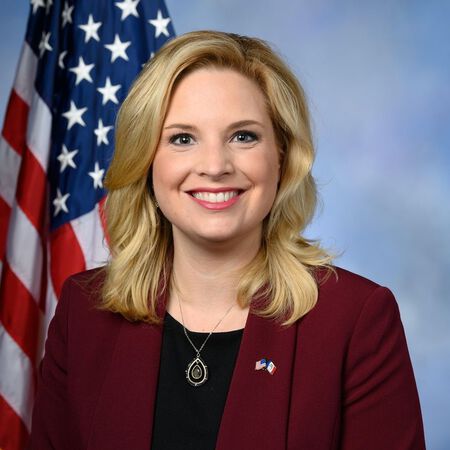
Photo of Ashley Hinson
R United States House · District 2 · Iowa

Rep. Ashley Hinson

Compare
Total votes
2,837
all sessions
Attendance
99%
32 missed
Near the chamber average
With party
93%
of cast votes
Higher than 86% of chamber peers
Bipartisan score
4%
crosses aisle rarely
Lower than 87% of chamber peers
Sponsored
1,027
bills & resolutions
Near the chamber average
Committees
5
assignments
1,027 bills and resolutions

Sponsored bills

Total
1,027
Primary
96
Co-sponsor
931
This page
1,027
matching current filters
Co-sponsor HR 703
In committee · Indiana House · Co-sponsor
Main Street Tax Certainty Act

Maddy summaryHR 703, the Main Street Tax Certainty Act, makes a key tax deduction permanent for small business owners. It removes the temporary sunset provision (subsection (i)) from Section 199A of the tax code, ensuring the qualified business income deduction remains available for eligible small businesses. This change directly affects pass-through business owners (like S-corps, partnerships, and sole proprietorships) who currently qualify for this deduction. The permanent change takes effect for tax years starting after December 31, 2025.

In committee Jan 23, 2025 1 co-sponsor
Co-sponsor HJRES 28
In committee · Indiana House · Co-sponsor
Proposing an amendment to the Constitution of the United States to require that the Supreme Court of the United States be composed of nine justices.

Maddy summaryHJRES 28 proposes a constitutional amendment to permanently fix the number of justices on the U.S. Supreme Court at nine. This would require ratification by 38 state legislatures (three-fourths of states) within seven years to become part of the Constitution. The amendment directly affects the structure of the Supreme Court, which has had nine justices since 1869 but could otherwise be altered by future congressional action. It does not change current court operations or create new laws, but instead seeks to make the nine-justice composition a permanent constitutional requirement.

In committee Jan 22, 2025 1 co-sponsor
Co-sponsor HR 599
In committee · Indiana House · Co-sponsor
Protect Funding for Women’s Health Care Act

Maddy summaryThis bill prohibits federal funding from being provided to Planned Parenthood Federation of America or its related clinics. It redirects funds previously allocated to Planned Parenthood to other eligible providers like community health centers, hospitals, and clinics that offer women's health services. These services include contraception, cancer screenings, prenatal care, STI testing, and family planning - particularly in underserved areas. The bill explicitly states it does not reduce overall federal funding for women's health care or affect existing abortion-related funding restrictions.

In committee Jan 22, 2025 1 co-sponsor
Co-sponsor HR 7
In committee · Indiana House · Co-sponsor
No Taxpayer Funding for Abortion and Abortion Insurance Full Disclosure Act of 2025

Maddy summaryHR 7 prohibits federal funds from being used for abortions or health insurance plans covering abortion, with exceptions for pregnancies resulting from rape, incest, or when a woman's life is endangered. It blocks federal premium tax credits under the Affordable Care Act for health plans covering abortion (except in specified cases) and requires clear disclosure of abortion coverage and related surcharges in plan materials. The bill allows individuals or employers to purchase separate abortion coverage using non-federal funds, such as out-of-pocket payments, without affecting federal subsidies. It directly affects federal health programs, ACA marketplace plans, and health insurance issuers offering coverage that includes abortion services.

In committee Jan 22, 2025 1 co-sponsor
Co-sponsor HR 569
In committee · Indiana House · Co-sponsor
Birthright Citizenship Act of 2025

Birthright Citizenship Act of 2025 This bill limits birthright citizenship by redefining what it means to be subject to the jurisdiction of the United States. Currently, a person born in the United States and subject to U.S. jurisdiction is entitled to citizenship. Under the bill, a person is subject to U.S. jurisdiction if he or she is born to a parent who is (1) a U.S. citizen or national, (2) a lawful permanent resident residing in the United States, or (3) a non-U.S. national ( alien under federal law) with a lawful immigration status who is performing active service in the Armed Forces. The bill does not affect the citizenship or nationality status of any person born before the bill's enactment date.

In committee Jan 21, 2025 1 co-sponsor
Co-sponsor HR 578
In committee · Indiana House · Co-sponsor
Sarah’s Law

Maddy summaryHR 578, "Sarah’s Law," requires mandatory detention for certain non-citizens (aliens) charged with crimes resulting in death or serious bodily injury. It directly affects non-citizens facing such charges and their victims' families. Key provisions mandate that the Department of Homeland Security detain these individuals immediately and notify victims or their closest living relatives (like parents or spouses) about the alien’s identity, immigration status, custody details, and removal efforts. The bill adds specific categories of non-citizens to the mandatory detention list, including those whose visas were revoked or who are deportable for prior immigration violations. This creates a formal process for victim notification while expanding detention requirements under immigration law.

In committee Jan 21, 2025 1 co-sponsor
Primary HR 514
In committee · Indiana House · Lead sponsor
SWAMP Act

Maddy summaryHR 514 (the SWAMP Act) requires most federal agencies to move their headquarters out of the Washington, D.C., metropolitan area (encompassing DC, parts of Maryland and Virginia) within one year of enactment. It prohibits new headquarters in this area and restricts existing headquarters (already located there) from renovating, renewing leases, or signing new leases after the law takes effect. The bill mandates a competitive bidding process where states or local areas can propose relocation sites, with selection based on economic impact, relevant expertise, and national security considerations. Notably, agencies like Defense, Homeland Security, and intelligence agencies (including NSA and CIA) are explicitly excluded from this requirement.

In committee Jan 17, 2025 0 co-sponsors
Co-sponsor HR 30
Passed · Indiana House · Co-sponsor
Preventing Violence Against Women by Illegal Aliens Act

Maddy summaryThis bill amends U.S. immigration law to deny entry to noncitizens convicted of or admitting to certain violent crimes, and to make them deportable. It directly affects noncitizens who have been convicted of or admitted to sex offenses, domestic violence, stalking, child abuse/neglect, or violating protection orders involving threats of violence. Key provisions add these offenses as grounds for denying entry (inadmissibility) under Section 212(a)(2) and as grounds for deportation (deportability) under Section 237(a)(2). The law specifies that domestic violence and protection order violations are included regardless of whether the jurisdiction received specific federal grant funding.

Passed Jan 17, 2025 1 co-sponsor
Co-sponsor HR 482
In committee · Indiana House · Co-sponsor
No Tax on Tips Act

Maddy summaryThis bill creates a new tax deduction for cash tips received by workers in specific service occupations that traditionally accepted tips before 2024 (like servers, barbers, and beauticians). It allows a deduction of up to $25,000 per year for qualified tips included on employer statements, but excludes employees who earned over a certain threshold ($220,000 in 2023) from the same employer the previous year. The deduction applies to taxable years beginning after December 2024 and is designed to reduce taxable income for eligible workers. It directly affects service industry workers in qualifying tip-dependent jobs who receive cash tips, not the general public.

In committee Jan 16, 2025 1 co-sponsor
Co-sponsor HR 503
In committee · Indiana House · Co-sponsor
Qualified Immunity Act of 2025

Maddy summaryThis bill codifies qualified immunity standards for law enforcement officers under federal law. It specifies that individual officers cannot be held liable in civil suits if they demonstrate either that the constitutional right at issue was not clearly established at the time of the incident, or that a prior court ruling already confirmed the conduct was lawful. Local government agencies also cannot be held liable if the officer is found not liable under these standards and was acting within their job duties. The law applies to all federal, state, tribal, and local officers with arrest powers, including police officers. The changes would take effect 180 days after enactment.

In committee Jan 16, 2025 1 co-sponsor
Showing 261 to 270 of 1,027 bills
Previous 1 … 26 27 28 … 103 Next